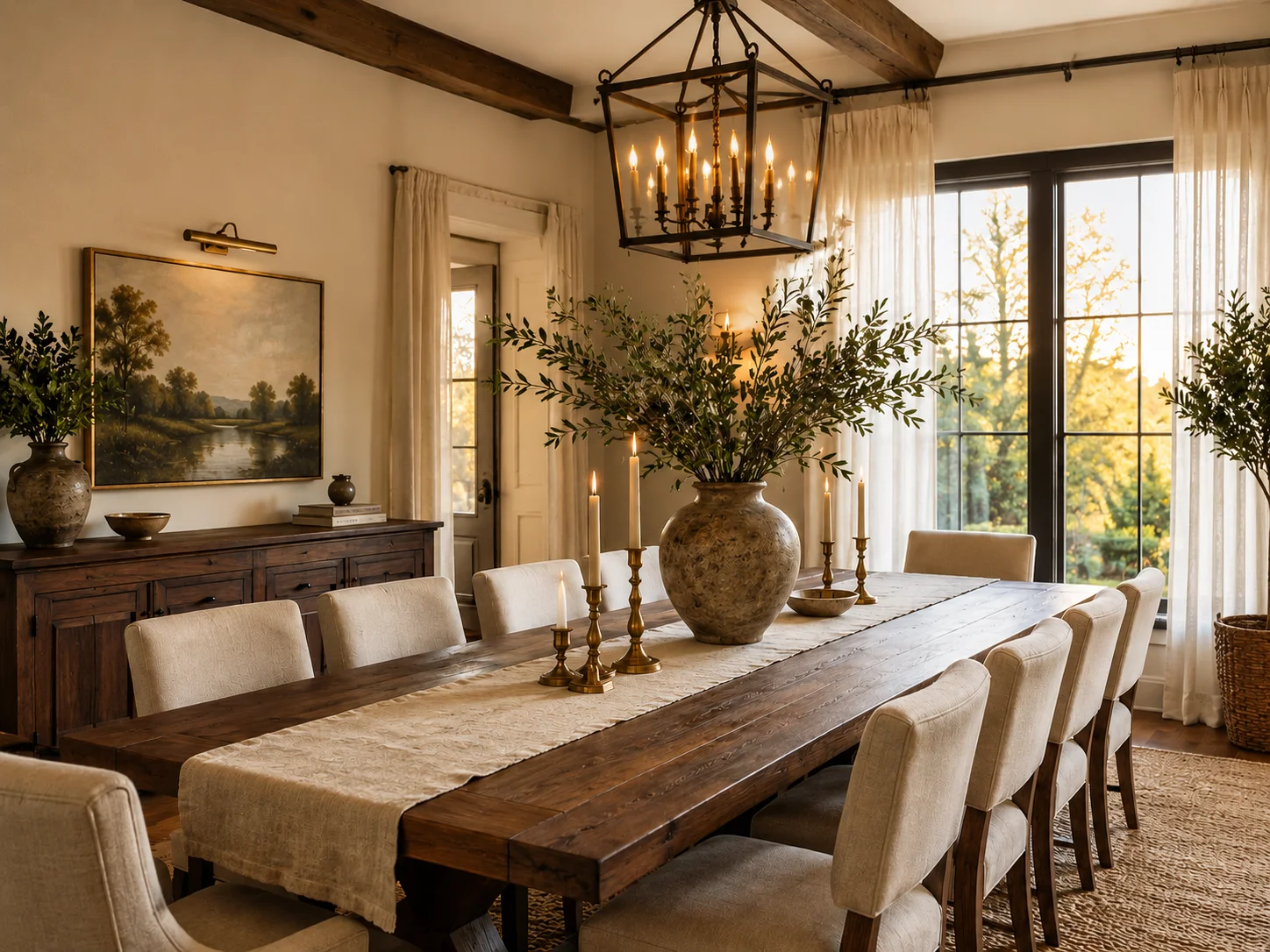
Dining Room Decor Ideas: 22 Easy Ways to Style Your Space
Great dining room decor ideas can make the difference between a room that gets used and a room that gets ignored. In 2026, the best design concepts do not start with a full makeover, but rather with a few smart changes that help the space feel ready for both Tuesday night dinners and weekend guests.
A finished dining room usually comes down to three things working together: the walls, the lighting, and the dining table. Because the dining table serves as the core of any functional space, its presence sets the tone for the entire room. When those pieces feel balanced, even a simple room looks pulled together. The ideas below focus on practical updates that work in small spaces, larger rooms, and budgets of all sizes, so you can find a look that fits the way you live.
Key Takeaways
- Prioritize scale and proportion: Ensure your chandelier width is roughly half to two-thirds the width of the table, and choose a rug large enough so chair legs remain on the fabric even when pulled out.
- Establish a cohesive color and material palette: Create a sense of rhythm by repeating key materials, wood tones, or metal finishes across your dining room furniture and decor to ensure the space feels intentionally styled.
- Maximize functionality with low-profile centerpieces: Keep table decor under 12 inches high to maintain clear sight lines, ensuring your dining space remains comfortable for both casual conversation and hosting.
- Use strategic wall decor to anchor the room: A single oversized piece of art or a well-balanced gallery wall can provide a focal point that supports the dining table without causing visual clutter.
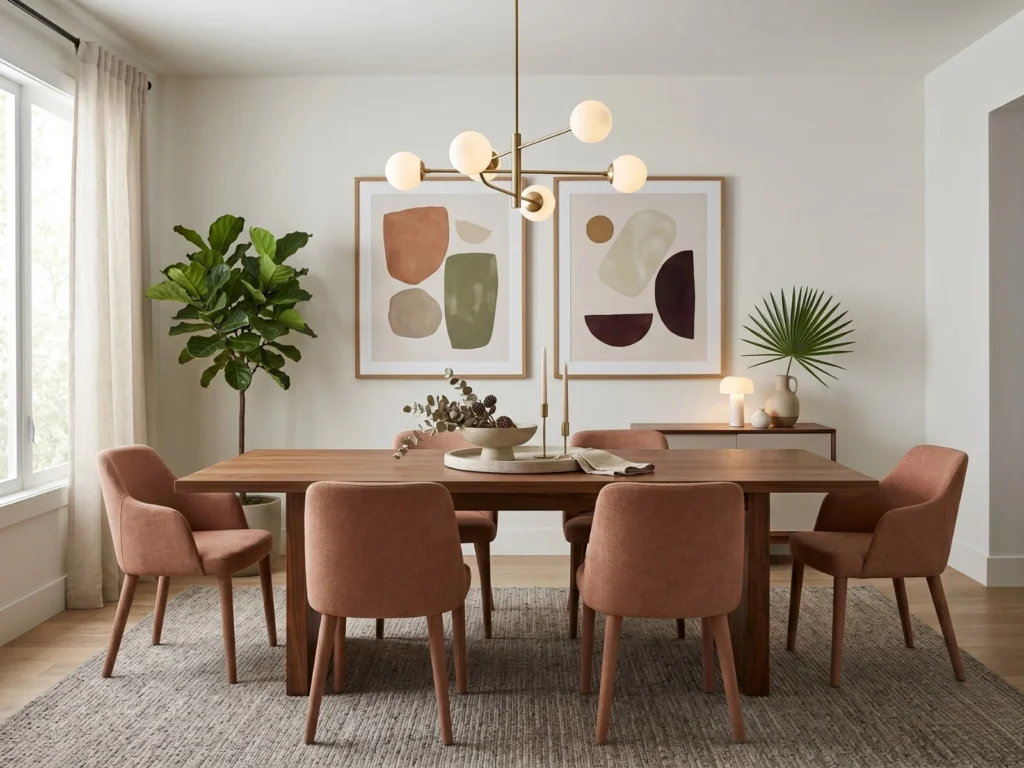
How to Use Dining Room Decor Ideas to Create a Cohesive Space
A dining room feels pulled together when the major pieces look like they belong to the same story. The table, chairs, light, rug, and wall decor should work in the same scale and color family, so the room reads as planned instead of assembled in a rush. That sense of order is what makes even simple dining room decor ideas feel finished.
Scale comes first
Scale does most of the heavy lifting. A table that overwhelms the room, or a rug that stops too soon, makes the space feel off even when the decor is nice.
A few basic rules help the room settle into place:
- Chandelier width should feel close to half to two-thirds of the table width, so the light looks centered and intentional.
- Proper rugs should extend past the table far enough for chairs to stay on the fabric when pulled out, which anchors the furniture and keeps the layout from feeling cramped.
- Centerpiece height should stay low enough for clear sight lines across the table, especially in a room used for both dinner and conversation.
For a deeper sizing reference, these dining room rules of thumb are useful when the room needs a quick reality check. The takeaway is simple, if the proportions work, the room already feels more expensive and more settled.
Lighting and walls need to balance each other
Lighting gives the table a focal point, but it also sets the mood for the whole room. A centered pendant or chandelier makes the table feel anchored, while wall decor keeps the rest of the room from feeling empty.
When one side of the room feels heavier, a mirror, framed art, or even a slim gallery wall can restore balance. That matters most in open-plan homes, where the dining area has to hold its own without looking crowded. Dining room design inspiration can help when the room needs stronger wall ideas or a clearer visual anchor.
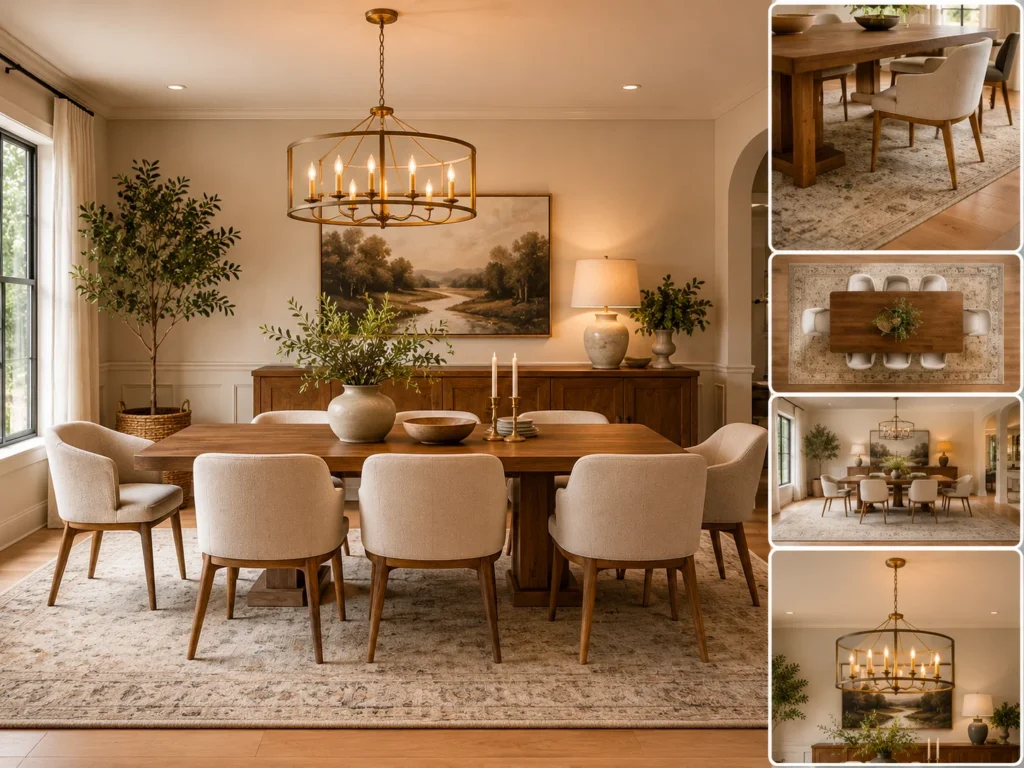
Repeated materials make the room feel finished
A room feels pulled together when materials repeat on purpose. Wood tones, metal finishes, upholstery, and the style of your dining chairs should echo one another in small ways. That repetition works like rhythm in music, it keeps the room from sounding flat.
Storage matters too. A sideboard, console, or closed cabinet gives plates, linens, and extras a place to disappear, which keeps the dining zone calm between meals. For broader ideas that carry through the rest of the house, home decor ideas for every room can help the dining room match the same visual language as nearby spaces.
Simple dining room decor ideas work best when they share the same quiet logic, one strong focal point, balanced proportions, and a few repeated materials. That is what makes the room feel edited instead of accidental, even before the table is set.
Centerpiece and Tablescape Ideas
The most useful dining room decor ideas often start at the table. A strong centerpiece and a few simple layers can make the room feel ready for a normal Tuesday, then switch into something more polished for hosting company without touching the rest of the space.
1. Anchor with a low, year-round centerpiece
A low centerpiece keeps the table useful, which matters more than people think. A wide bowl, a shallow tray, or a compact greenery arrangement adds shape without blocking faces, so dinner still feels relaxed and easy to talk through.
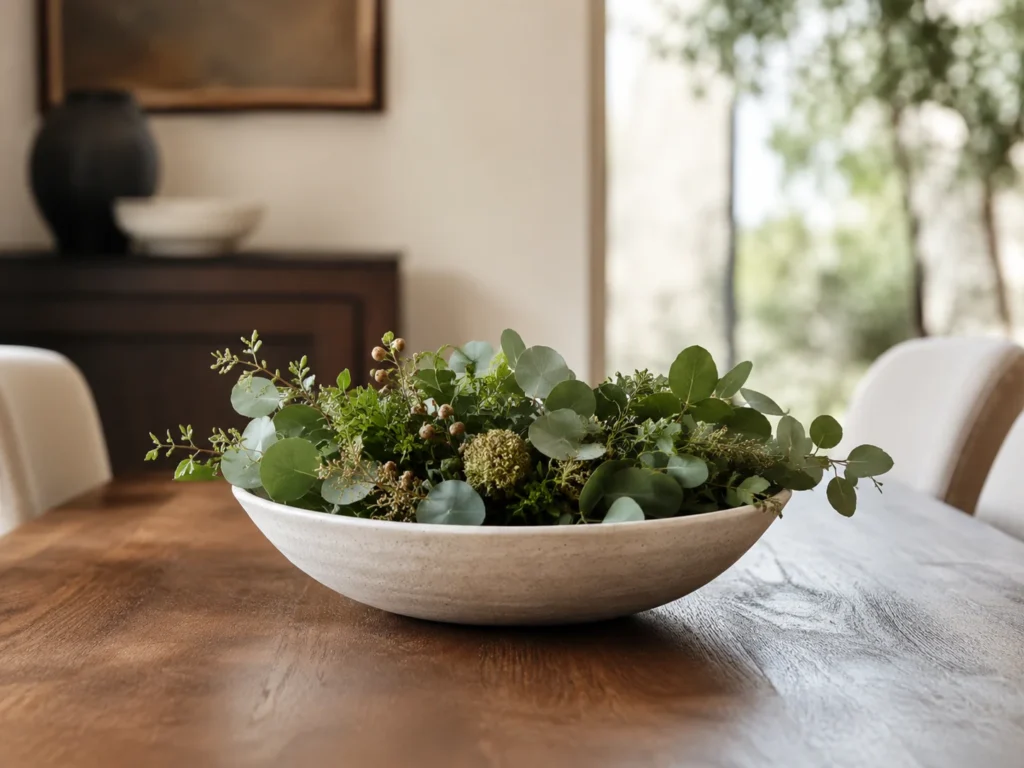
A good rule is to keep the tallest point at 12 inches or less. On long tables, a low arrangement also reads cleaner than a tall one, since it leaves the table line open and avoids visual clutter. When looking for versatile centerpieces, keep these height constraints in mind to ensure your dining room remains functional.
2. Build a seasonal tablescape for entertaining
A tablescape changes the mood fast, even if the room stays the same. Cloth napkins, simple plates, candles, and one or two natural pieces, like branches, pears, or herbs, can shift the table toward holiday dinners, birthdays, or a quiet dinner party. For a Christmas table, our Pottery Barn Christmas decor guide shows when plaid napkins are worth buying ready-made.
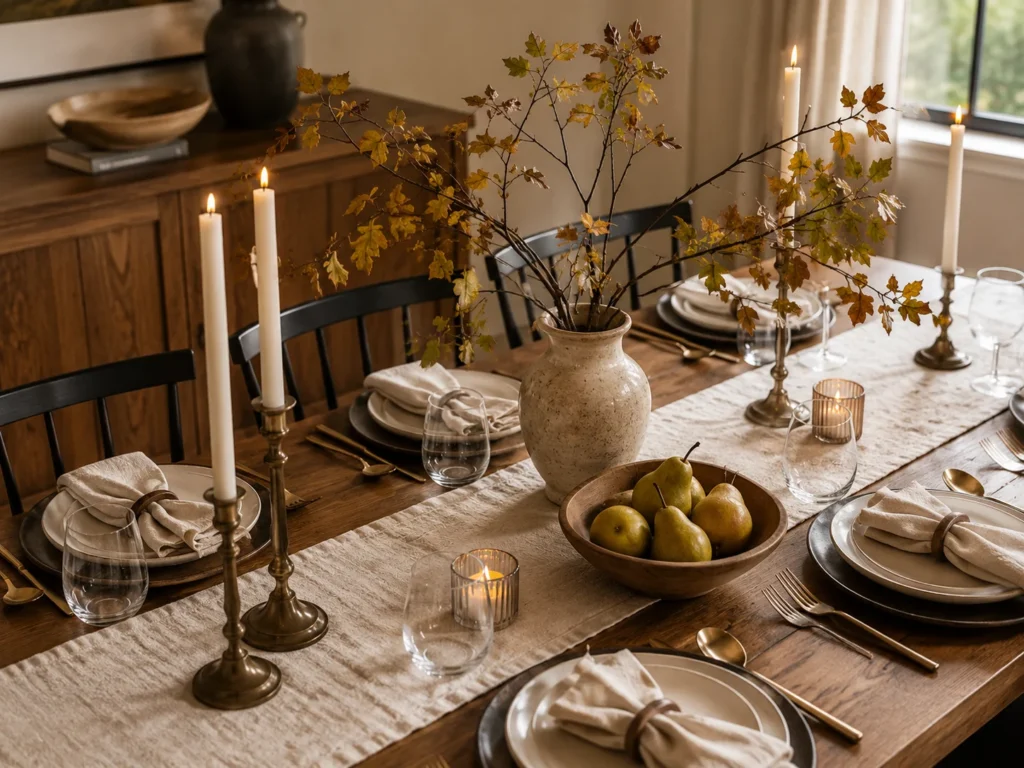
The best tablescapes feel intentional, not crowded. Keep the color story tight, then layer texture instead of piling on more objects. For more styling ideas that work across the house, see these home decor ideas for every room.
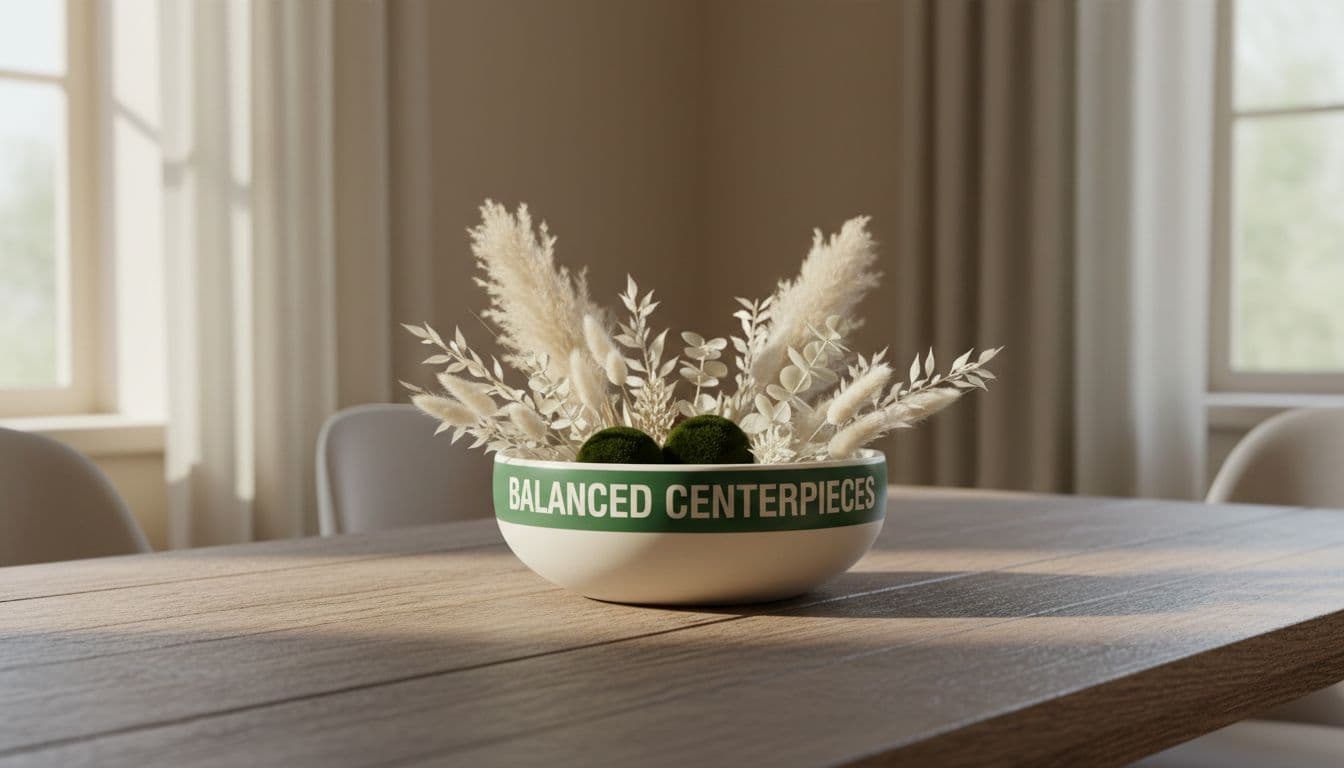
Keep the eye moving across the table, but leave space for plates, glasses, and conversation.
3. Define the table with a runner or layered linens
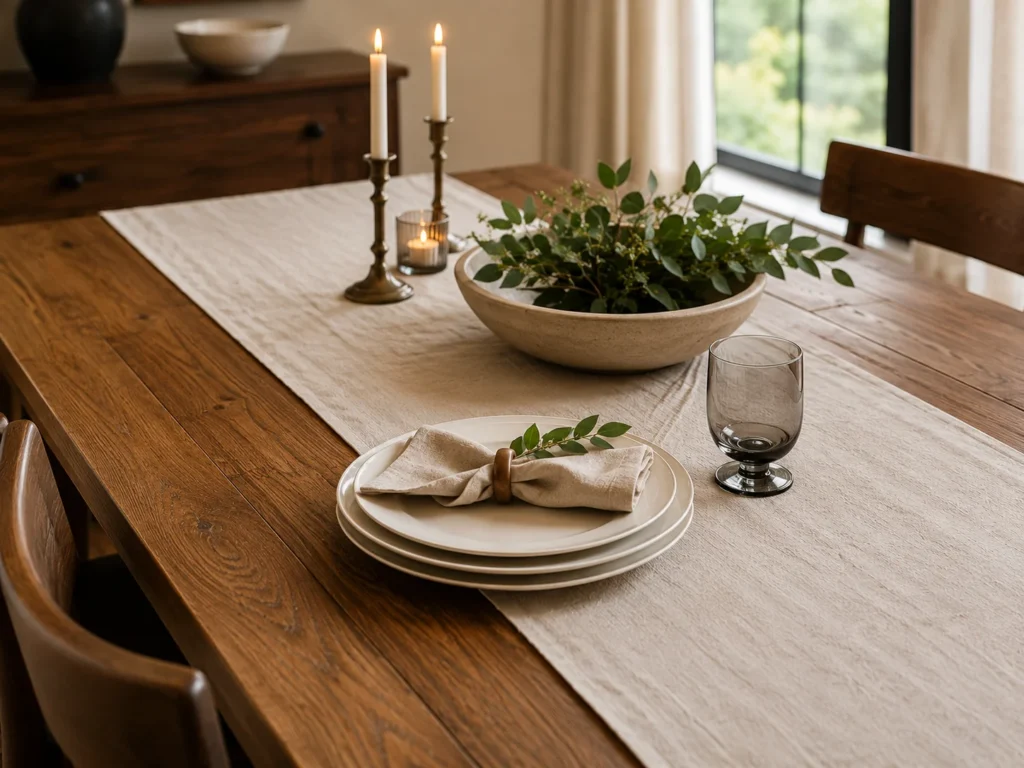
A table runner, placemats, or a full tablecloth adds softness and structure at the same time. On a wood table, a runner often works best because it shows off the grain while still giving the surface a finished look.
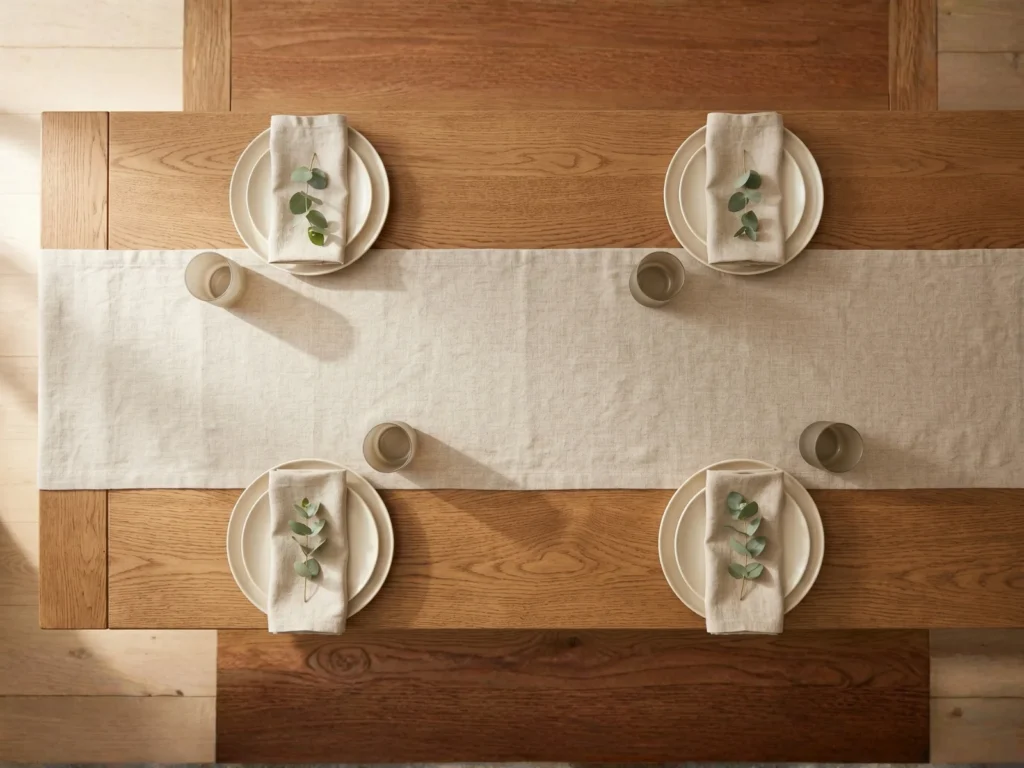
Scale matters here. Use a runner that leaves several inches of wood visible on each side, and choose fabric with enough body to lie flat, such as linen or cotton. That balance keeps the setup neat instead of fussy, which is why this trick works so well in modern dining room decor.
4. Add candlesticks or taper candles for instant ambiance
Candles do what overhead light cannot, they soften the whole room. Taper candles are especially useful because they add height, warmth, and a little movement without taking over the table. Keep them at least 12 inches from napkins, greenery, and anything else that can burn, as the U.S. Fire Administration advises.
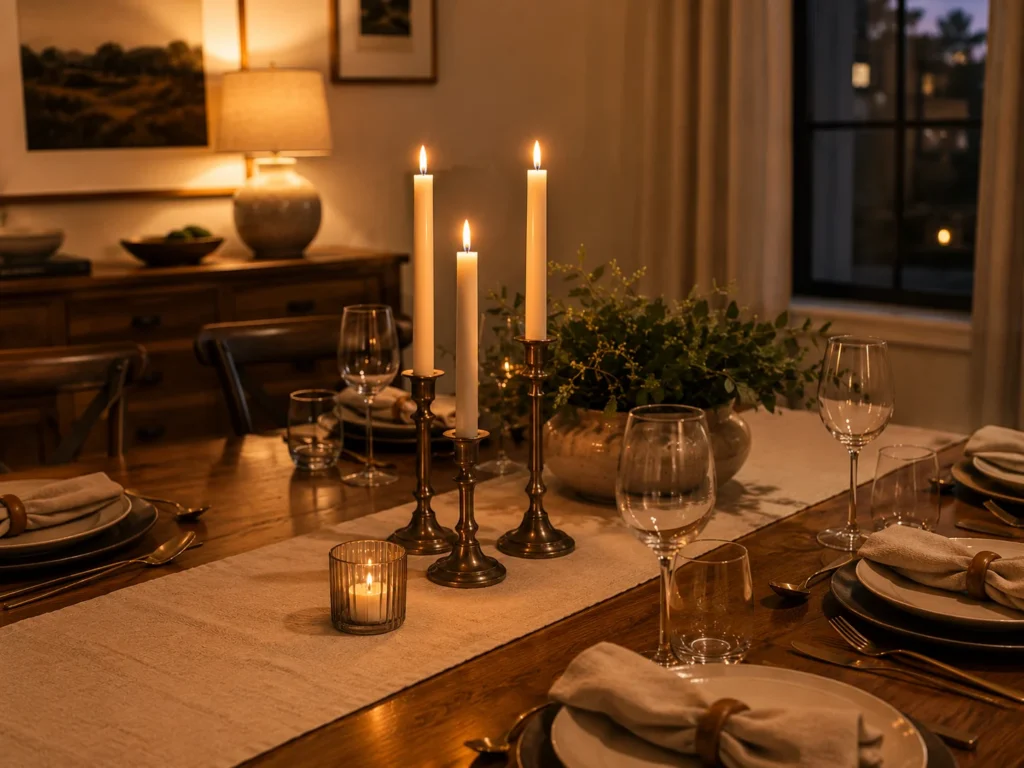
Mixing holder heights keeps the arrangement from feeling stiff. Use sturdy candlesticks, keep the cluster centered, and leave enough open surface around them for serving dishes. A simple trio of flames often looks calmer than a large cluster of decor, and it suits both everyday meals and guests. For a fuller look at this style, styling elegant candle holders for dining tables fits neatly into a warmer tablescape.
5. Style a bare table with the 3-object rule
A bare table does not need much to feel finished. Decorative vases, a bowl, and a candle can create shape and rhythm without turning the surface into a display shelf.
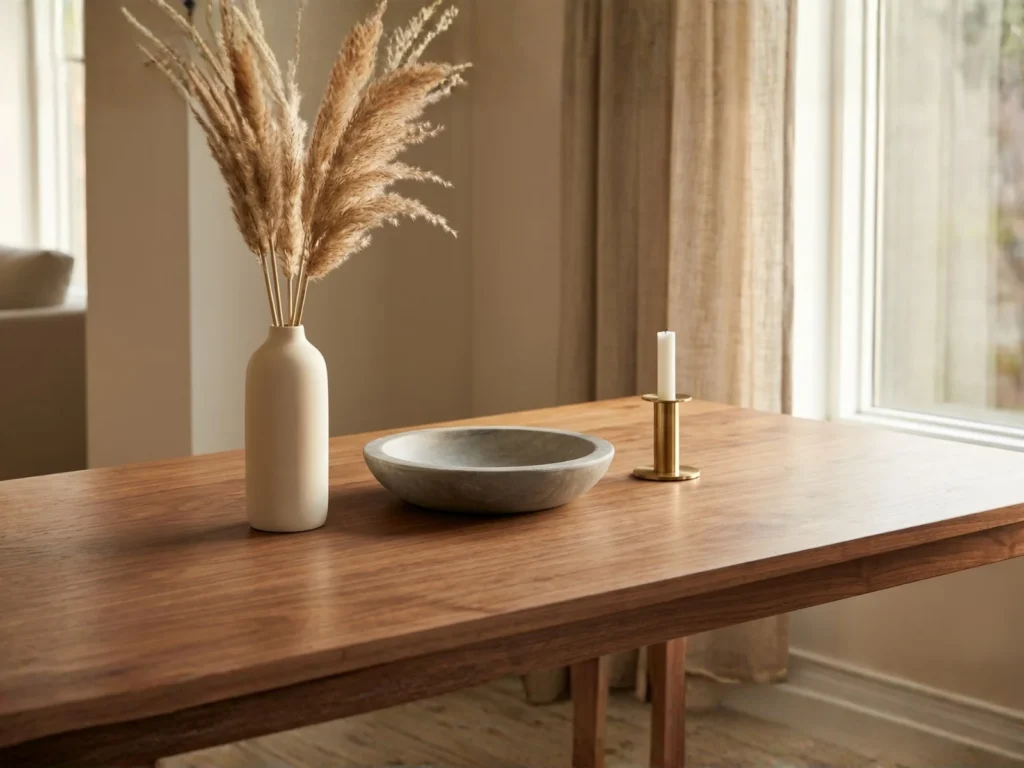
The trick is to vary the forms. One piece should feel tall, one rounded, and one low, so the eye moves easily across the table. Swap one item by season, such as dried stems in fall or fresh greenery in spring, and the look stays current with almost no effort.
If the room feels small or the table pulls double duty, this kind of light styling is easier to live with than a heavier arrangement. For tighter layouts, small dining room ideas can help the table stay useful without losing character.
Dining Room Wall Decor Ideas
Dining room wall decor ideas work best when they give the room a clear anchor without making it feel busy. In a space built around conversation, the walls should support the table rather than compete with it. One strong piece, a thoughtful arrangement, or the right texture can do more than a dozen small objects scattered at random.
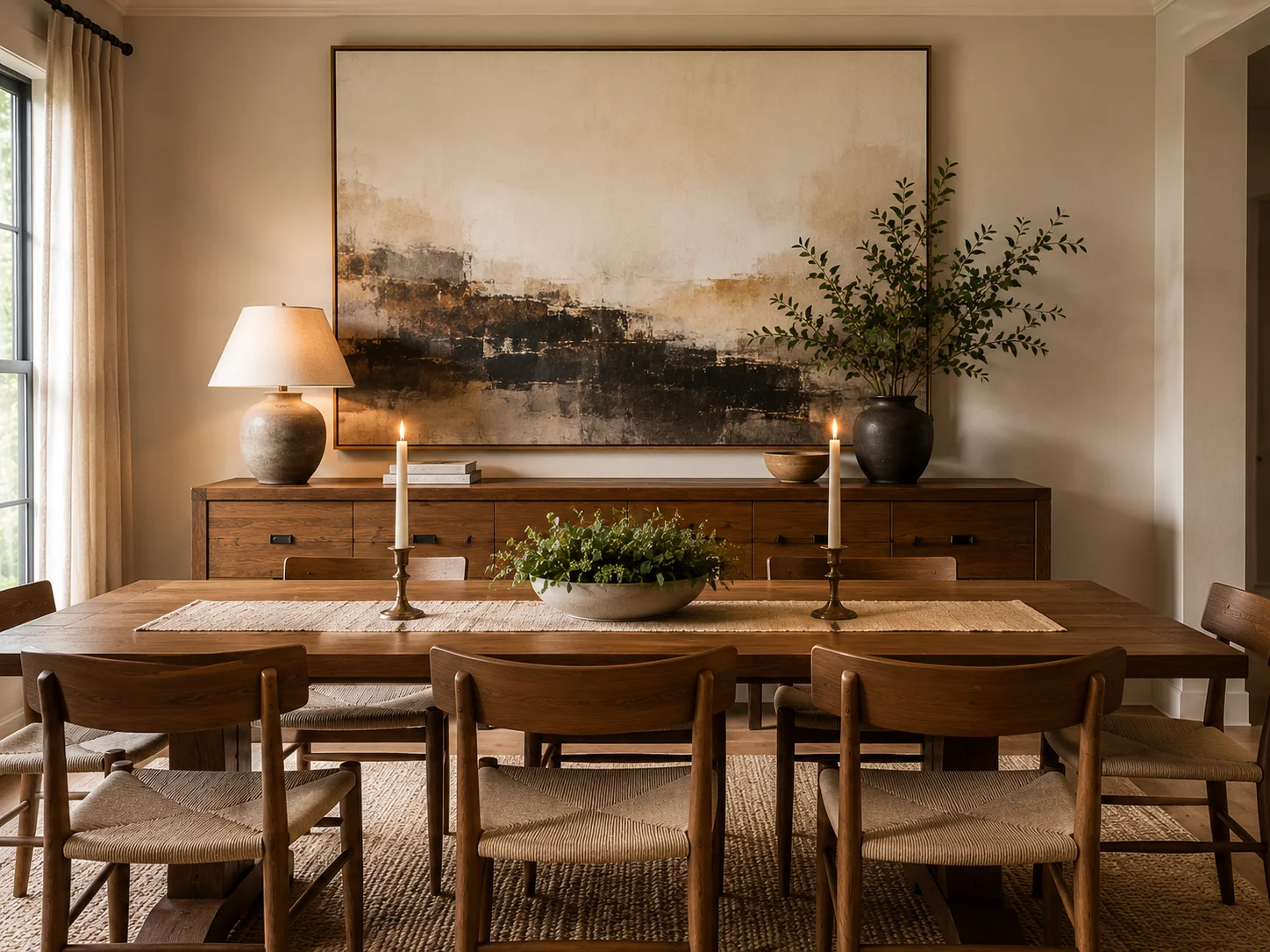
6-Hang one oversized statement piece
One large artwork or framed print often feels calmer than a cluster of small pieces. The eye lands once, then rests. That makes the room feel more settled, especially above sideboards or a buffet where a single piece can echo the width of the furniture below.
A reliable sizing rule helps here. Choose wall art that is about two-thirds the width of the table or furniture it hangs above. For more proportion tips, this large wall art size guide gives a solid reference point. To mix modern and traditional styles, pair a large, abstract canvas with a classic wood table to create a balanced, curated look.
7-Create a balanced gallery wall
A gallery wall works when it feels collected, not random. Mix prints, photos, and frame shapes, then repeat one detail so the arrangement holds together. That repeated thread can be a shared color, a matching frame finish, or one paper tone running through the group.
Spacing matters as much as the art itself. Keep gaps even, start with the largest piece first, and center the layout over the table or sideboard. About 2 to 3 inches between frames usually looks clean, while a common finish keeps the wall from feeling busy.

A gallery wall can fit many dining room ideas, but it needs discipline. Too many colors or mismatched finishes can make the wall feel like a bulletin board instead of decor.
8-Use a large mirror to expand the room and bounce light
Mirrors can change the feel of a dining room fast, especially in a small or darker space. They open the wall, reflect daylight, and make the room feel brighter without adding visual weight. In tight layouts, that extra light matters more than another decorative object.
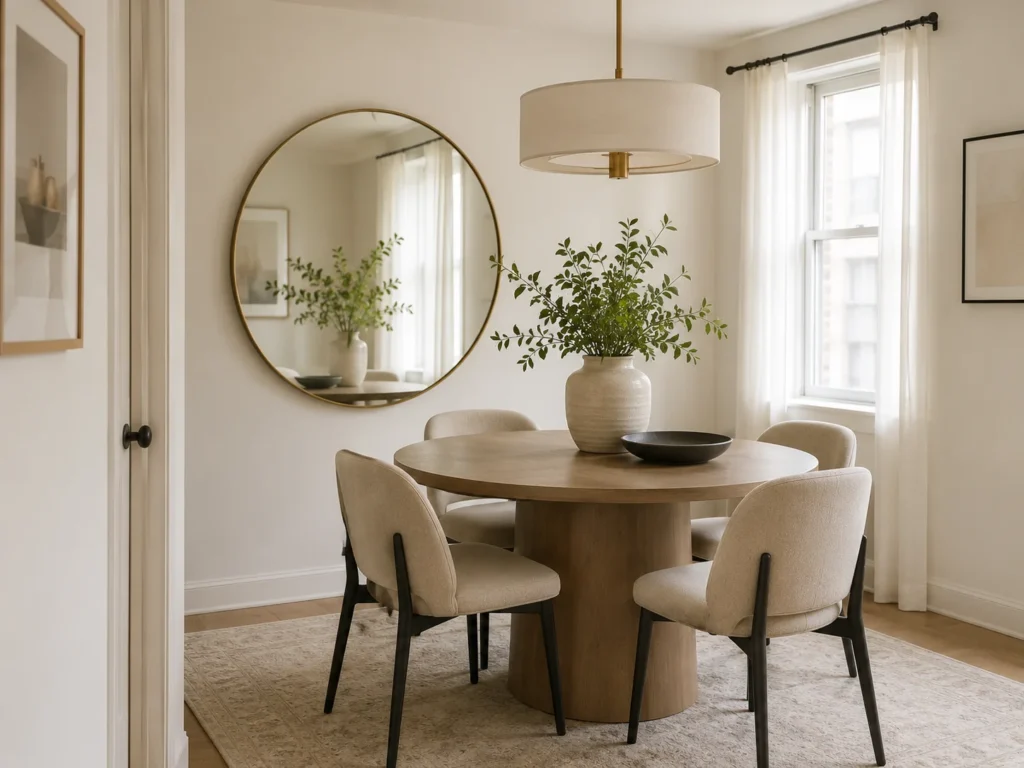
Placement makes the difference. Hang the mirror across from a window, or near a lamp or pendant so it catches light and spreads it around. In a compact room, a mirror can also make the space feel longer, which is why it shows up so often in small dining room ideas.
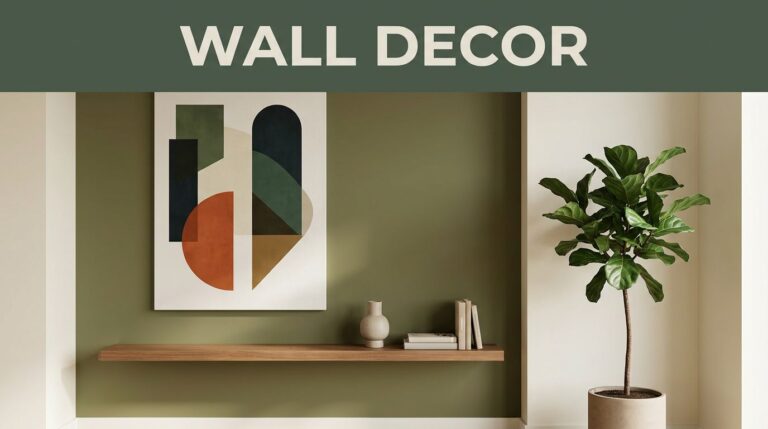
9-Add floating shelves for styled objects
Floating shelves give you a place for bowls, vases, books, or small art without taking up floor space. They work well on blank dining walls that need warmth but not a full gallery. The look feels relaxed when the objects are useful as well as decorative.
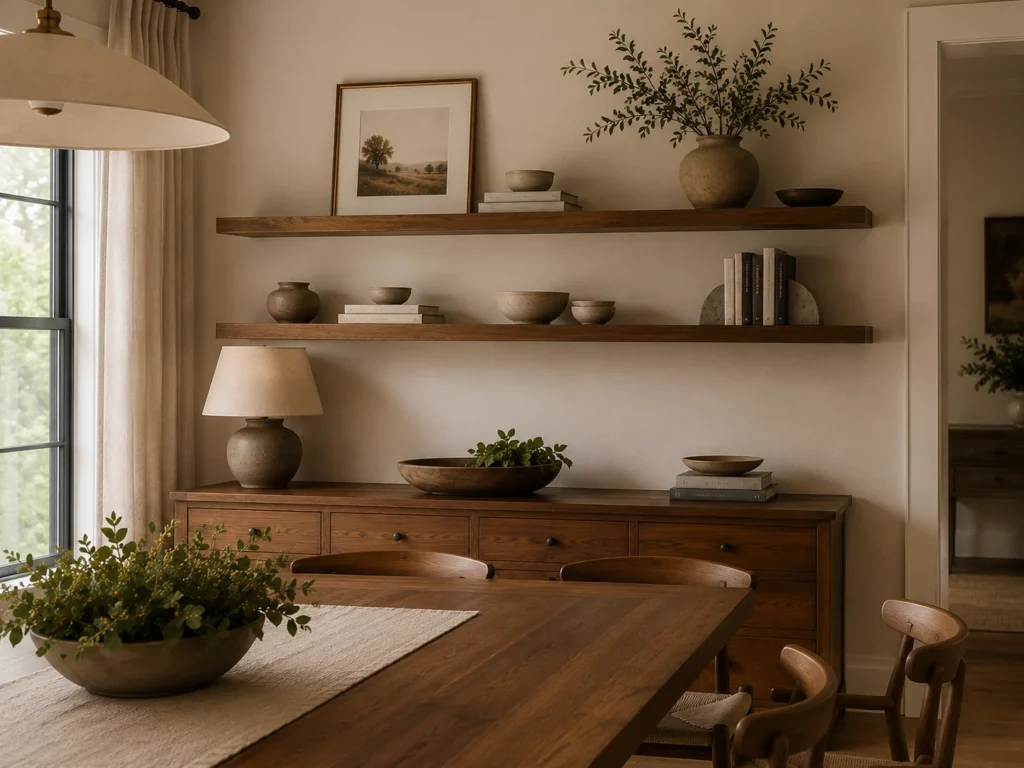
The key is restraint. Leave visual breathing room between items, and do not fill every inch of the shelf. A few grouped objects, such as one stack of books, one vase, and one bowl, usually look better than a crowded row.
10-Try a plate wall, textured panel, or wallpaper
Texture does a lot of work in a dining room. Ceramic plates, woven wall hangings, and panel-style art add warmth even when the colors stay simple. Alternatively, adding a subtle, textured wallpaper can provide a sophisticated backdrop that lifts the entire room. This approach is especially helpful in modern dining room decor, where clean lines can sometimes feel flat. Texture breaks that up. A neutral palette can carry the whole wall if the surfaces feel varied, layered, and a little tactile.
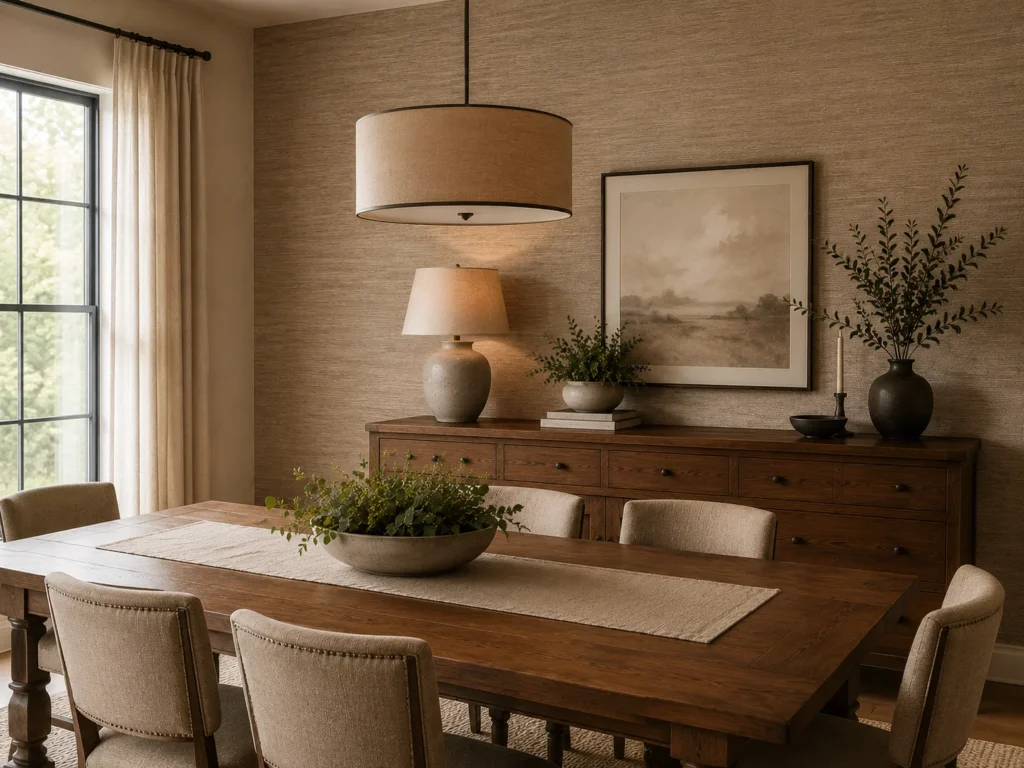
When the room already has strong furniture, wall decor does not need to shout. It only needs to add depth, give the eye a place to pause, and keep the dining area from feeling unfinished.
Lighting Ideas to Set the Mood
Lighting changes how a dining room feels before anyone notices the furniture. A bright room can feel practical and flat, while layered light makes the same space softer, warmer, and better suited to meals that last a little longer. The best dining room decor ideas use one strong overhead fixture, then add smaller sources that bring depth after dark.
11-Make the chandelier or pendant the focal point
The main light should fit the dining table first, then the room. As a rule of thumb, the lighting fixture width should be about half to two-thirds the table width, so it feels balanced instead of oversized or skimpy. Height matters too, because a light hung too low blocks sightlines, while one hung too high loses intimacy. For most dining rooms, the fixture should sit low enough to anchor the table but high enough that people can still see across it. A good light does more than illuminate the surface; it frames the meal and gives the room a clear center.
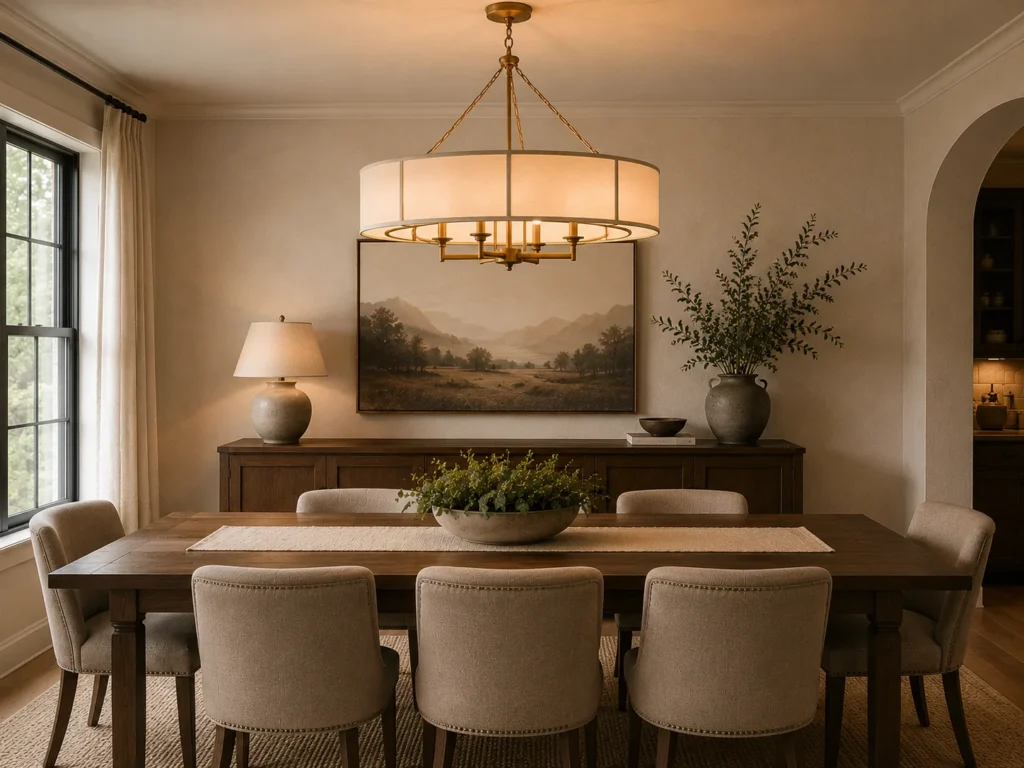
12-Put the main light on a dimmer and use warm bulbs
A dimmer makes one room work for homework, weeknight meals, and dinner parties without changing a thing else. Full brightness helps when kids need to read at the table or someone is sorting mail, but lower light softens the whole room when dinner starts. Complement this with warm bulbs, which make dining rooms feel more inviting because they flatter skin tones, wood finishes, and fabric textures. Cool white light often reads too bright for meals and can make even a well-styled room feel flat. A warmer tone supports conversation instead of competing with it, helping the whole home feel connected.
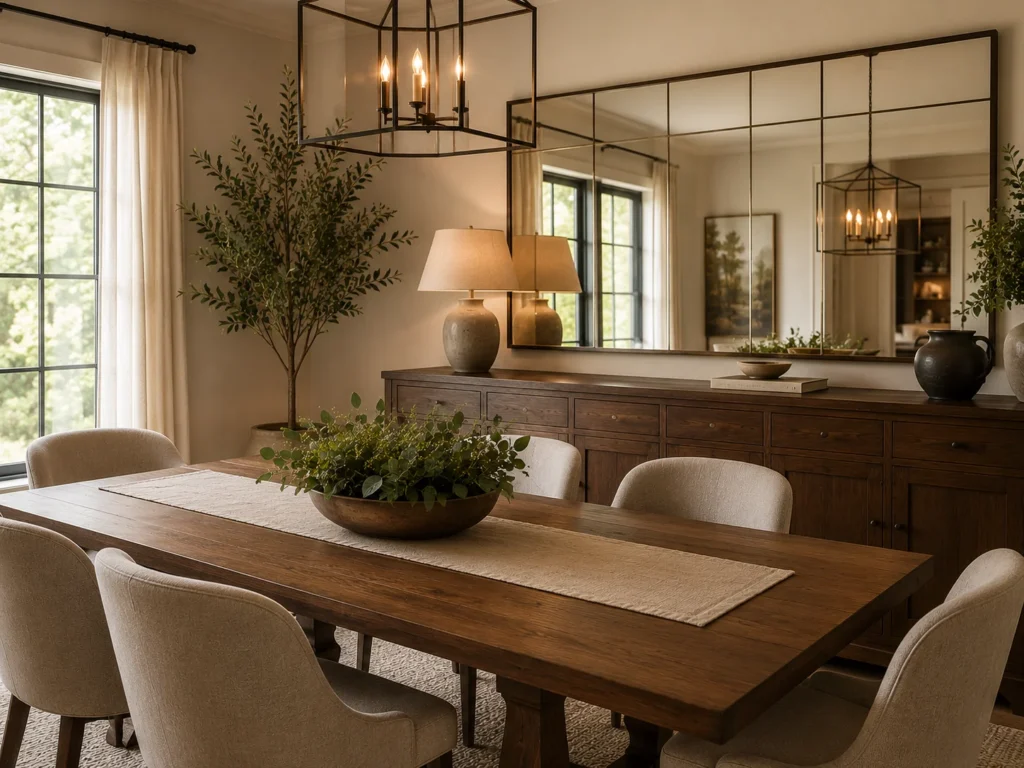
13-Layer in sconces, lamps, and hidden light for warmth
Smaller light sources keep the room from feeling harsh. A pair of sconces can frame art or a mirror on the wall, while buffet lamps on a sideboard add a low glow that makes the space feel lived in. You can also add hidden light where the room needs depth, such as a picture light over art or LED strips inside glass cabinets. This kind of lighting works best when it points to something useful or beautiful rather than shining everywhere at once. If the room feels dim in the corners, these pockets of light pull the eye outward and make the space feel bigger without cluttering the surfaces.
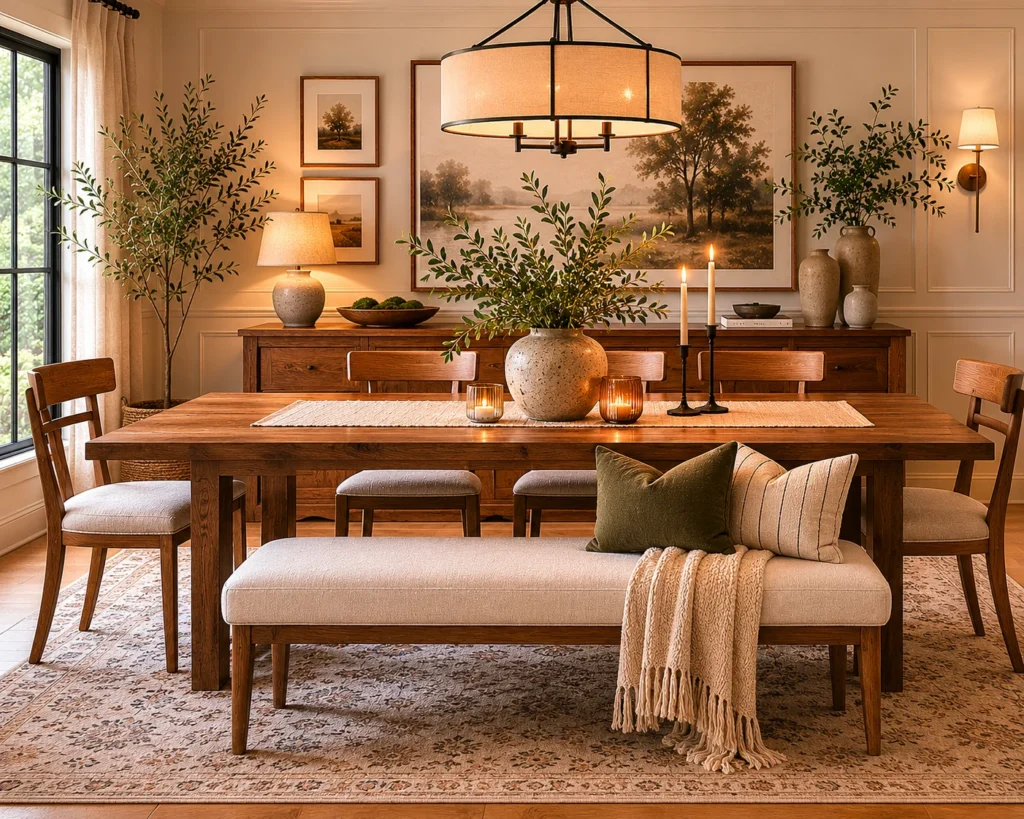
14-Refine the glow with candles and intentional shapes
Candles add movement that electric light cannot copy, reflecting off glassware and polished surfaces to give the room a gentle shimmer. Use glass hurricanes or taper candles, keeping the arrangement low and centered to maintain table utility. Beyond accessories, ensure your lighting choice matches your furniture.
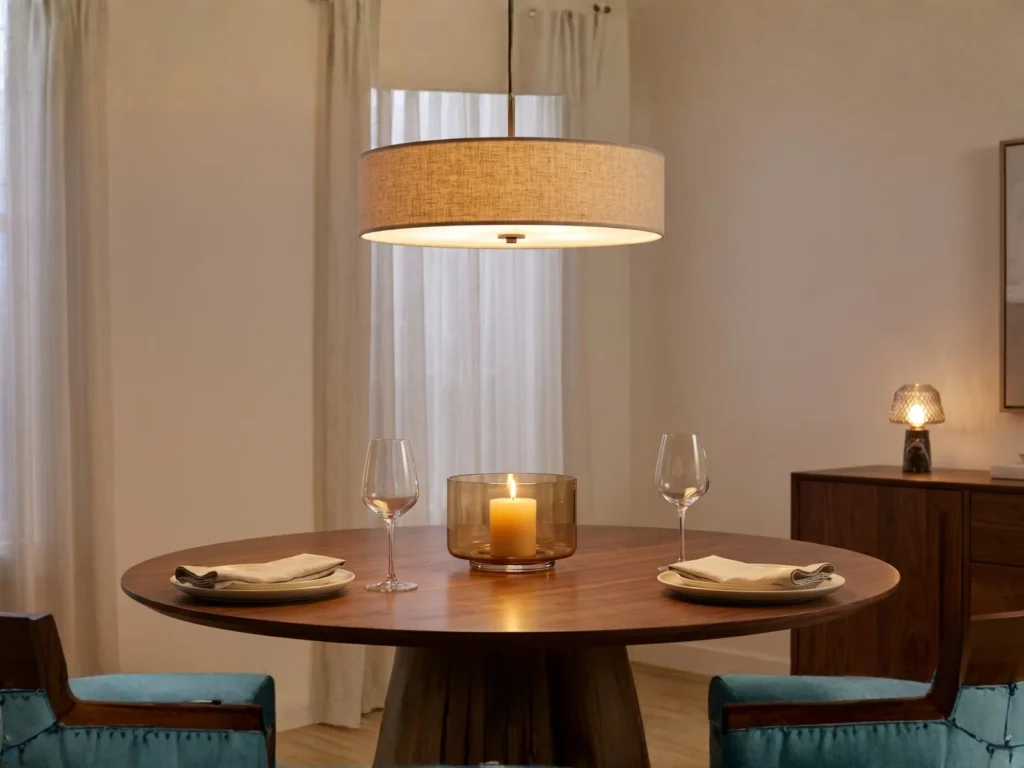
Round tables usually look best under a round fixture, while rectangular tables often need a linear pendant. That echo between shape and light makes a modern dining room feel deliberate and cohesive. By treating lamps and sconces as decor rather than afterthoughts, you create structure that keeps the room looking finished even when the table is bare.
Furniture and Layout Ideas
Furniture choices do more than fill a dining room. They set the tone, shape how people move, and decide whether the room feels formal, relaxed, or easy to live with. The smartest dining room decor ideas work with the size of the space first, then add character through seating, storage, and soft finishes.
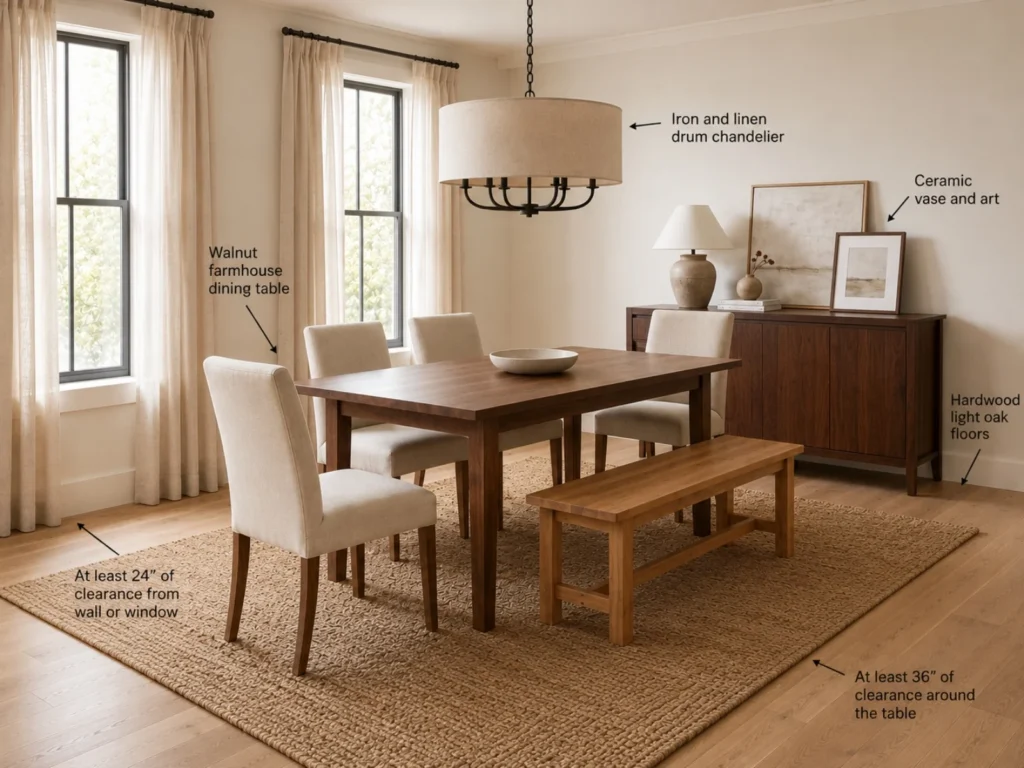
15-Mix chair styles or add a bench for character
A mixed seating plan keeps the room from looking too matched. Pairing different dining chairs, or swapping one side for a bench, softens a formal look and makes the space feel more collected. A bench also works well in tight rooms because it tucks in neatly and can seat more people, though it usually feels less formal than individual chairs.
The easiest version is simple: keep the chairs similar in scale, then vary the material or shape. One bench on one side of the table often adds enough contrast without making the layout feel random.
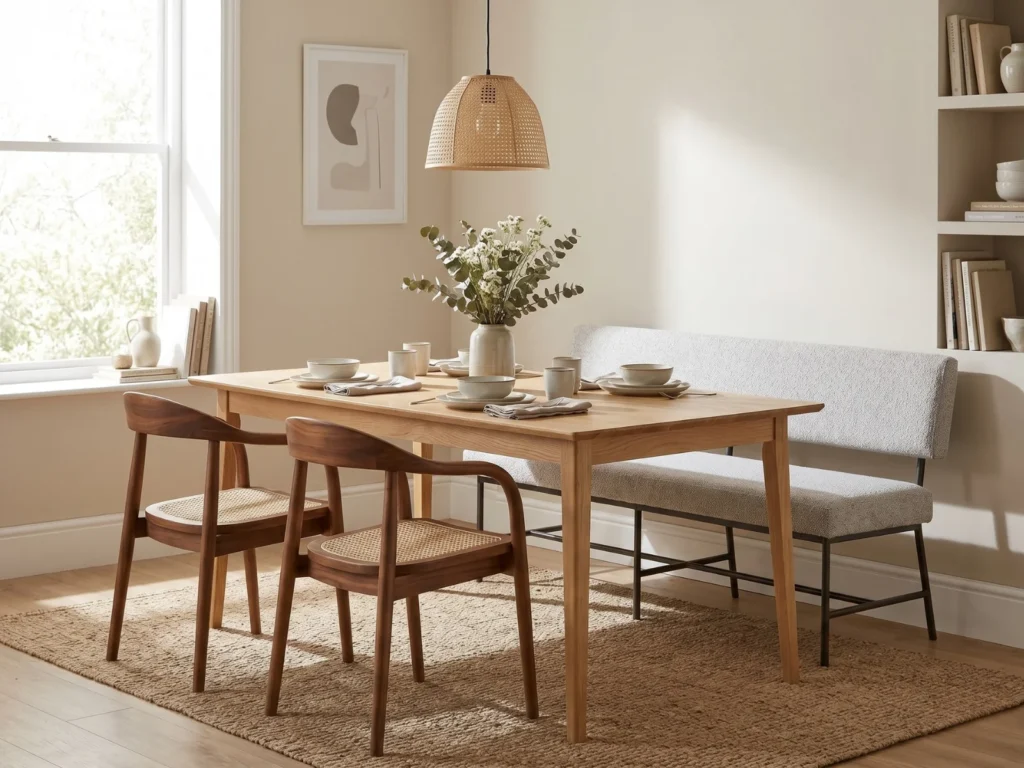
16-Ground the set with a rug
A rug helps the dining area feel like its own zone, especially in open-plan homes. It also quiets the room visually, which makes even simple dining room ideas feel more finished. The key rule is practical: when chairs are pulled out, all chair legs should still stay on the rug. If they catch the edge, the rug is too small.
A rug should be large enough to anchor the table and define the dining zone without crowding the floor. For a standard reference, many rug guides suggest extending the rug at least 24 to 30 inches beyond the table edges, which helps chairs move smoothly and keeps the layout looking intentional. Dining room rug size guidance gives a useful sizing benchmark.
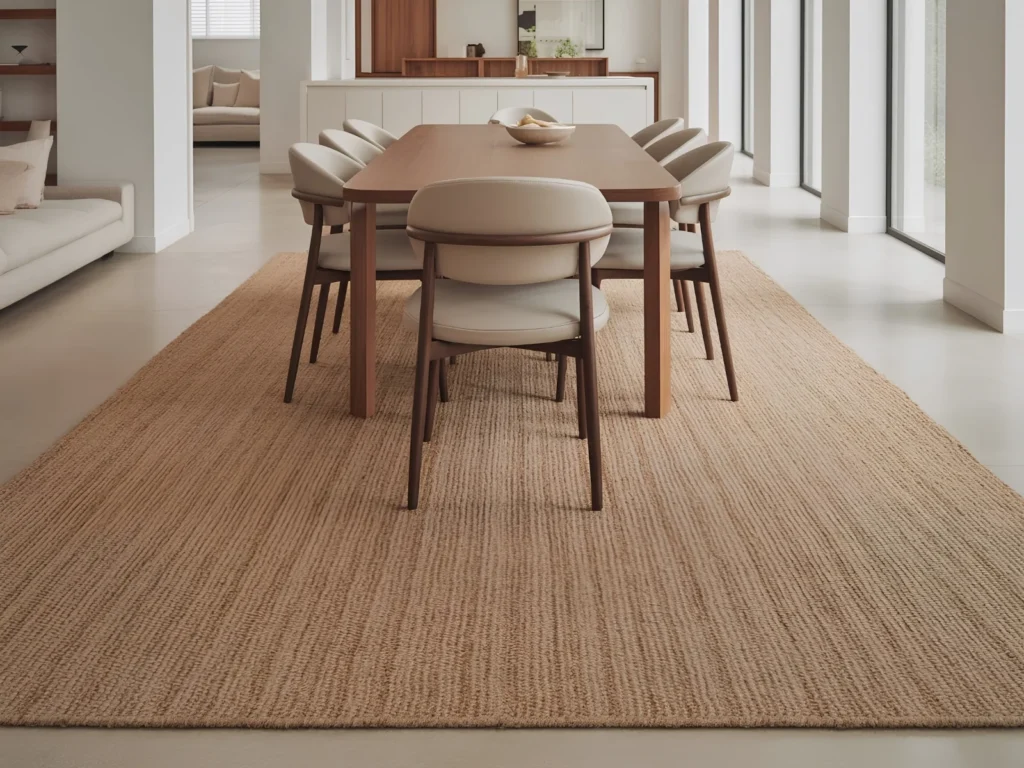
17-Add a sideboard or buffet for storage and styling
A sideboard or buffet pulls double duty. It stores serving platters, linens, and extra dishes, then gives the room a surface for decor that does not need to live on the table. Choosing the right furniture pieces is key for function and polish. Whether you prefer the classic look of a hutch, the low profile of a credenza, or the mobility of a stylish bar cart, these versatile storage solutions keep the space organized while providing a perfect platform for styling.
Keep the styling tight so the piece feels calm, not crowded. One lamp, one tray, and one art piece or mirror are enough to give the surface shape while leaving room for everyday use.
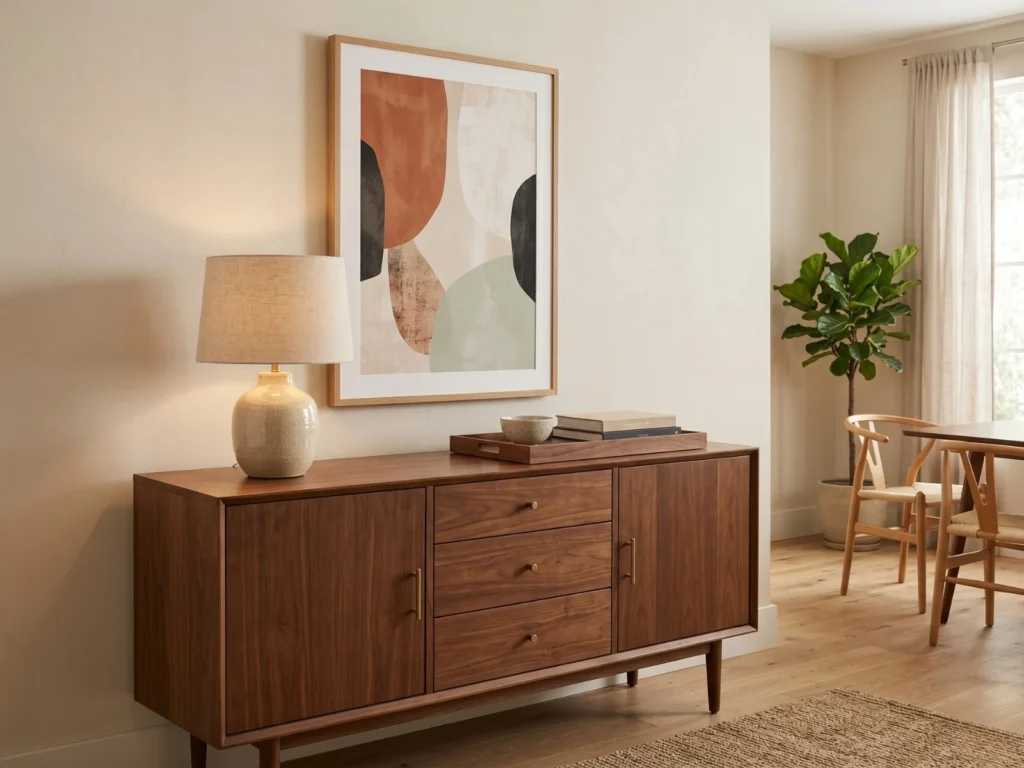
> A buffet looks best when it does less. One strong lamp and one clear focal point usually beat a crowded display.
18-Use slipcovers or cushions to soften the space
Fabric changes the mood of a dining room fast. Slipcovers and seat cushions make hard chairs feel more welcoming, and they help the whole room look less rigid. That matters in homes where the dining area gets used often and needs to feel comfortable as well as presentable.
Choose washable covers or durable materials if the room handles daily meals, kids, or frequent guests. Linen blends, cotton canvas, and wipeable cushion fabrics are all smart options because they hold up without losing the softer look that makes the space feel inviting.
Small Dining Room Ideas That Make Tight Spaces Work Harder
Small dining rooms need furniture that moves well, seating that tucks in cleanly, and layouts that leave room to breathe. The best dining room decor ideas for a small space do less on the floor and more with shape, scale, and placement. A room feels larger when the table fits the traffic pattern instead of fighting it.
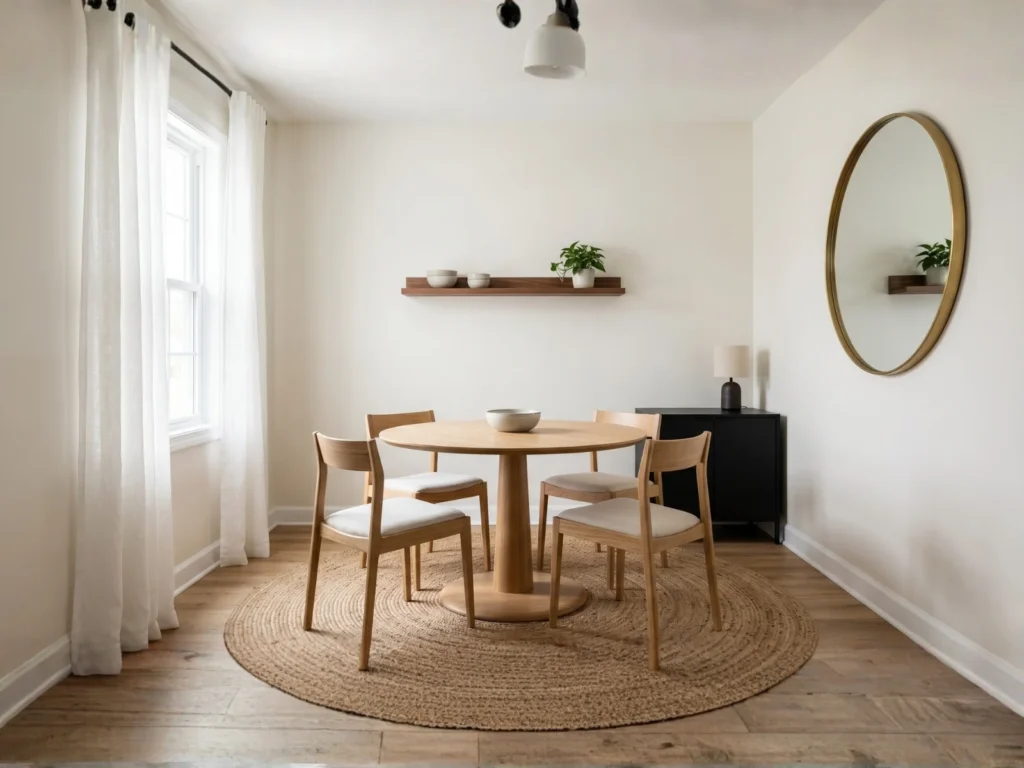
19-Choose a round or oval table to ease tight traffic
Round tables help small rooms feel less boxed in because there are no sharp corners to dodge. People can walk around them more easily, and the layout starts to feel softer right away. A round table may give up a little seating capacity, but it often gives back comfort and better movement.
That trade-off matters in narrow rooms, studio corners, and breakfast areas that need to stay open. Round dining table options show why curved edges work so well when every inch counts.
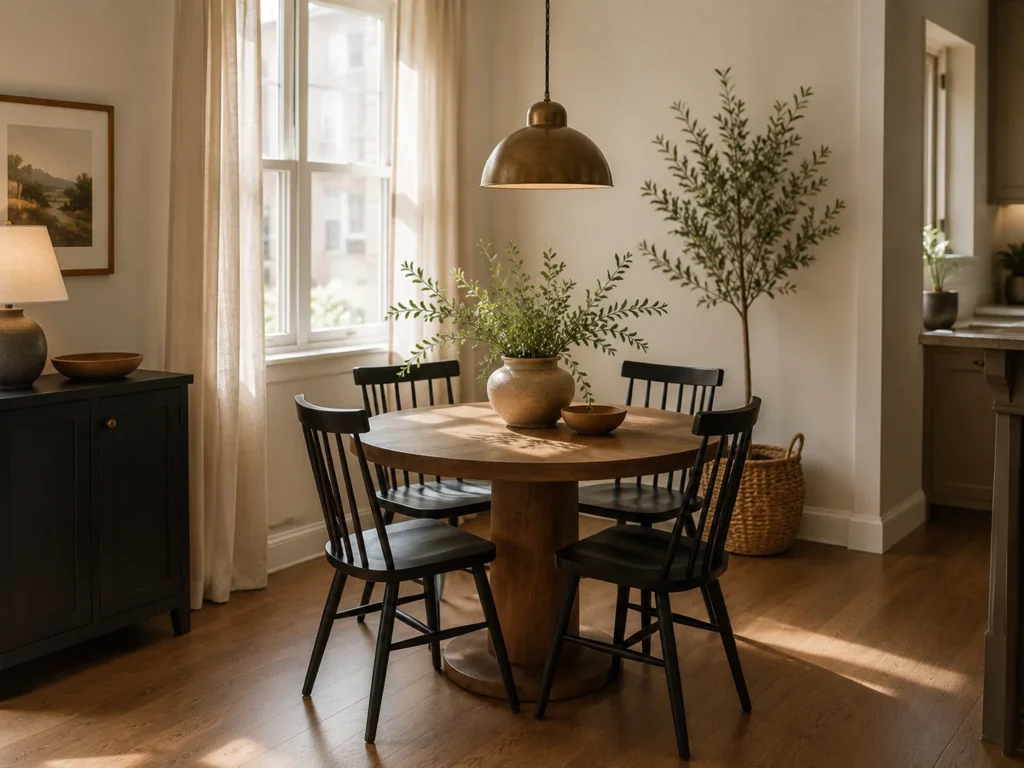
20-Build in banquette or bench seating against a wall
Wall-hugging seating opens up the floor and cuts down on the visual clutter that chairs can create. A banquette, built-in bench, or simple bench along one side of the table frees up walking space and makes a small nook feel more efficient. It also works well in corners that would otherwise go unused.
Cushions and pillows add comfort without adding much bulk, so the seat still feels soft and inviting. This setup also works well in narrow layouts, because fewer chair legs mean easier movement and a cleaner line around the table.
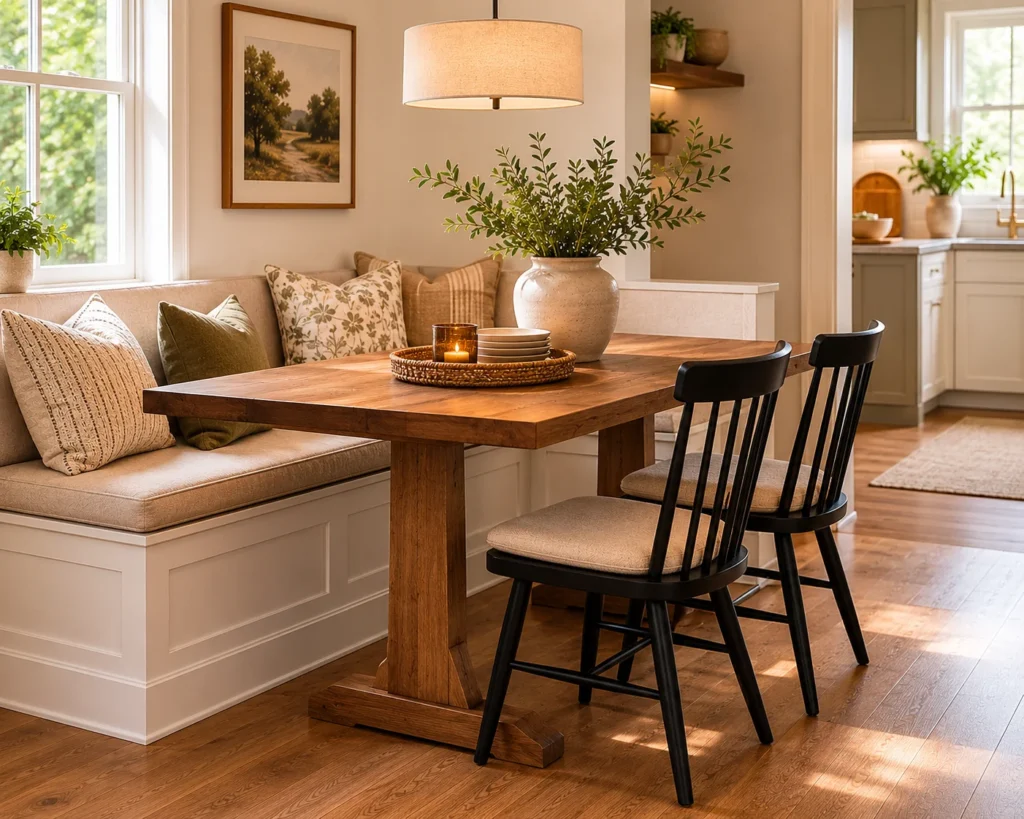
A small dining room usually looks best when the furniture follows the room’s boundaries instead of pushing past them. In other words, the more the pieces can tuck, bend, or adapt, the easier the room feels to live in.
In compact dining areas, shape matters as much as style. The right table and seating plan can make the room feel twice as usable.
For readers comparing styles, this dining room design guide can help narrow the look without adding visual weight.
How to Get a Modern Dining Room Look
A modern dining room usually feels calm, warm, and edited. The look comes from clean lines, a tighter color palette, and furniture that feels current without chasing trends too hard. In 2026, that often means softer shapes, richer woods, and lighting that does more than just brighten the space.
Start with a warm, simple color story
Modern dining room decor works best when the palette stays restrained. By curating cohesive color schemes that feature walnut, oak, beige, charcoal, black accents, or one muted tone like olive or terracotta, the room feels grounded. The space feels more modern when colors repeat across the table, chairs, rug, and wall decor instead of competing for attention.
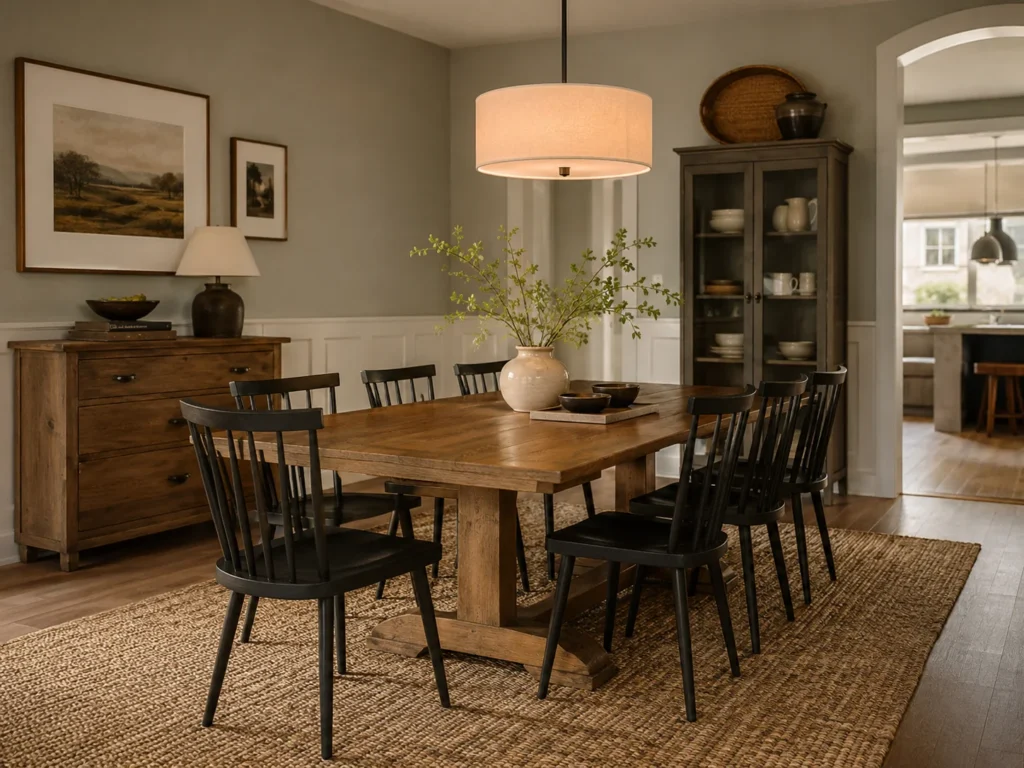
A good rule is to choose two main neutrals and one accent color. That keeps the room balanced and makes every piece look intentional. For more ways to keep the area refined on a budget, budget home decor ideas can help you make the look feel current without replacing everything.
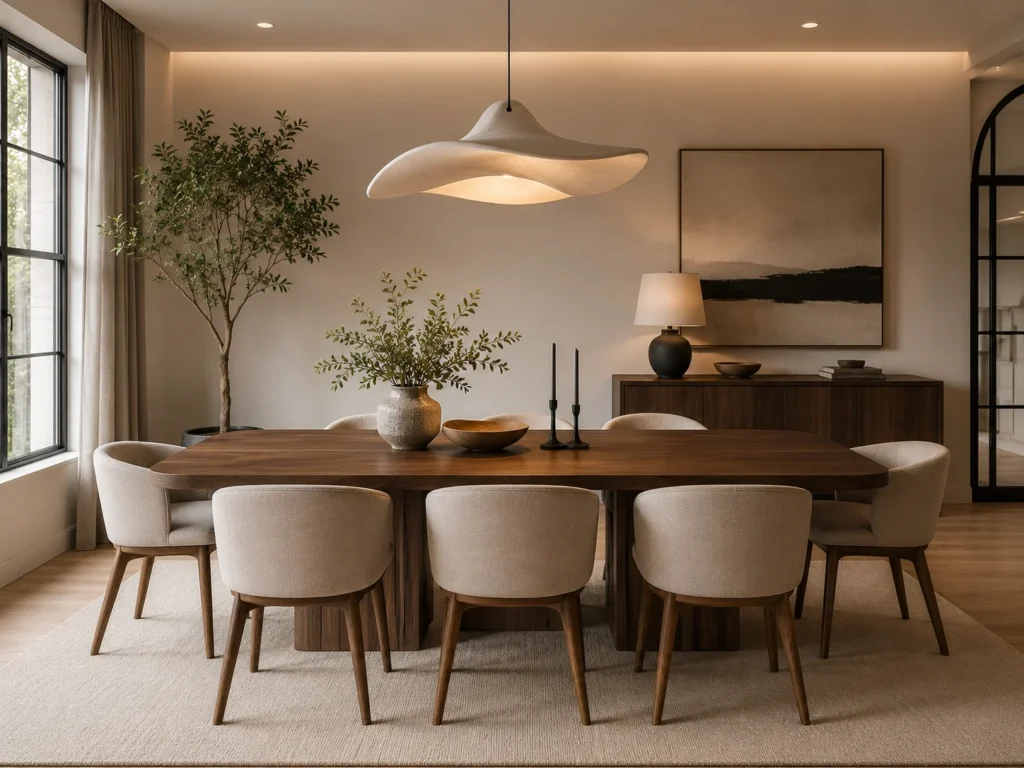
> Modern dining rooms feel strongest when the palette does less, not more.
Choose furniture with clean lines and soft edges
Straight lines give the room structure, but soft edges keep it from feeling stiff. A rectangular dining table with rounded corners, a curved-back chair, or a bench with a smooth profile can make the room feel fresh without looking cold. The best modern dining room ideas often mix these two qualities.
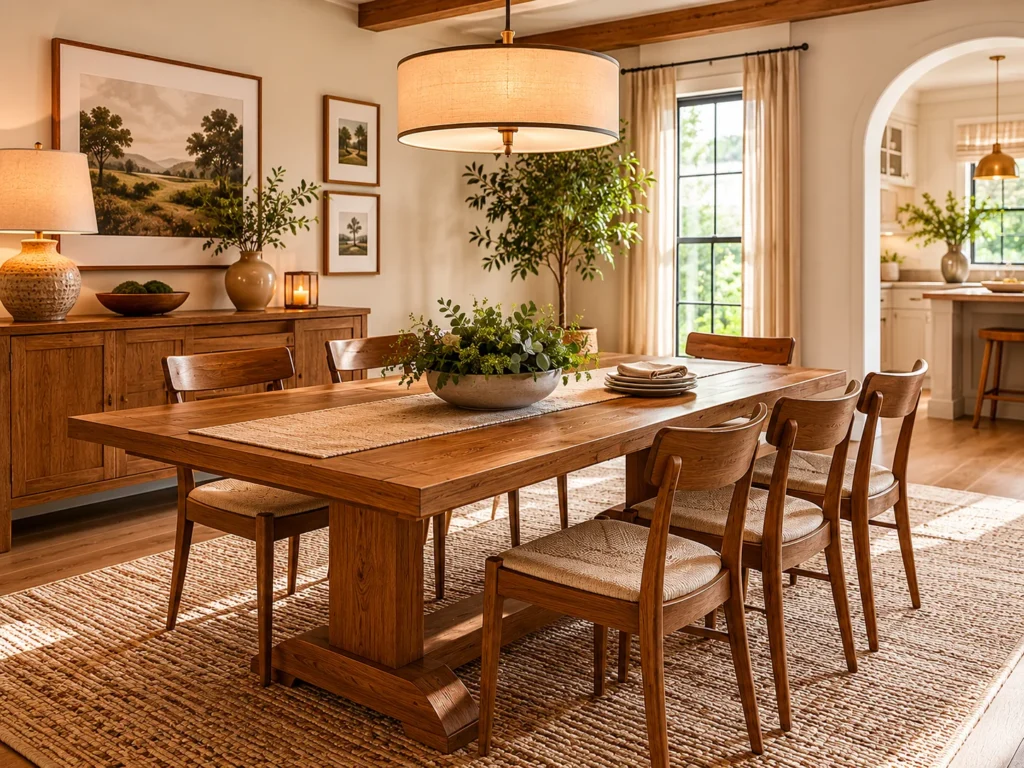
The trade-off is simple. Hard-edged furniture feels sharper, while curved shapes feel more relaxed. A room with both usually lands in the right place, especially in homes that want modern dining room decor with a more lived-in feel.
Use one strong light fixture as the focal point
Modern design depends on shape, and lighting does a lot of that work. A sculptural pendant, a linear chandelier, or an oversized globe fixture can anchor the room and make the layout feel planned. The fixture should fit the table scale, not float awkwardly above it.
For most setups, the fixture width should land around half to two-thirds of the table width. That proportion keeps the room looking balanced. If the dining area needs more visual direction, dining room ideas can be useful for comparing fixture shapes, table sizes, and seating styles in real rooms.
Keep the table simple, then add texture
A modern table does not need much styling. A low bowl, a ceramic vase, or a single branch arrangement is enough when the furniture already has good shape. Texture does the work here, so linen, stoneware, wood, and matte finishes matter more than lots of decor.
This is where modern dining room wall decor can stay quiet and still feel finished. A framed print, a mirror, or one textured panel can support the room without pulling focus from the furniture. For readers comparing broader styles, home decor styles is a useful starting point when narrowing the look.
Bring in comfort so the room feels current
Modern dining rooms now lean warmer than the old all-white version. Upholstered chairs, slipcovers, banquettes, and soft seating give the space a more relaxed shape. That shift matters because a room that looks good but feels hard rarely gets used often.
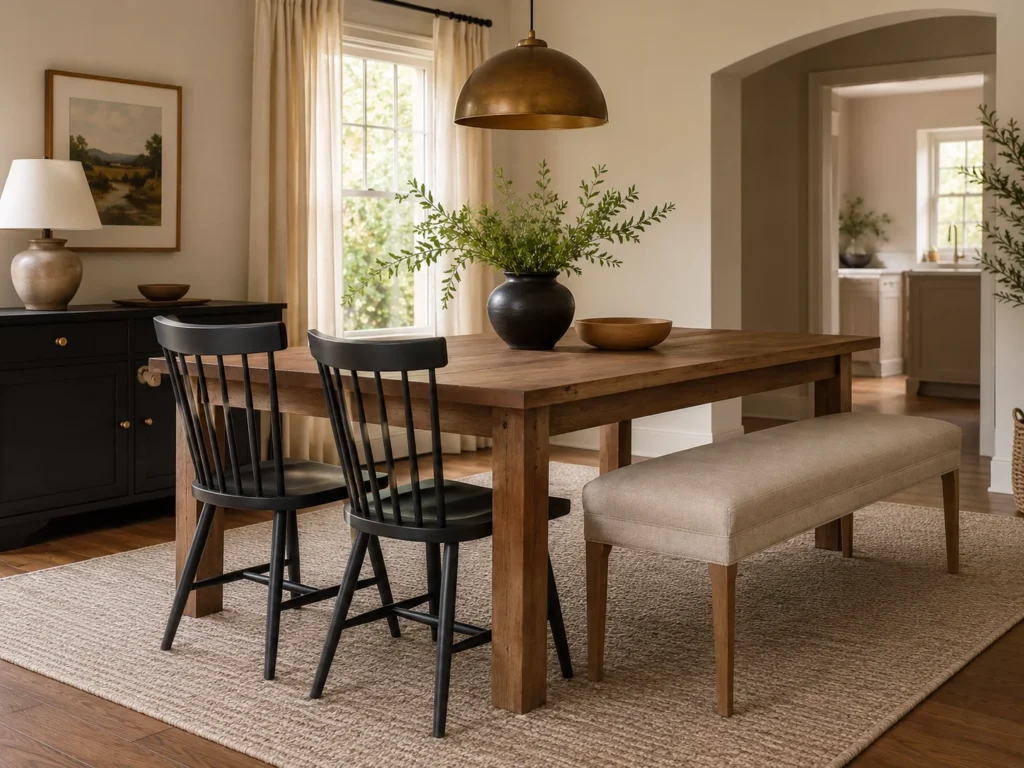
This style also works well in smaller homes. Incorporating custom furniture, such as benches or tables built to specific dimensions, ensures that every piece earns its place. Those choices keep the room modern without making it feel severe, which is why they show up often in small dining room ideas.
Finish with fewer, better pieces
The modern look holds together when the room stays edited. One sideboard, one large artwork, and one clear centerpiece usually say more than a crowded mix of accents. That clean restraint is what keeps the space from drifting into generic decor.
In practice, that means choosing pieces with purpose, then letting them breathe. A sideboard with closed storage, a dining chair in a durable fabric, or a rug with a simple weave can make the room feel complete on its own. For a closer look at modern dining room ideas with stronger lines and warmer finishes, The Spruce’s modern dining room ideas offers a helpful visual reference.
Modern dining rooms look best when they feel edited, not empty. The right balance of warm wood, simple shapes, and soft texture turns even a basic dining area into a space that feels ready for everyday meals and long conversations alike.
Budget-Friendly Dining Room Decor
Budget-friendly dining room decor works best when the room gets a few smart updates, not a full replacement plan. A chair set can look fresher, a side table can feel custom, and a plain wall can gain personality with almost no spend. The goal is a room that feels edited, useful, and finished without looking overdone.
21-Thrift, upcycle, and repaint existing pieces
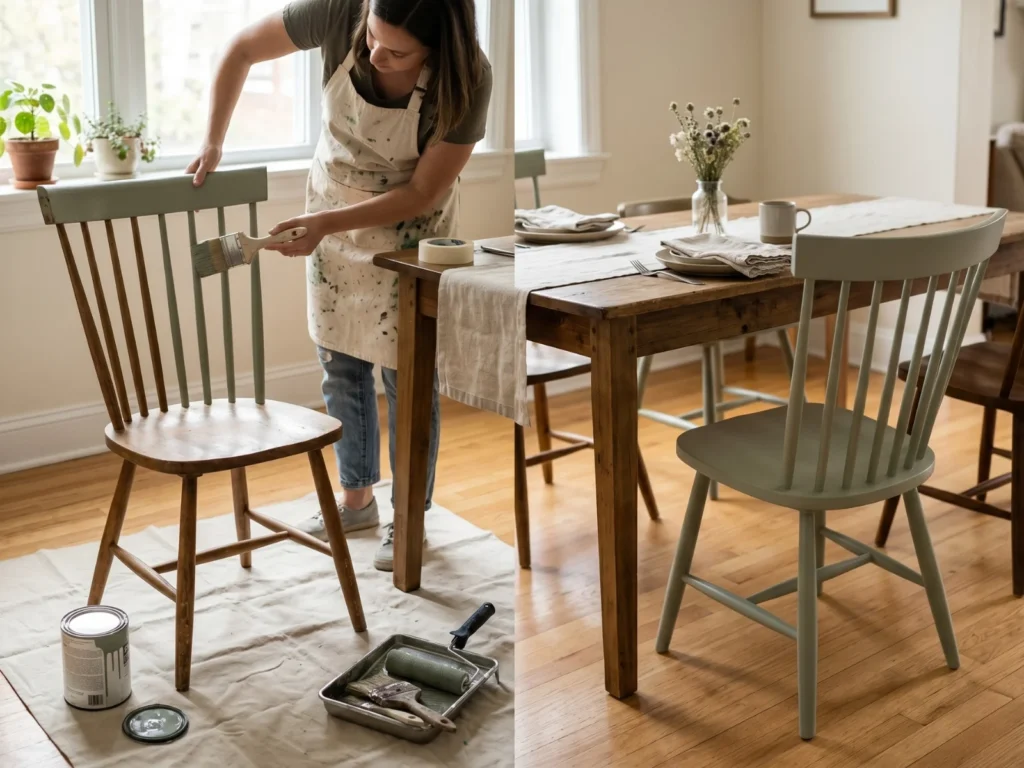
A tired chair set, side table, or mirror can look almost new with paint, stain, or new hardware. That is why thrifted pieces work so well in dining room decor ideas, they add character without the cost of buying everything new. Many people love using upcycled finds to achieve a cozy farmhouse style, as a dark stain can make pine look richer while fresh paint can turn an old sideboard into a clean anchor for the whole room.
Prep matters more than the price of the piece. Clean first, lightly sand glossy spots, then use primer before painting in thin coats so the finish looks smooth and lasts longer. New knobs or pulls on a buffet can make the biggest difference for very little money, especially when the rest of the room already has a calm color palette.
For painted dining chairs, work on the legs and hard edges first, then flip them and finish the seat and back. For a mirror, repaint the frame in matte black, warm white, or wood tone so it matches the table and chair finish. These thrift store dining room finds show how much mileage one secondhand piece can get.
A few low-cost updates usually do the trick:
- Dining chairs: repaint the set in one color so mismatched pieces look intentional.
- Side tables or buffets: swap old hardware for simple brass, black, or wood pulls.
- Mirrors: stain or paint the frame so it fits the room’s finish story.
Thin coats, clean edges, and patience matter more than an expensive product list.
22-DIY centerpieces and art
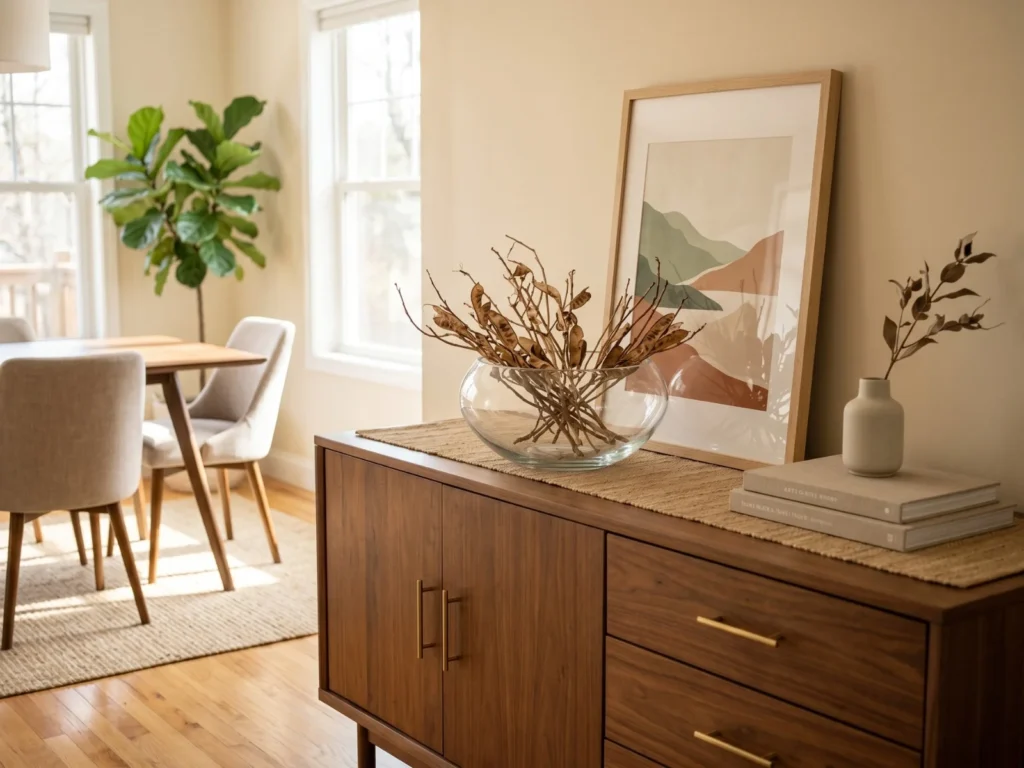
Simple DIY pieces can make a dining room feel custom without much effort. A glass bowl with fruit, a bundle of branches, or a hand-painted canvas adds personality because it looks made for the room, not pulled from a random shelf. When the colors and materials echo the chairs, table, or rug, the whole space feels more cohesive. Decorative vases also serve as excellent low-cost centerpieces that can be updated with seasonal florals to keep the look fresh.
Framed prints also work well when the art is simple and the frame matches the room’s finish. A black frame suits modern dining room decor, while a natural wood frame feels softer in warmer spaces. Even a painted canvas can look polished if it repeats one color already in the room, such as olive, tan, clay, or charcoal.
The most successful homemade pieces stay quiet and balanced. A low bowl works better than a tall arrangement on a small table, and a wide canvas usually feels calmer than several tiny frames scattered across the wall. For more quick styling ideas that keep the room affordable, budget home decor ideas can help connect the tabletop, walls, and storage pieces without overspending.
A few easy options fit almost any dining room:
- Bowls and vases: fill a simple ceramic or glass bowl with branches, or place seasonal greens in decorative vases.
- Framed prints: choose one or two oversized prints instead of many small ones.
- Painted canvases: use one repeated tone so the art feels tied to the room’s palette.
The best budget dining room decor often looks the most edited, because it relies on restraint. When the materials repeat and the scale stays right, the room feels considered long before anyone notices what it cost.
If you are wondering what is the best way to clean dining room decor items, start by using a microfiber cloth to gently dust glass vases and delicate frames. For upholstered dining chairs, a quick vacuum with an upholstery attachment or a light wipe with a damp cloth and mild soap will help maintain the fabric and keep your budget pieces looking new for years.
Frequently Asked Questions
The most common dining room decor questions come down to scale, comfort, and balance. A room feels finished when the table, lighting, and wall art work together, so these dining room decor ideas focus on the small decisions that change the whole space.
Should a dining room have a rug?
A dining room should have a rug if the goal is a more finished look. Rugs help define the eating area, especially in open-plan homes, and they soften the room visually. The best rule is simple: the rug should extend 24 to 36 inches beyond the table on all sides, so chairs stay on it when pulled out. If the chairs catch the edge, the rug is too small for the space.
How high should a dining room light hang?
A lighting fixture should usually hang 30 to 36 inches above the table. That height keeps the piece low enough to anchor the room, but high enough for clear sight lines across the table. Scale matters just as much as height. A chandelier or pendant should feel proportional to the table, and a fixture that covers about half to two-thirds of the table width usually looks best.
What is the easiest way to make a small dining room look better?
A small space looks better when the furniture feels light and the layout stays open. A round or oval table usually works well because it softens corners and makes movement easier. Keep the decor simple, then let one or two pieces do the work. A mirror, a slim sideboard, or a low centerpiece can add style without crowding the room.
How do I make dining room decor feel more put together?
Dining room decor feels more put together when color, material, and shape repeat in small ways. A wood table, a frame in the same finish, and a centerpiece that picks up one color from the chairs can make the room feel planned instead of pieced together. The easiest fix is to edit. Remove one or two items, keep the palette tight, and let the main pieces breathe.
How do you mix modern and traditional dining room decor?
Mixing styles is all about balance. Start with a traditional wooden table and pair it with modern chairs, or hang a sleek, contemporary light over an antique sideboard. By keeping the color palette consistent, you can blend different eras and textures without the room feeling cluttered.
What are the safest dining room styling rules to follow?
A few simple rules keep most dining rooms looking balanced:
- Keep centerpiece height low so people can see across the table.
- Match the light to the table shape so the room feels intentional.
- Leave about 36 inches between the table and nearby walls or furniture for easier movement.
- Repeat one finish in the room, such as black, brass, or natural wood, to tie the pieces together.
A strong dining room usually feels calm because nothing is fighting for attention. For more broad style direction, home decor styles can help narrow the look before any major shopping begins.
Conclusion
The strongest dining room decor ideas all follow the same logic: anchor the dining table, layer in texture, and repeat a few finishes so the room feels connected. When the centerpiece stays low, the lighting feels centered, and the walls echo the furniture below, the space reads as planned rather than pieced together.
That balance matters for everyday meals and entertaining alike. It is what gives your dining room wall decor, lighting, and furniture a cohesive visual language.
For homes that need to feel more finished without a full remodel, that quiet consistency does most of the work. As you explore these concepts, remember that the best design reflects your personality; do not be afraid to add unique touches that make the space feel truly like home.