21 Bedroom Decor Ideas That Make Any Bedroom Feel Finished
Bedroom decor ideas can help your room feel finished without a big budget or design experience. Start with four quick changes: anchor the wall behind your bed, layer overhead, bedside, and accent lighting, choose a rug that fits the bed, and clear each nightstand down to three useful or decorative things. These small edits give the room structure without requiring a matching furniture set or a major project.
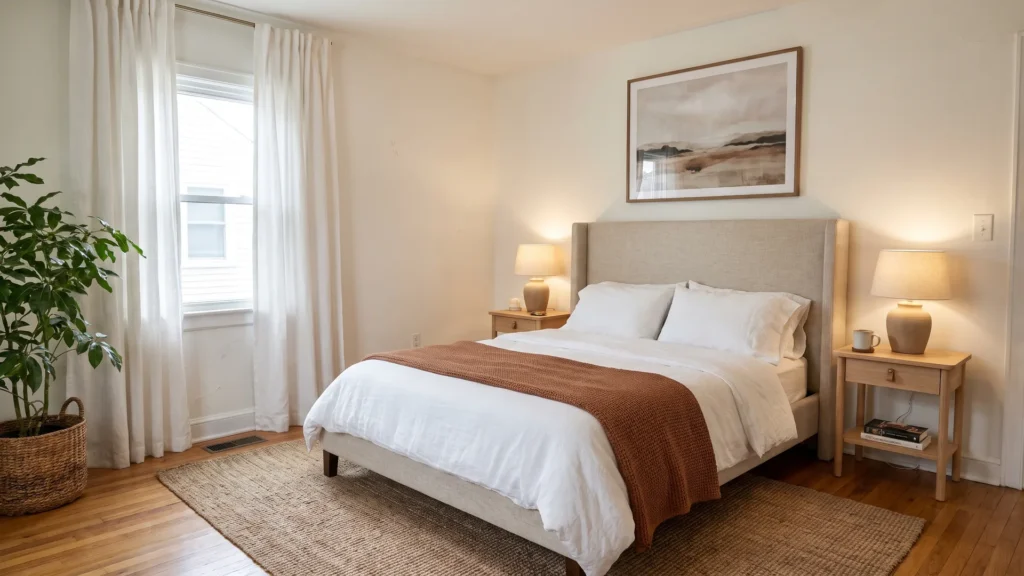
You can also borrow ideas for the rest of your home from these home decor ideas for every room. Start with the bed, then make a few practical changes that suit your space and budget.
Key Takeaways
- Start with low-cost bedroom decor ideas: rearrange what you own, then add art above the bed at about two-thirds the headboard’s width, with its lower edge 6–10 inches above.
- Choose a rug that extends 18–24 inches beyond each side of the bed; an 8-by-10-foot rug often suits a queen, while a king usually needs 9 by 12 feet.
- Layer overhead, bedside, and accent lighting. Use warm bedside bulbs around 2700K, and follow the NHLBI’s advice for a dark bedroom.
- Keep nightstands useful and uncluttered, then add a soft textile you already own for a quick refresh. Find more cozy bedroom decorating ideas.
- Make one or two changes at a time, prioritizing the bed, lighting, and floor so the room feels finished without replacing everything.
How to Decorate a Bedroom in 5 Steps
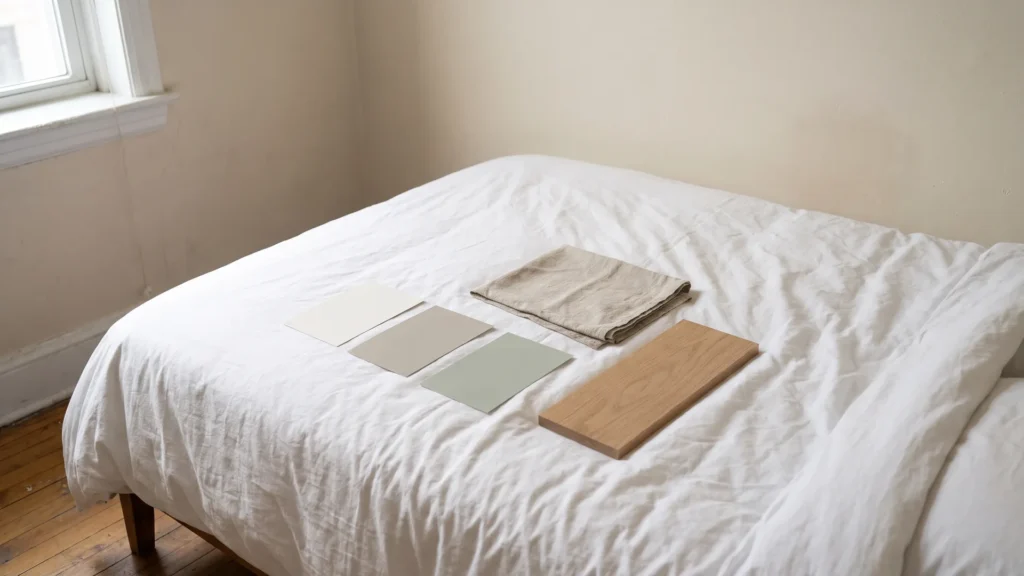
A finished bedroom feels cohesive because its colors, focal point, lighting, and surfaces work together. You can make progress without buying a matching furniture set; start by rearranging what you own, then add only what the room needs. For more ideas, browse our room-by-room decorating guide.
- Choose a three-color palette before shopping. Look at your bedding, curtains, and furniture, then choose one main color, one supporting shade, and one accent. Reuse colors you already own, such as a pillow cover or throw, to connect the room without spending money.
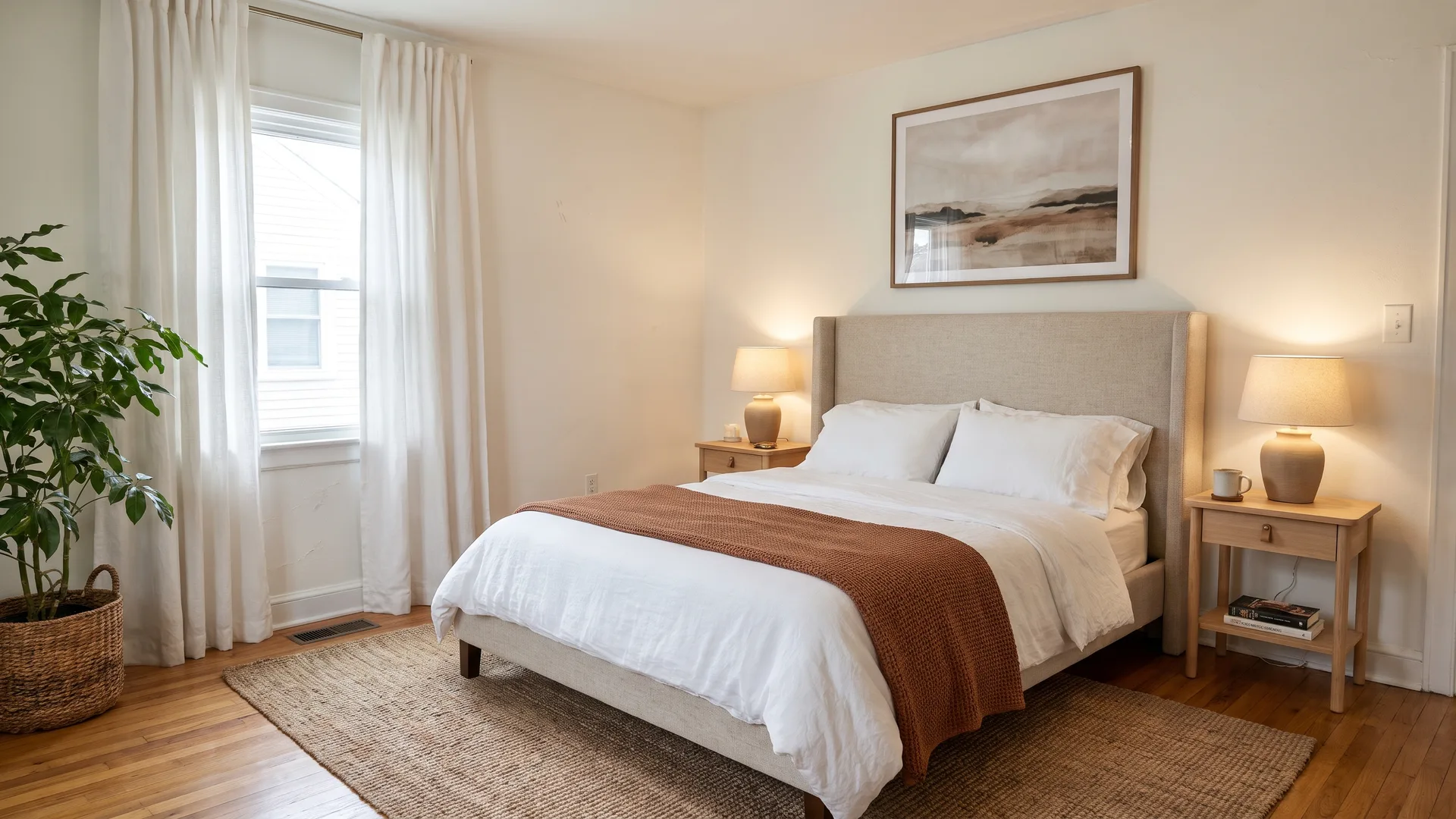
- Anchor the bed wall. First, center the bed on its wall if the layout allows. A simple headboard gives it definition; artwork above should measure about two-thirds the width of the headboard, with its bottom edge 6–10 inches above. Repurpose a framed print or fabric panel before buying new art.
- Layer your lighting. Keep the ceiling fixture for general light, then add a bedside lamp or wall light for reading. A 2700K bulb gives off a warm white glow; use a bulb color temperature guide if you’re comparing options.
- Ground the bed with a rug. Before shopping, check whether an existing rug can sit under the lower two-thirds of the bed. Aim for 18–24 inches of rug beyond each side; an 8-by-10-foot rug often fits a queen, while a king usually needs 9 by 12 feet.
- Edit what you see from bed. Clear nightstands and dressers, keeping only daily essentials and a few personal pieces. Then put useful items in drawers or baskets, so visible surfaces feel considered rather than crowded.
Bedroom Decor Ideas: Start With the Bed
Your bed is the room’s visual anchor, so a few thoughtful changes here can make the whole space feel more finished. Start with what you own, then add one practical detail at a time.
1. Give the Bed a Headboard (or Fake One)
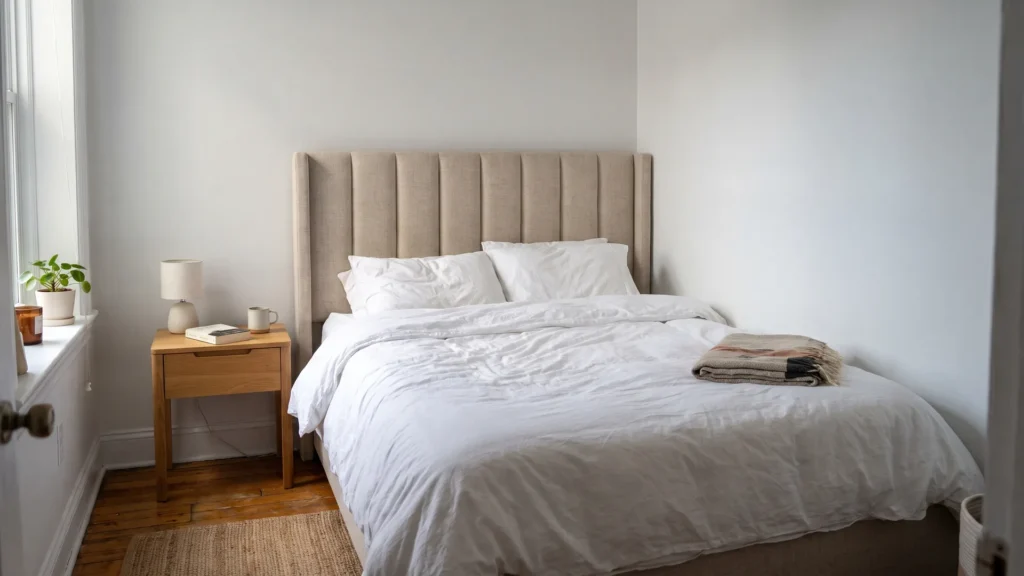
A headboard frames your bed and gives the wall behind it a clear focal point. Before buying one, paint a soft arch or a 4-foot-wide color block behind the bed; a quart of paint often costs $20–$50. For a softer finish, stretch cotton or linen over a lightweight 30-by-48-inch panel, which may cost around $40–$120 in materials. A simple upholstered headboard often ranges from $150–$600. Find more DIY home decor ideas or browse Architectural Digest’s DIY headboard ideas.
Renter-safe option: Hang a lightweight fabric panel with removable hooks, after checking your lease and testing the wall finish.
2. Layer Bedding in Three Weights
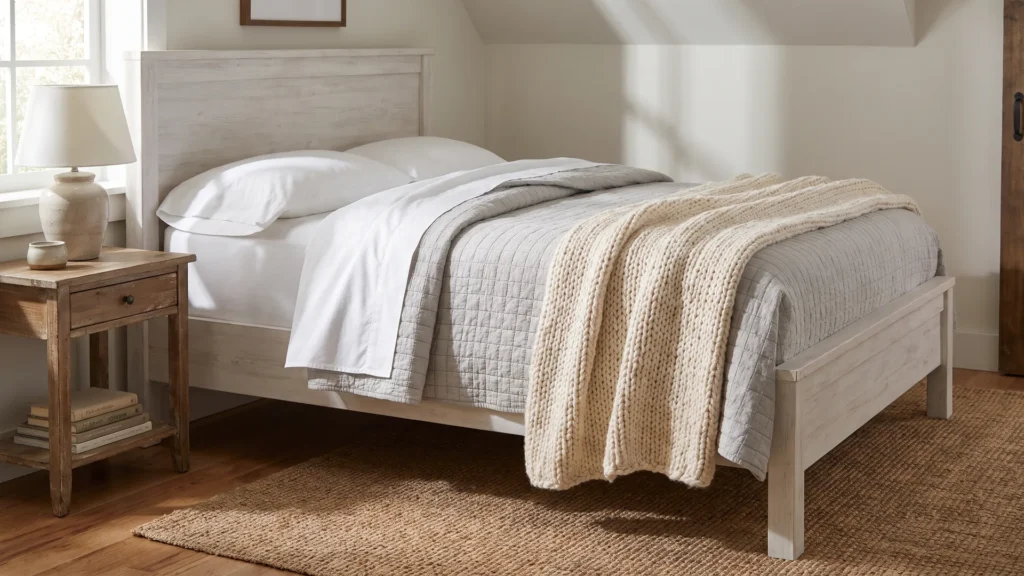
Three bedding layers give your bed a finished look without requiring a matching set. Start affordably with the sheets you own, then add a cotton quilt or coverlet for about $30–$90 and a fleece or cotton throw for roughly $15–$50. If you prefer a comforter, expect around $50–$150 for a basic option. Choose one shared color or texture to connect the layers, and see more cozy bedroom decorating ideas.
Cheaper option: Fold a blanket you already own across the foot of the bed.
3. Use a Simple Pillow Formula
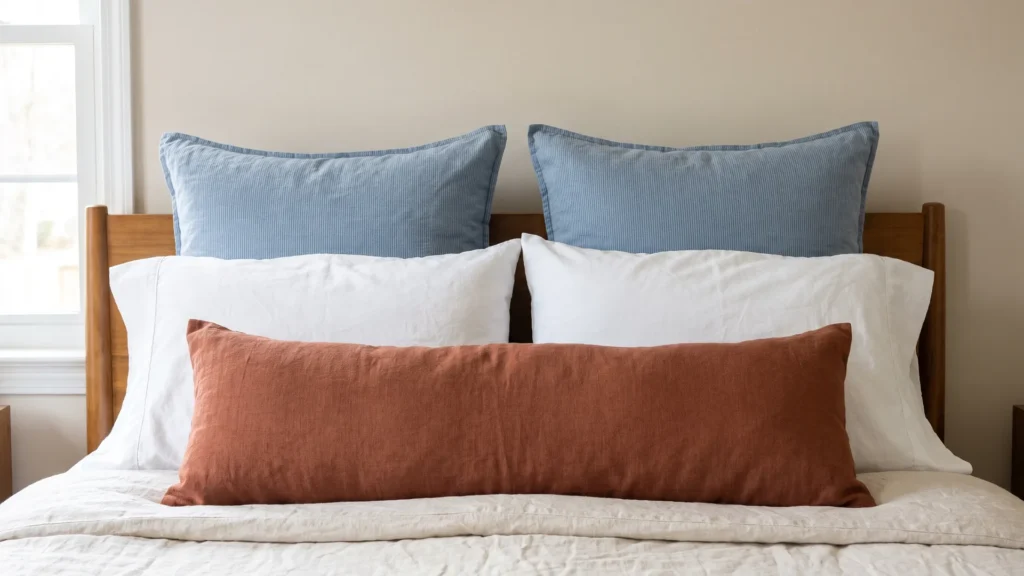
A few well-placed pillows make your bed look intentional, and fewer are easier to manage. For a queen, place two sleeping pillows against the headboard, then add two standard shams; a king can use two king pillows and two king shams. Finish with one 18- to 20-inch accent pillow, or skip it for a simpler look. Keep pillows evenly spaced and choose covers you can reuse with your existing bedding. Euro shams measure about 26 by 26 inches, so two of them span most of a queen headboard on their own.
Cheaper option: Use your sleeping pillows in matching pillowcases instead of buying decorative inserts.
4. Add a Bench or Trunk at the Foot of the Bed
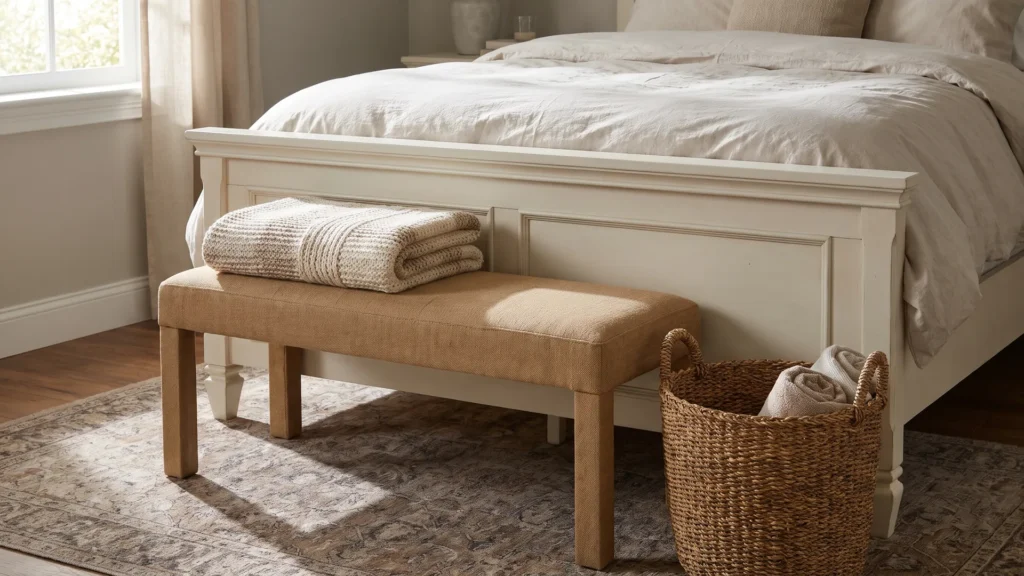
A bench or trunk creates a visual endpoint for your bed and gives you a spot for tomorrow’s clothes or spare blankets. Look for a piece about two-thirds the bed’s width; a 36- to 48-inch bench often suits a queen. Basic benches may cost $80–$250, while storage trunks commonly range from $100–$350.
Renter-safe option: Fold a blanket into a neat stack at the foot of the bed, or reposition a stool you already own.
Bedroom Wall Decor Ideas That Fill Empty Space
Blank walls can make a bedroom feel unfinished, but you can add color and a focal point without major construction. Start with affordable art or removable details, then choose one wall treatment that suits your budget. Most of these wall-focused bedroom decor ideas work in rentals too.
5. Hang Art That Fits the Bed
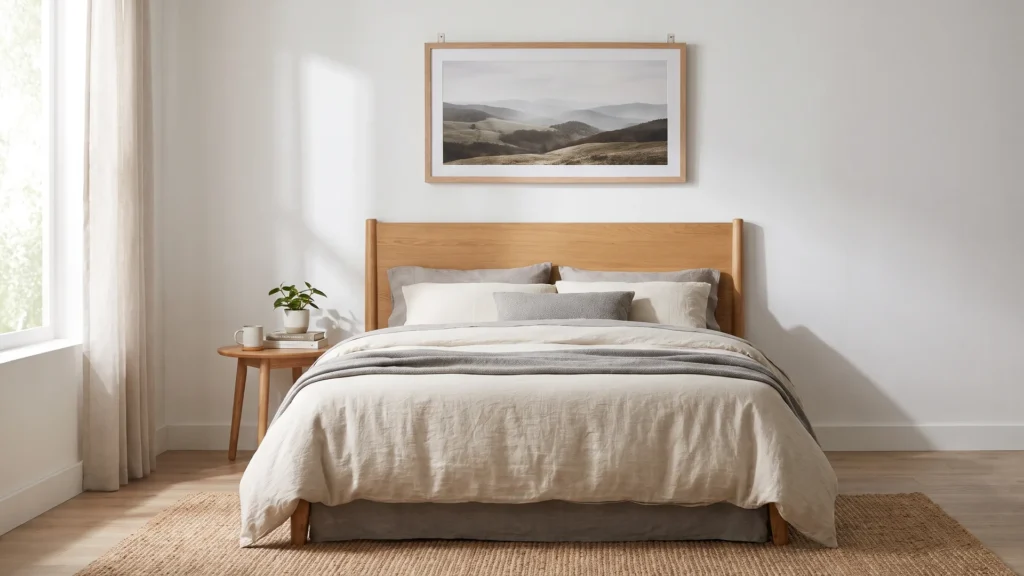
Properly scaled art makes the bed wall feel balanced. Choose a piece about two-thirds the width of your headboard, and hang it with the bottom edge 6–10 inches above the headboard. On a queen headboard about 60 inches wide, that means a piece roughly 40 inches across. Printable art can cost about $5–$20, while a thrifted frame may run $5–$25.
Cheaper option: Print a favorite image at home and use a frame you already own.
6. Build a Gallery Wall Over the Bed or a Chair
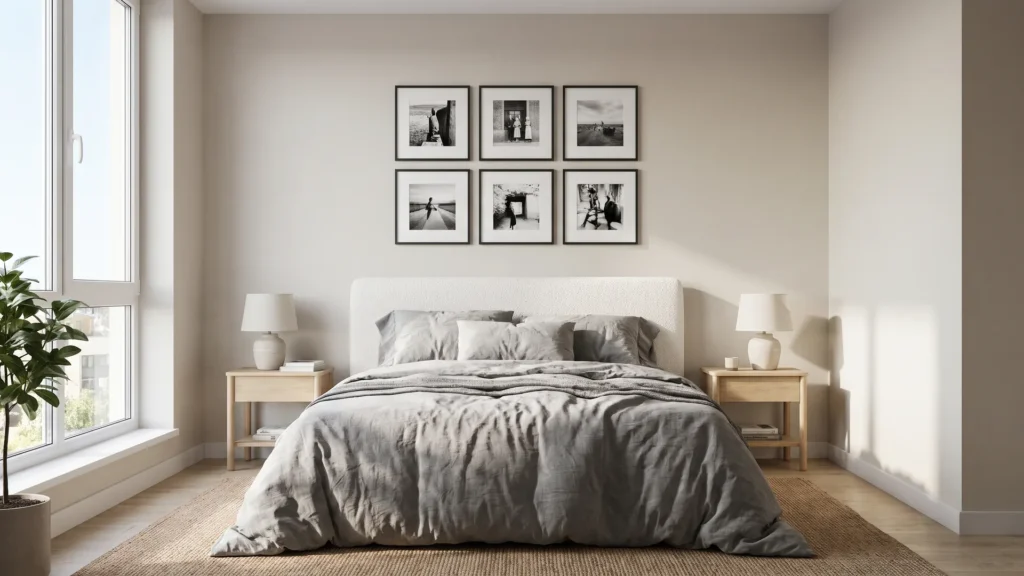
A gallery wall brings small pieces together into one intentional display. Mix frame sizes with personal photos or prints, leaving about 2–3 inches between frames. Trace each frame onto paper, tape the templates to the wall, then adjust the layout before hanging. For more wall decor ideas, explore arrangements that suit your room.
Renter-safe option: Use removable picture-hanging strips rated for each frame’s weight.
7. Paint or Paper One Accent Wall
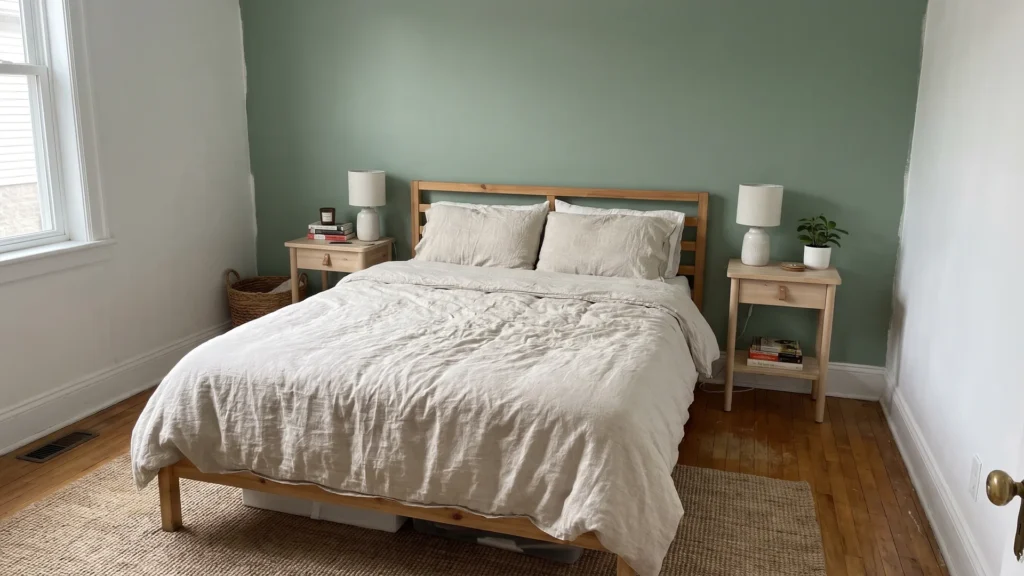
One accent wall adds color without overwhelming the room, and the wall behind your bed is a natural choice. Test paint samples on the wall and view them in morning and evening light. A small paint project may cost about $25–$60; removable wallpaper often costs $30–$100 per roll. For a deeper palette, see these dark feminine bedroom ideas.
Renter-safe option: Try removable wallpaper, following the manufacturer’s surface and removal guidance.
8. Add Molding or a Painted Arch
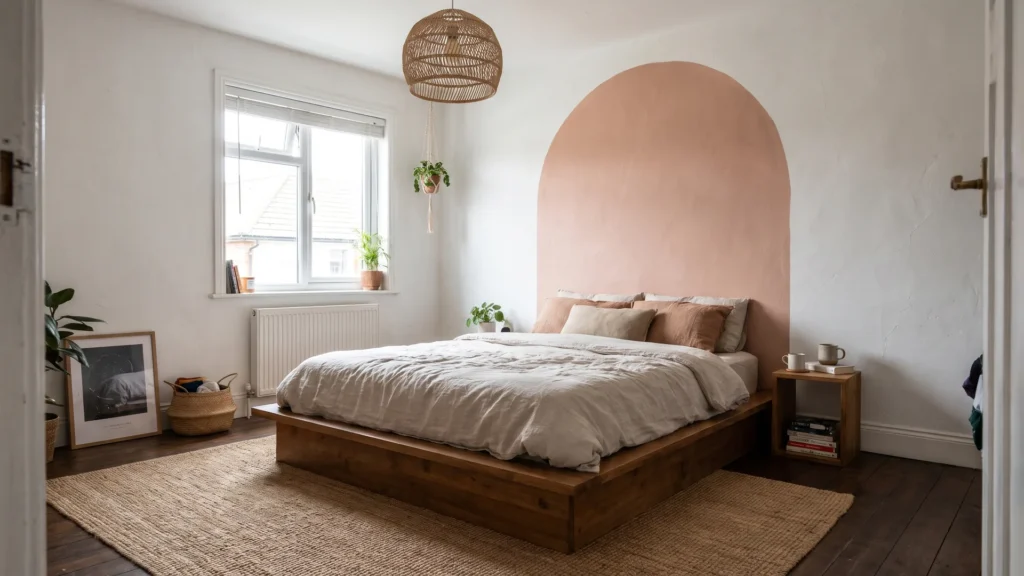
Simple trim or a painted arch can create a focal point without taking up floor space. For an easy DIY, mark an arch about 36–48 inches wide behind the bed, then paint it with a small foam roller. A pencil tied to a length of string, pinned at the center point, draws an even curve before you tape the edge. A quart of paint often costs about $20–$50; lightweight trim adds roughly $20–$60 in materials.
Renter-safe option: Paint an arch only if your lease allows repainting, or use removable wall decals.
9. Lean a Large Mirror
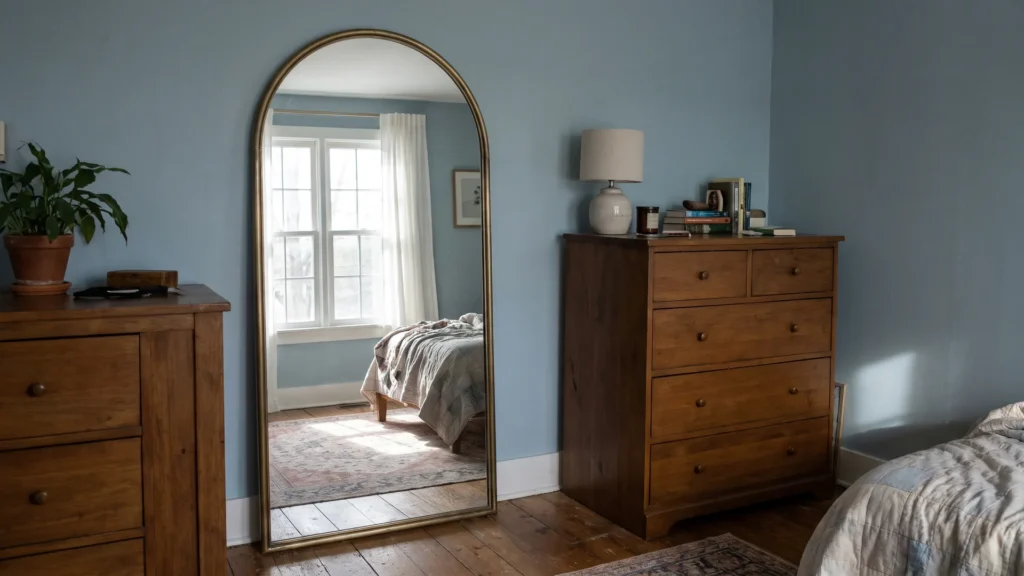
A mirror reflects light and fills a bare wall with a useful accent. A 24-by-60-inch or 30-by-72-inch mirror often suits a bedroom; expect about $80–$250, while a smaller thrifted mirror may cost $20–$60. Place it where it won’t block a walkway, and secure the top to prevent tipping. Consumer Reports’ furniture anchoring guidance explains the basic safety measure.
Renter-safe option: Use a smaller mirror with a secure wall-mounted hook.
Bedroom Lighting Ideas for a Softer, More Finished Look
Layered lighting makes your bedroom useful for reading and calmer before bed. Start by rearranging lamps you already own, then add light only where you need it. Of all the bedroom decor ideas here, lighting changes how the room feels for the least money. The NHLBI recommends a quiet, cool, dark bedroom and advises avoiding bright artificial light before bed.
10. Layer Three Kinds of Light
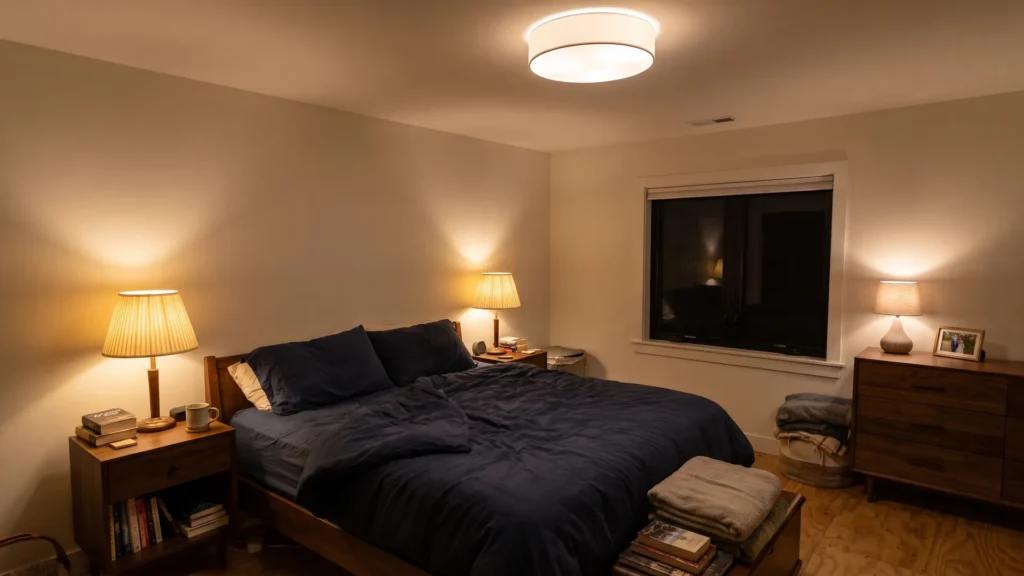
Before buying anything, move an existing lamp beside the bed and place another on a dresser or shelf. That simple change gives you more than one pool of light and helps the room feel less dependent on a single bright ceiling fixture.
Use a ceiling fixture for general light, a bedside reading lamp for books, and a small accent light to soften a dark corner. A table lamp or plug-in light on a dresser can provide that final layer. For more small bedroom ideas, consider compact lamps that leave your nightstand clear.
Cheaper option: Reposition the lamps you already own before shopping.
11. Switch to Warm 2700K Bulbs and Dimmers
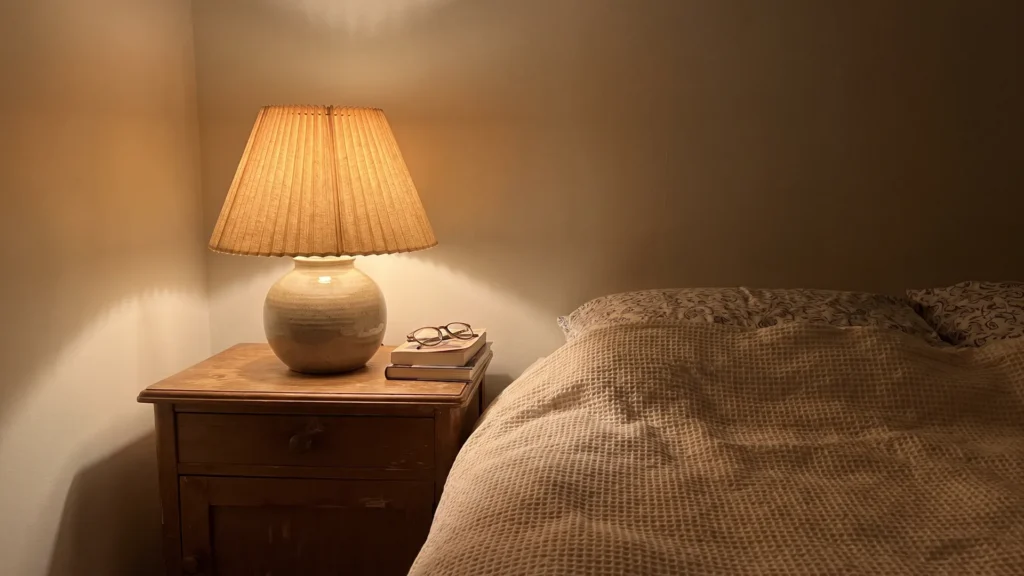
A 2700K bulb gives your bedside lamp a warm glow that feels softer in the evening. Keep a brighter or daylight bulb where you need clearer task lighting, such as near a dresser or mirror. Check the fixture’s maximum wattage and bulb base before buying; dimmers also need to match the bulb type. LED bulbs often cost about $3–$12 each, while plug-in dimmers range from roughly $10–$25.
Renter-safe option: Use a compatible plug-in dimmer with a table lamp.
12. Mount Plug-In Wall Sconces
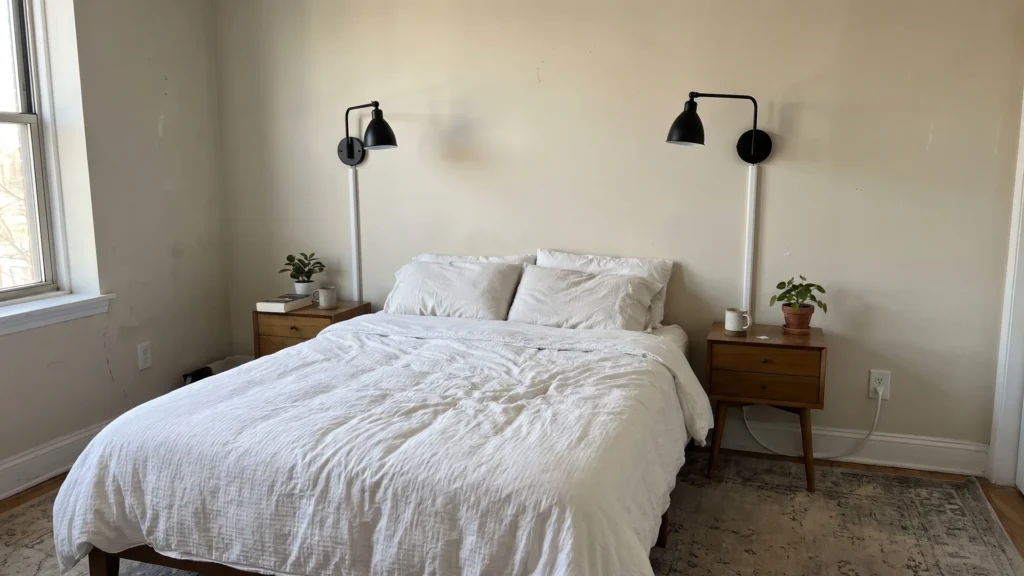
Plug-in sconces free up nightstand space while giving the bed a more finished look. Mount each light where you can reach its switch from bed, and angle a swing-arm shade toward your book without pointing it across your partner’s pillow. Plug-in pairs commonly cost about $40–$150; a cord cover, often $10–$25, can keep the cable neat along the wall. Follow the fixture’s installation instructions and use hardware suited to your wall.
Renter-safe option: Choose removable cord covers and follow their weight and surface instructions.
Nightstands and Dresser Tops That Look Intentional
A few edited surfaces can make your bedroom feel finished without adding more furniture. Start by clearing what you own, then keep the pieces you use within easy reach and give each arrangement a little breathing room. These bedroom decor ideas cost little or nothing.
13. Style the Nightstand With Three Things
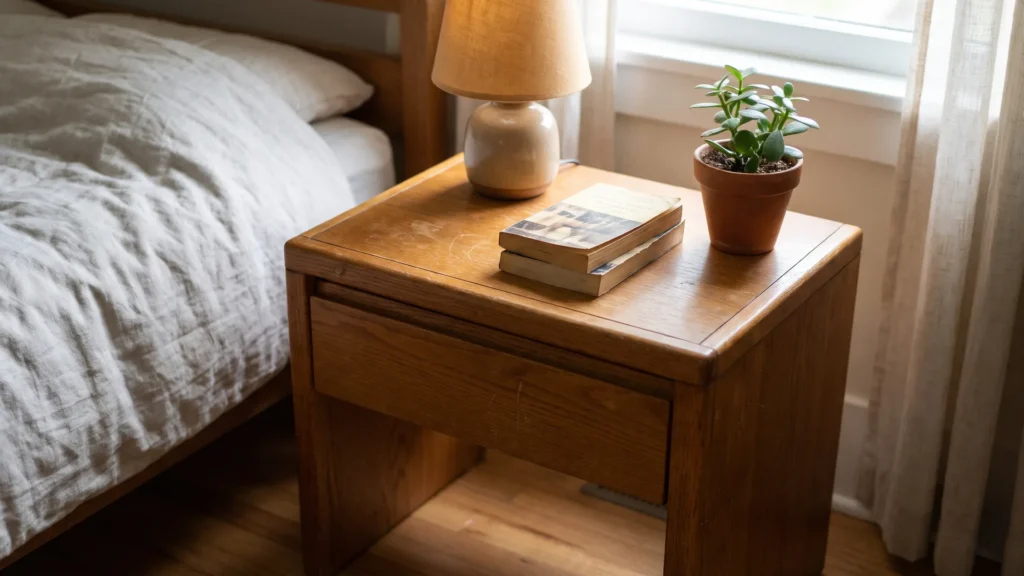
Keep your nightstand useful with a lamp, one daily essential, and one small decorative object. For example, pair a table lamp with your current book and a ceramic dish for rings. First, clear everything else and return only the items you reach for at bedtime or in the morning.
Choose a nightstand within a few inches of mattress height, so you can reach it comfortably. Set the lamp shade’s bottom near eye level when you sit up, about 24 to 28 inches above the mattress. If the surface still feels bare, a small secondhand dish or bud vase can be an affordable finishing touch.
Cheaper option: Move a lamp and a small object from another room, then put stray items in a drawer.
14. Pair Mismatched Nightstands on Purpose
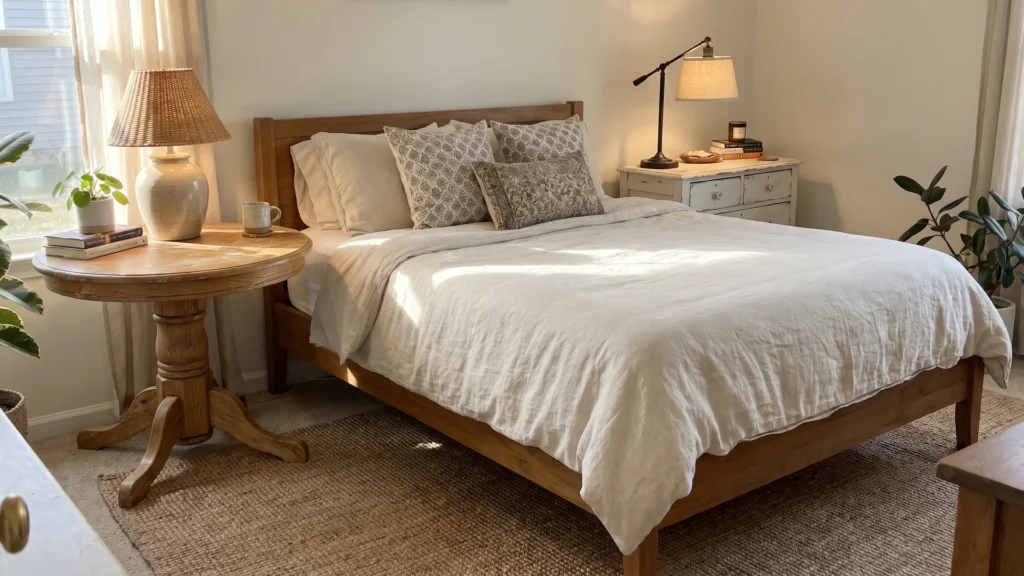
Different nightstands can look balanced when their heights, visual weight, or finishes relate. Before buying anything, try a stool beside a small chest you already own. If you shop secondhand, look for pieces within about 2 to 3 inches of each other in height; thrifted tables often cost $20 to $80, while simple new options may run $50 to $150.
A lighter table can balance a darker one if both have similar visual weight, such as solid legs or compact tops. You can also connect them with matching lamps or repeat one wood tone elsewhere in the room.
Renter-safe option: Repurpose a sturdy stool or small side table you can move without installation.
15. Style the Dresser Top as One Vignette
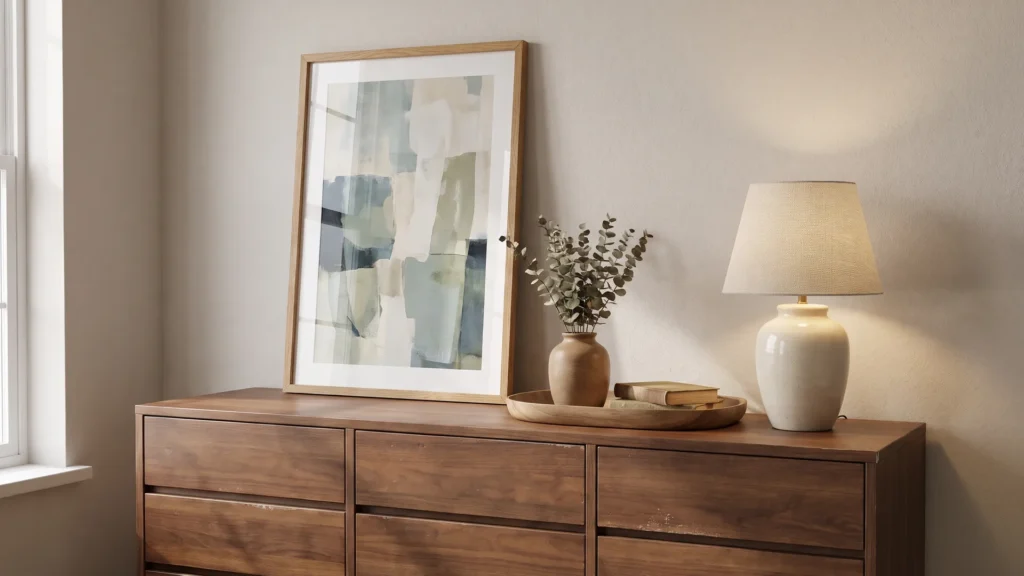
Group a shallow tray, one vertical element, and one small object to create a composed dresser top. For example, place a catchall tray beside a framed photo and a small ceramic bowl. Keep open space beside the arrangement for folding clothes or setting down laundry; a vignette should not take over the surface.
Tall dressers and bookcases can tip, so anchor them to the wall according to the manufacturer’s instructions. Anchor It’s furniture safety guidance explains why anchoring matters.
Cheaper option: Use a plate or bowl you already own as the tray, then add one framed photo.
Rugs, Curtains, and Color Tie the Room Together
Rugs, curtains, and color help your bed, windows, and decor feel connected. You can make the room look more finished with thoughtful placement and a few colors repeated across pieces you already own. Measure before you buy anything for this group of bedroom decor ideas, since rugs and curtain rods come in fixed sizes.
16. Size the Rug to the Bed
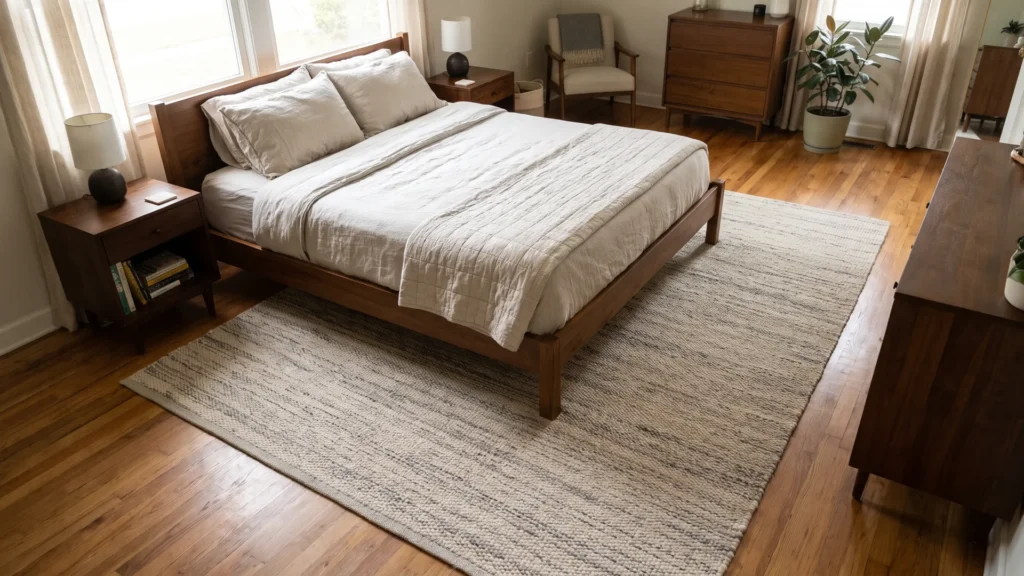
A correctly sized rug anchors your bed and makes the room feel complete. Aim for 18–24 inches of rug beyond each side; an 8-by-10-foot rug is a practical starting point for a queen, while a king often suits a 9-by-12-foot rug. Slide it under the lower two-thirds of the bed, leaving the top legs of the bed off the rug if you prefer to use a smaller one. For a lower-cost option, look for washable rugs, flatweaves, or secondhand finds.
Cheaper option: Place a smaller rug across the lower half of the bed.
17. Hang Curtains High and Wide
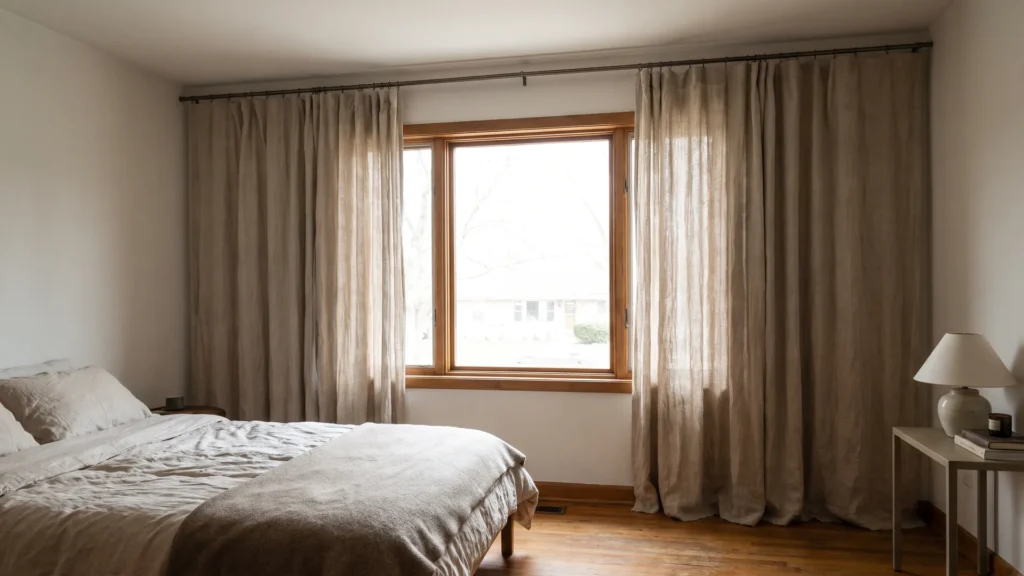
A higher, wider curtain rod makes your window look larger and keeps open panels from blocking daylight. Mount the rod 4–6 inches above the frame and extend it 8–12 inches past each side. For a 36-inch-wide window, that means a rod of roughly 52 to 60 inches. Budget-friendly panels can frame the window without matching your bedding exactly; repeat one color elsewhere in a pillow or throw to connect the pieces.
Renter-safe option: Use a tension rod inside the window frame, if the fit and curtain weight allow.
18. Choose a Three-Color Palette
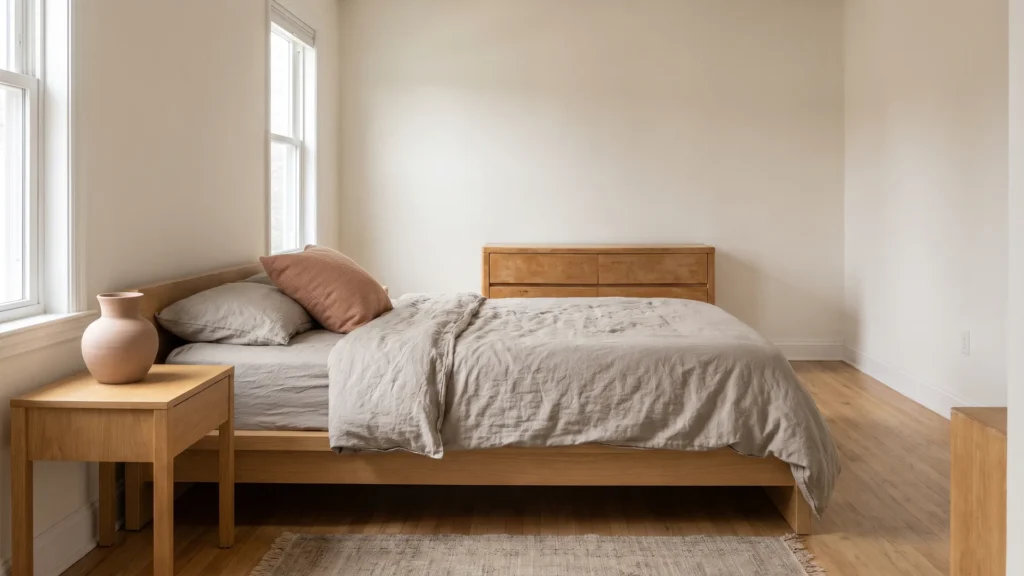
A simple palette gives you an easy way to connect rugs, curtains, bedding, and art. Choose one main color, one supporting color, and a small accent, then repeat each in a few places rather than matching every item. For instance, use warm ivory as your base, sage in the curtains, and a small terracotta detail in a pillow or print. Explore these neutral home decor ideas if you want a softer starting point.
Cheaper option: Choose three colors from items you already own.
Finishing Touches That Make Your Bedroom Feel Lived-In
Personal details bring warmth and character to a bedroom without requiring a major purchase. Add one living thing, mix materials you already own, or make a corner useful for reading. These last bedroom decor ideas are also the easiest to change with the seasons.
19. Add Plants That Tolerate Bedroom Light
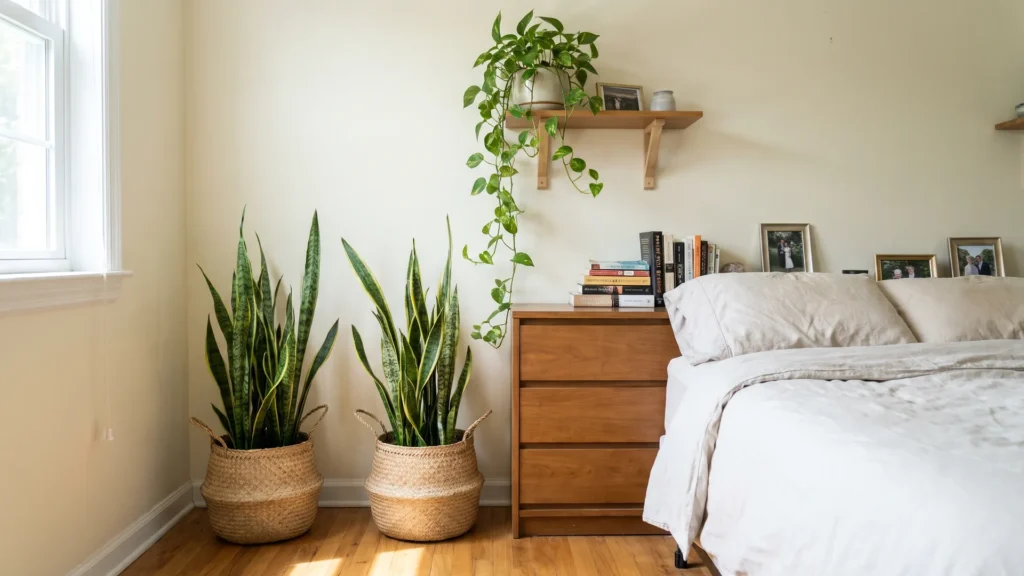
One healthy plant adds color and life, even on a small nightstand or dresser. First, check how much natural light the spot actually gets; a dim corner needs a different plant than a bright windowsill. Pothos, snake plants, and ZZ plants can tolerate lower-light conditions, though low light still means some indirect daylight. Iowa State University Extension shares more low-maintenance houseplant options.
Water according to the plant’s needs, and check the soil before watering so you don’t leave roots sitting in soggy soil. To keep costs down, ask a friend for a cutting or reuse a secondhand pot.
Cheaper option: Propagate a pothos cutting from a friend and plant it in a pot you already own.
20. Mix at Least Four Textures
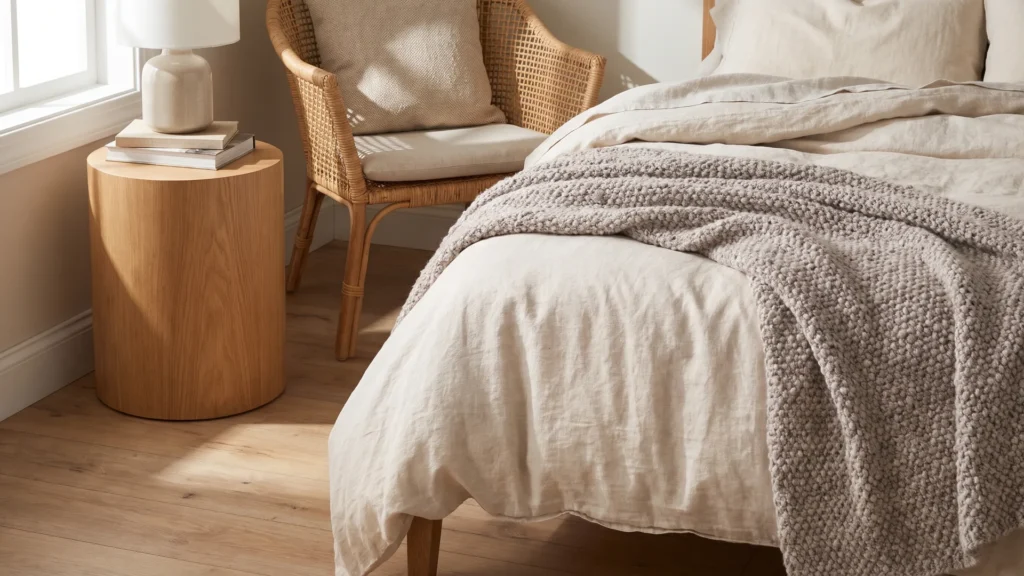
A few contrasting materials make your bedroom feel more considered, even when you keep the colors simple. Pair cotton bedding with a wood tray, a metal lamp, and a woven basket or rug. You may already have these materials around the house, so try moving a small object from another room before buying anything. For more ideas, browse these home decor trends for 2026.
Cheaper option: Mix four textures using your existing bedding, furniture, lamp, and basket.
21. Carve Out a Reading Corner
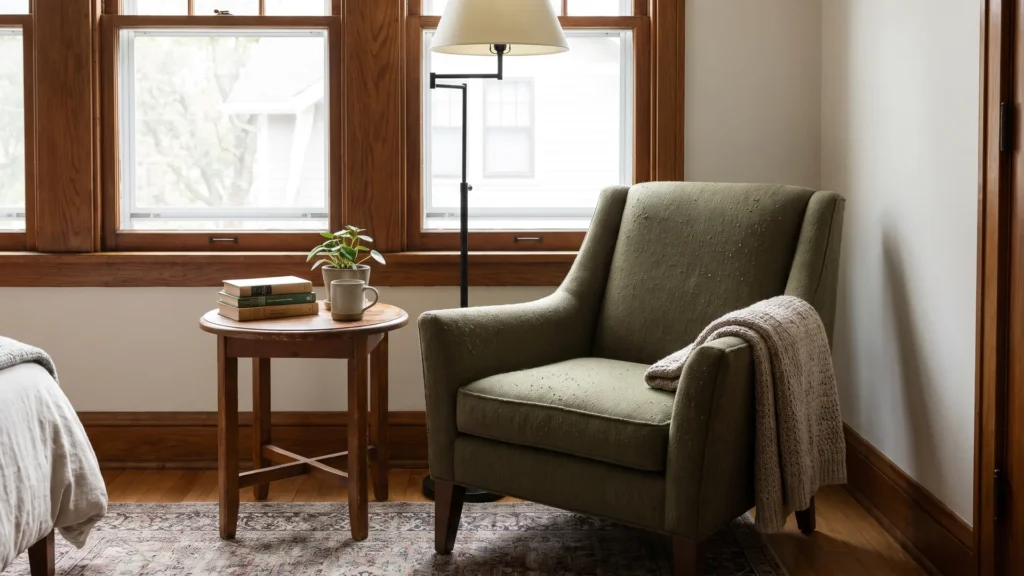
A chair, a lamp, and a place to set a book can turn an unused corner into a useful retreat. Position the chair near an outlet or window, but keep the walkway clear. Aim a reading lamp toward your book, not directly into your eyes, and use a stool or small table as a temporary book stand. A simple floor lamp often costs $40–$120, and a secondhand armchair can run $50–$200.
Cheaper option: Move a chair you already own beside a lamp, then use a sturdy stack of books as a side table.
Bedroom Decor Styles at a Glance
Choose a bedroom style by looking first at what you already own. Your bed frame, favorite colors, and existing textiles can guide the direction, so you can add a few details instead of replacing everything. Browse popular home decor styles for more inspiration, or explore luxury master bedroom ideas if you prefer a more polished finish.
Use the table as a starting point, not a strict decorating formula. You can also compare descriptions in this interior design styles guide before deciding which details suit your room.
| Style | Palette | Key materials | One signature piece | Best for |
|---|---|---|---|---|
| Modern | Neutrals with a crisp accent | Metal, glass, smooth wood | A clean-lined platform bed | A simple, uncluttered look |
| Farmhouse | Warm whites and earthy neutrals | Reclaimed wood, cotton, iron | A rustic wood headboard | A relaxed, familiar feel |
| Boho | Earth tones and muted colors | Woven fibers, wood, linen | A patterned textile | A collected, personal room |
| Coastal | Whites, soft blues, sandy tones | Linen, rattan, pale wood | A woven pendant | An airy, light-filled room |
| Japandi | Warm neutrals and natural shades | Light wood, linen, ceramic | A low-profile bed | A calm, pared-back space |
| Traditional | Creams, muted greens, rich blues | Wood, velvet, patterned cotton | An upholstered headboard | A balanced, classic room |
To make a style your own, repeat one color or material you already have in two or three places. That small connection helps your bedroom decor ideas feel cohesive without requiring a matching set.
Bedroom Decorating Ideas on a Budget
You can make your bedroom feel more finished without replacing furniture or buying a matching set. Start by rearranging what you own, then spend only on details that solve a visible problem. These budget-friendly bedroom decor ideas help you refresh the room while keeping purchases focused.
Refresh the Room With What You Own
Before you shop, move a lamp, framed print, or small table from another room. Clear the surfaces, make the bed, and try a different furniture arrangement; even shifting the bed a few inches can change how the room feels. Then use leftover paint to refresh a frame or give a tired bedside table a new finish.
If you need a few supplies, compare your list with these decor ideas under $50. For inspiration on repainting furniture and planning an affordable refresh, browse room makeover tips.
Choose Purchases That Make a Difference
When you do buy something, choose one item that addresses what feels unfinished. A frame can fill a bare wall, a warm bulb can soften harsh lighting, and a thrifted basket can tidy visible clutter. Prices vary by size, material, and location, and secondhand finds can cost less. These budget home decor ideas can help you compare low-cost options.
| Budget | Decor ideas |
|---|---|
| Under $25 | Picture frames, warm LED bulbs, pillow covers |
| Under $50 | Table lamp, small framed print, woven basket |
| Under $100 | Secondhand nightstand, area rug, full-length mirror |
| Under $250 | Headboard, larger rug, pair of bedside lamps |
Buy one piece at a time, and check its size before bringing it home. That simple step helps you avoid spending on decor that doesn’t fit your room or work with what you already own.
3 Bedroom Decor Mistakes to Avoid
Even thoughtful bedroom decor ideas can feel off when the scale or lighting is wrong. Check these three details before you buy anything, because small adjustments can make the room feel more balanced.
- Art that’s too small for the bed can look disconnected. Choose a piece or grouping about two-thirds the width of your headboard, and hang it with the bottom edge 6–10 inches above. Before shopping, try rearranging frames you already own into a wider arrangement.
- A rug that stops at the nightstands may make the bed feel unanchored. Aim for 18–24 inches of rug beyond each side of the bed; an 8-by-10-foot rug often fits a queen, while a king usually needs 9 by 12 feet. If your rug falls short, pull it farther beneath the bed so more extends at the foot and sides.
- Cool-white bulbs can make bedside light feel harsh. Switch to a warm-white bulb around 2700K, then check that its brightness suits reading and winding down. The U.S. Department of Energy’s guide to LED color temperature explains how warmer and cooler light appear.
These fixes rely on proportion and placement, so you can often improve the room without adding another decor purchase.
Frequently Asked Questions
These quick answers can help you choose your next bedroom update, especially when you’re working with a limited budget or a compact layout.
How Can You Decorate Your Bedroom on a Budget?
Start by editing and rearranging what you already own, such as moving a lamp, changing the layout, or swapping in a throw from another room. Then make a short list of affordable purchases that address what still feels unfinished, like a frame for a bare wall or a warmer bulb.
What Is the Best Color for a Bedroom?
The best bedroom color depends on your room’s natural light, existing furnishings, and the mood you want. Before painting, test a sample on the wall and look at it in both daylight and evening light.
What Should You Put on the Wall Above Your Bed?
Choose art that measures about two-thirds the width of your headboard, or plan a gallery wall with a balanced mix of frame sizes. Hang the piece or grouping with its lower edge about 6–10 inches above the headboard.
How Do You Make Your Bedroom Feel Cozy?
Use warm bedside lighting and soft bedding, then add a contrasting texture such as a woven blanket or a smooth wood accent. A dimmer or a lamp with a shade can make the light more comfortable in the evening.
How Do You Decorate a Small Bedroom?
Keep the room feeling open by leaving a clear walkway and choosing pieces that don’t crowd the floor. Browse these small apartment decor ideas for space-conscious ways to arrange and furnish a compact room.
Final Thoughts
A bedroom feels finished when its details support the way you use the room and connect visually. You don’t need to buy everything at once; a few thoughtful bedroom decor ideas can bring more focus and balance to what you already own.
This weekend, measure the rug area around your bed and decide whether your current rug fits. For more practical inspiration, join our newsletter.