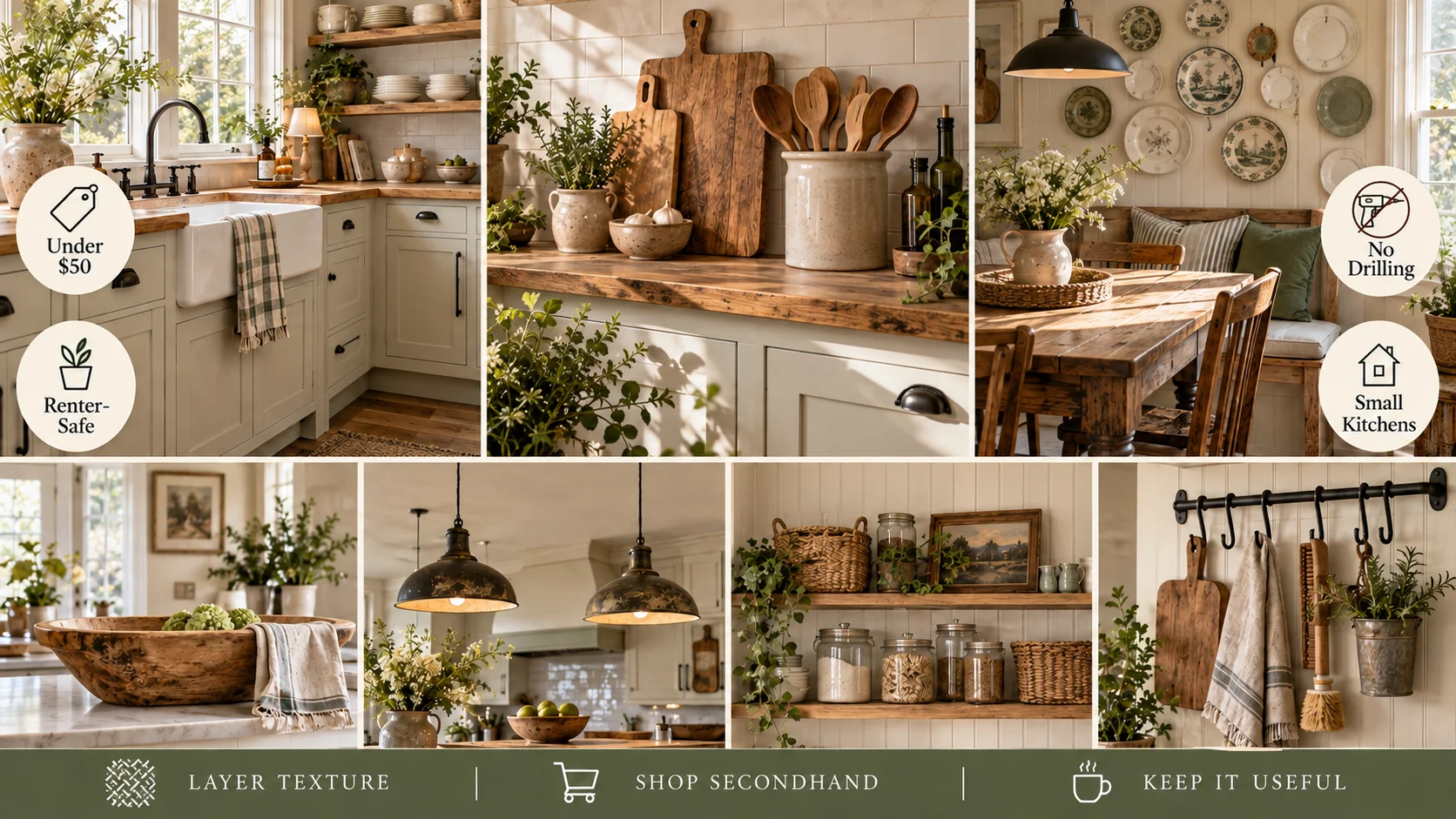
Rustic Farmhouse Kitchen Decor: 22 Ideas That Don’t Look Staged
Farmhouse kitchens start to look like store displays when they rely on matching signs, too much distressed white, and decor bought all at once. If your kitchen is small, storage is tight, or your budget is limited, that staged look can feel especially hard to avoid. If you haven’t settled on a style yet, start with these kitchen decorating ideas that work in any kitchen.
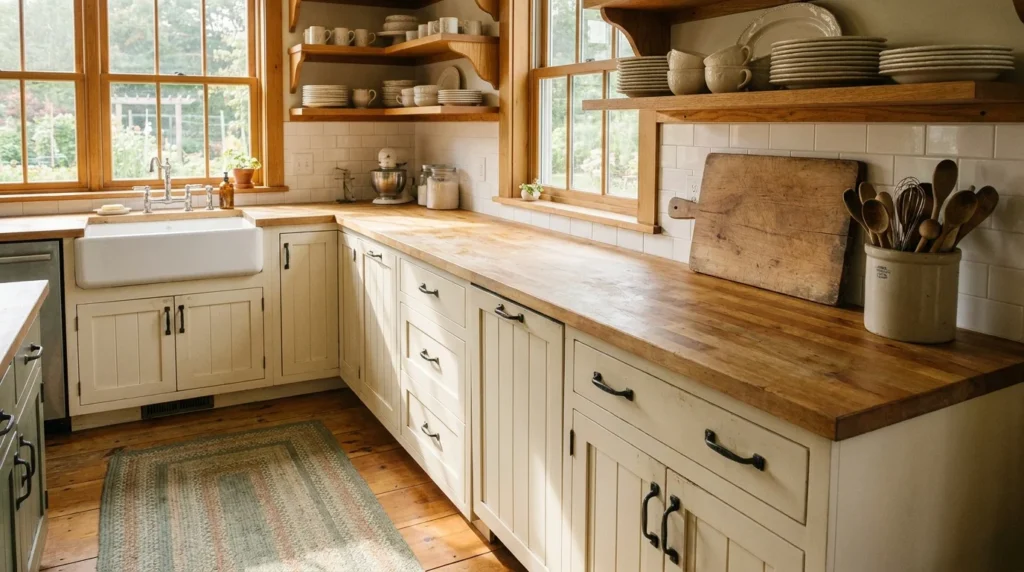
These rustic farmhouse kitchen decor ideas take a more natural approach by layering genuine textures, useful objects, and pieces that appear collected over time. They work even without architectural features, such as wooden beams. Most ideas cost less than $50, and many are renter-safe, removable, or require no drilling, including leaning art, tension-rod storage, baskets, and simple wood accents. Start with these practical ideas, including budget-friendly counter styling ideas, to make your kitchen feel personal without seasonal decor or a major makeover.
Key Takeaways
- Build a collected farmhouse look with natural materials, woven baskets, aged metal, and handmade-looking ceramics instead of matching signs.
- Start with renter-safe updates, such as leaning art, removable hooks, textiles, and countertop styling, before changing cabinets or lighting.
- Use warm whites, sage green, muted blue, charcoal, and honey oak to create a welcoming modern farmhouse kitchen.
- Keep open shelving useful by grouping everyday dishes with a few decorative pieces and leaving visible space between them.
- Spend in order: clear the clutter first, add one natural texture second, fix the lighting third, and buy accessories last.
What Is Rustic Farmhouse Kitchen Style?
This style pairs reclaimed wood, warm off-whites, aged metal, visible grain, and natural materials with practical details such as wooden beams, optional shiplap walls, Shaker-style elements, butcher block, ironstone, linen, jute, crocks, and matte black or oil-rubbed bronze accents. The result is a useful kitchen with genuine patina and personality, not manufactured distressing or a costume-like antique farmhouse look.
The best approach makes everyday items part of the design. A crock holds wooden spoons, a linen runner softens a butcher-block counter, and an old-looking ironstone platter adds character without staging the room. A farmhouse sink provides a practical focal point that earns its place through daily use.
Rustic vs. Modern Farmhouse: What Actually Differs
Both styles can use white cabinets, black hardware, and natural wood. A modern farmhouse kitchen feels different based on how much wear, texture, and visual history the room shows.
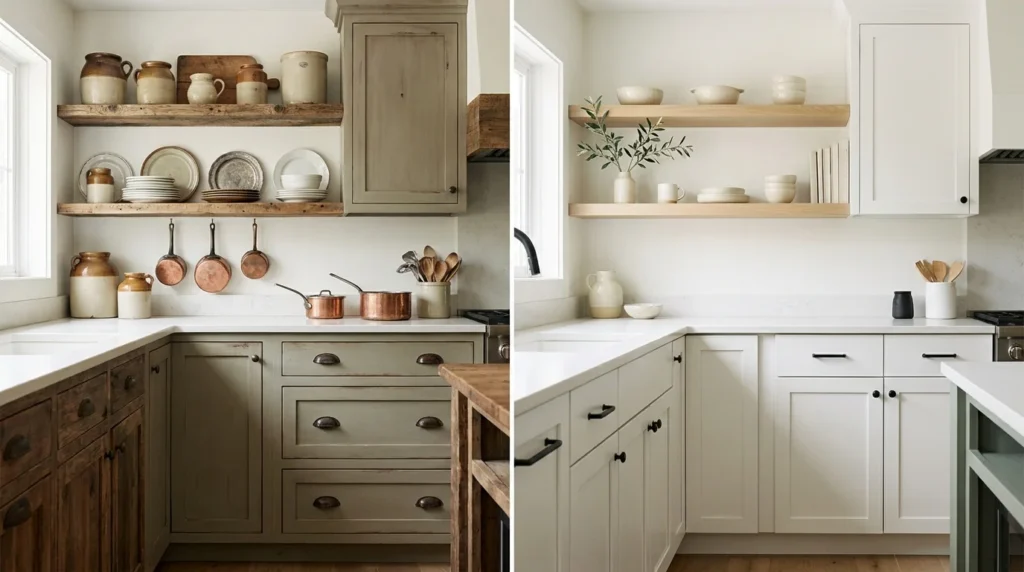
| Feature | Rustic farmhouse | Modern farmhouse |
|---|---|---|
| Wood | Warmer woods, reclaimed boards, knots, and visible grain | Cleaner oak or painted wood with calmer grain |
| Color | Cream, weathered brown, sage, dusty blue, and earthy neutrals | White, soft gray, beige, and one controlled accent color |
| Hardware | Aged iron, bin pulls, cup pulls, and antique-style finishes | Matte black, aged brass, or simple bronze pulls |
| Display | More collected objects, open shelving, crocks, and vintage finds | Fewer objects with more space between each piece |
| Lighting | Lanterns, wrought iron, wood fixtures, and character-heavy designs | Simple pendants, globe lights, cones, or woven shades |
| Overall feeling | Warm, layered, timeworn, and cabin-inspired | Bright, edited, practical, and newly renovated |
A kitchen blending both directions can feel collected without looking dated. In a modern farmhouse kitchen, keep Shaker cabinets and clean counters, then add rustic wood, a weathered stool, or aged metal lighting for warmth. A white cabinet palette can also pair naturally with green wall ideas for white kitchens when you want color without losing the farmhouse feel.
Start Here: 5-Minute Farmhouse Kitchen Reset
The most effective updates start by clearing the counter and using what you already own. This quick reset creates breathing room, so wood, ceramic, and aged metal pieces feel intentional instead of crowded.
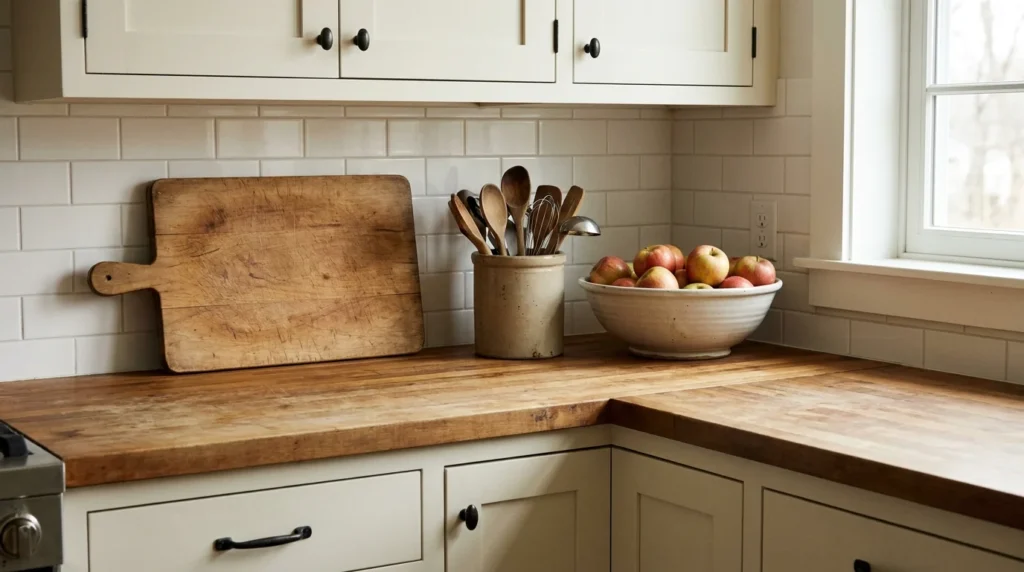
- Clear the counters until only three useful or beautiful objects remain.
- Replace visible plastic containers with glass or ceramic when possible.
- Create a simple cutting board display by leaning one wooden board against the backsplash.
Aim to leave about 40% of the counter empty. That open space keeps the kitchen calm and protects a practical prep area. For more ideas using warm materials and edited displays, see these cozy kitchen counter styling ideas.
A Simple Rule for Choosing What Stays Out
An item belongs on the counter if you use it, love its texture, or need it within the week. A wooden board used for chopping earns its place, especially when you lean it against the backsplash. A stoneware crock filled with cooking utensils adds height while keeping tools ready. A 12- to 16-inch fruit bowl also works because it brings color and purpose to an empty corner.
Small filler pieces create visual noise when they have no job or clear connection to the room. Remove tiny signs, random figurines, unused canisters, and scattered faux plants first. Then group the remaining objects on a tray so they read as one arrangement. The counter should feel ready for breakfast, baking, and conversation, not like a shelf that happens to hold appliances.
Rustic Farmhouse Kitchen Decor Ideas for Open Shelving and Everyday Display
Open shelves work best when they hold what you use, not a perfect collection that never moves. These rustic farmhouse kitchen decor ideas keep the display warm and practical by mixing everyday dishes with wood, ceramic, and aged metal.
1. Layer Each Shelf in Three Depths
Build every shelf back to front. Start with a flat or tall item at the back — lean a cutting board, ironstone platter, framed recipe print, or small wooden sign against the wall. A 10- to 14-inch board adds height without taking up much depth.
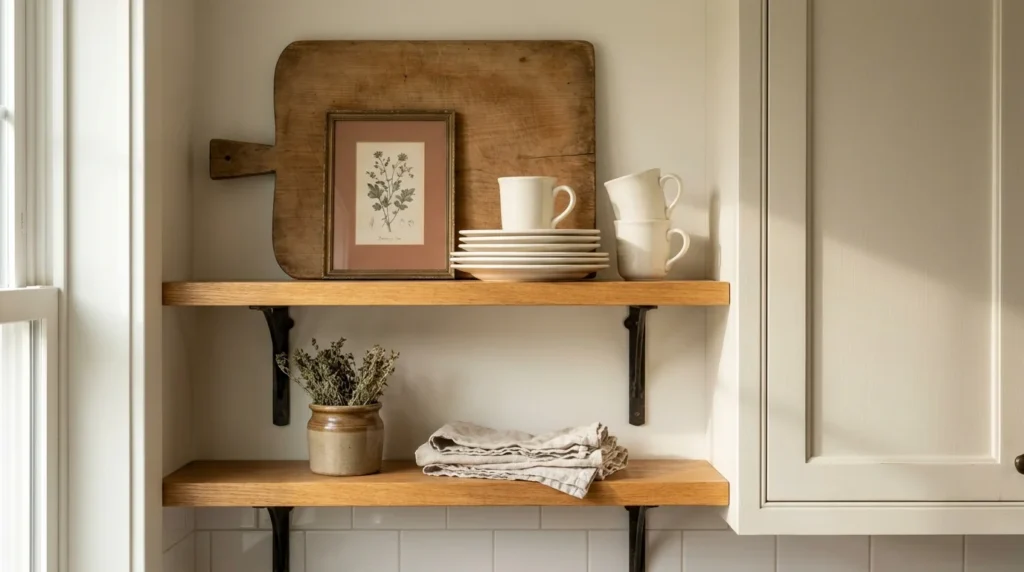
Place useful dishes in the middle. Stack three to five white or ironstone plates, then add bowls or mugs beside them. Finish with one textured accent in front, such as a small crock, secondhand wire basket, or linen-wrapped utensil holder. Keep this front layer low so you can remove plates without rearranging the entire shelf.
2. Group Dishes in Odd Numbers
Grouping dishes in odd numbers creates a relaxed farmhouse look, and keeping them together makes breakfast and cleanup easier. Repeat the three-layer pattern across four display zones, but change one item in each group.
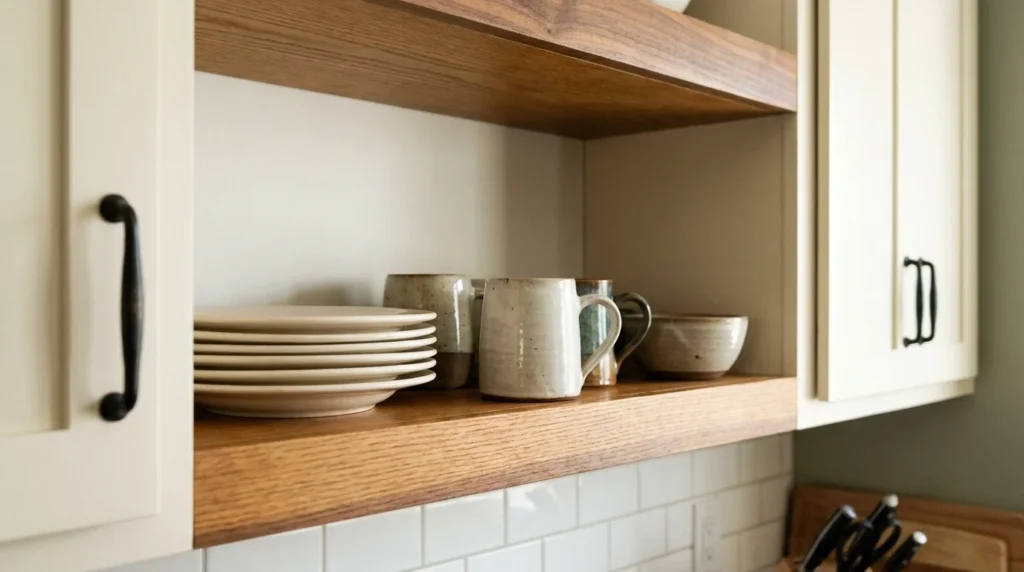
Use a thrifted plate stack on one shelf, a small crock on another, and an aged metal canister near the end. Add a little wood through a cutting board or breadboard, then stop before every object starts matching. For guidance on storing frequently used items, see these kitchen cabinet organization tips.
3. Limit Yourself to Two Wood Tones
Choose one or two wood tones, such as honey oak with darker walnut. Buying a complete matching set often makes the kitchen feel staged, while a few varied finishes create the collected look you want.
A thrift store, Facebook Marketplace, or a budget retailer can supply low-cost pieces without committing you to a full set. Look for the shape and grain first, then check whether the tone sits close enough to what you already own.
4. Get Open Shelving Without Drilling
Leave enough room to pull out a plate with one hand. Keep cast iron, large crocks, and heavy serving bowls on the lowest shelf, and place lighter baskets and small artwork higher.
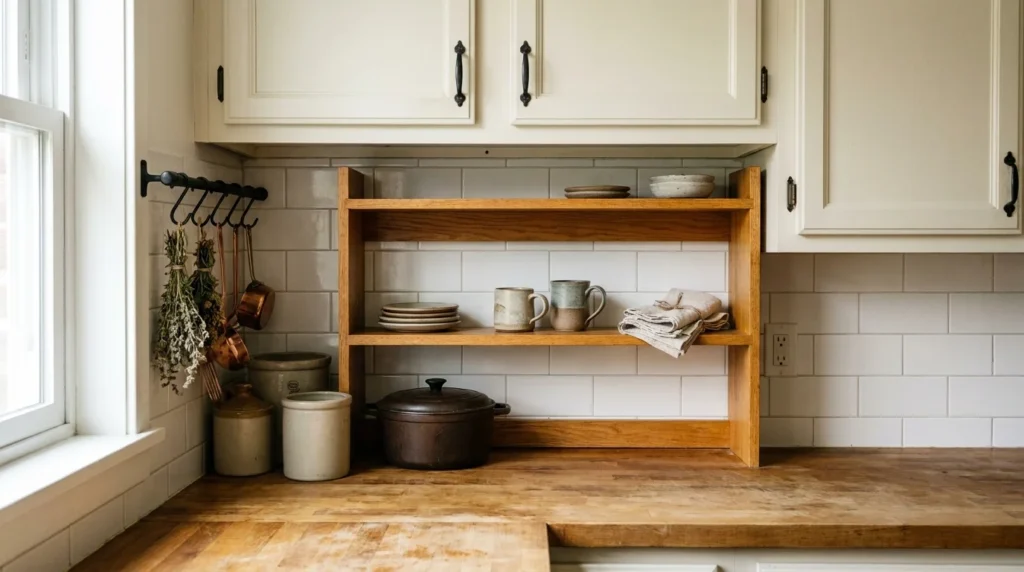
If you need the look without drilling, use a freestanding shelf unit, over-cabinet rack, tension rod system, narrow ledge, or removable hooks. Check the weight rating on any adhesive product before loading it. You can also find more ideas for open shelving as wall decor. The finished shelf should show daily life, with a few useful pieces slightly out of place.
Rustic Counters and Work Surfaces That Stay Practical
A collected farmhouse kitchen works best when your counters feel useful first and styled second. Keep daily tools visible, then hide anything that adds noise, takes up prep space, or rarely earns its place.
5. Choose Butcher Block for Warmth
Butcher block countertops add natural grain without requiring a full countertop replacement. Use a small kitchen island, rolling cart, or removable counter section to bring in warmth, with maple, oak, and walnut offering different tones.
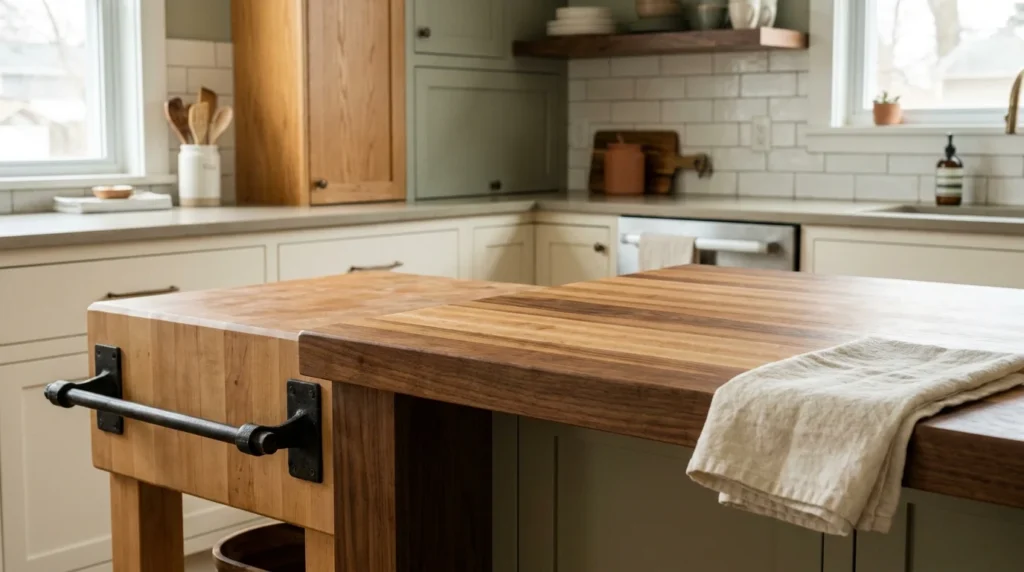
For a budget update, place a 24- to 30-inch wooden board beside the range or sink as a defined prep zone. Seal it with a food-safe finish, wipe spills promptly, and avoid leaving standing water near the edges. Pair the wood with cream cabinets, an apron-front sink, iron hardware, or a ceramic crock for rustic kitchen decor that feels useful every day.
6. Display Cutting Boards Upright
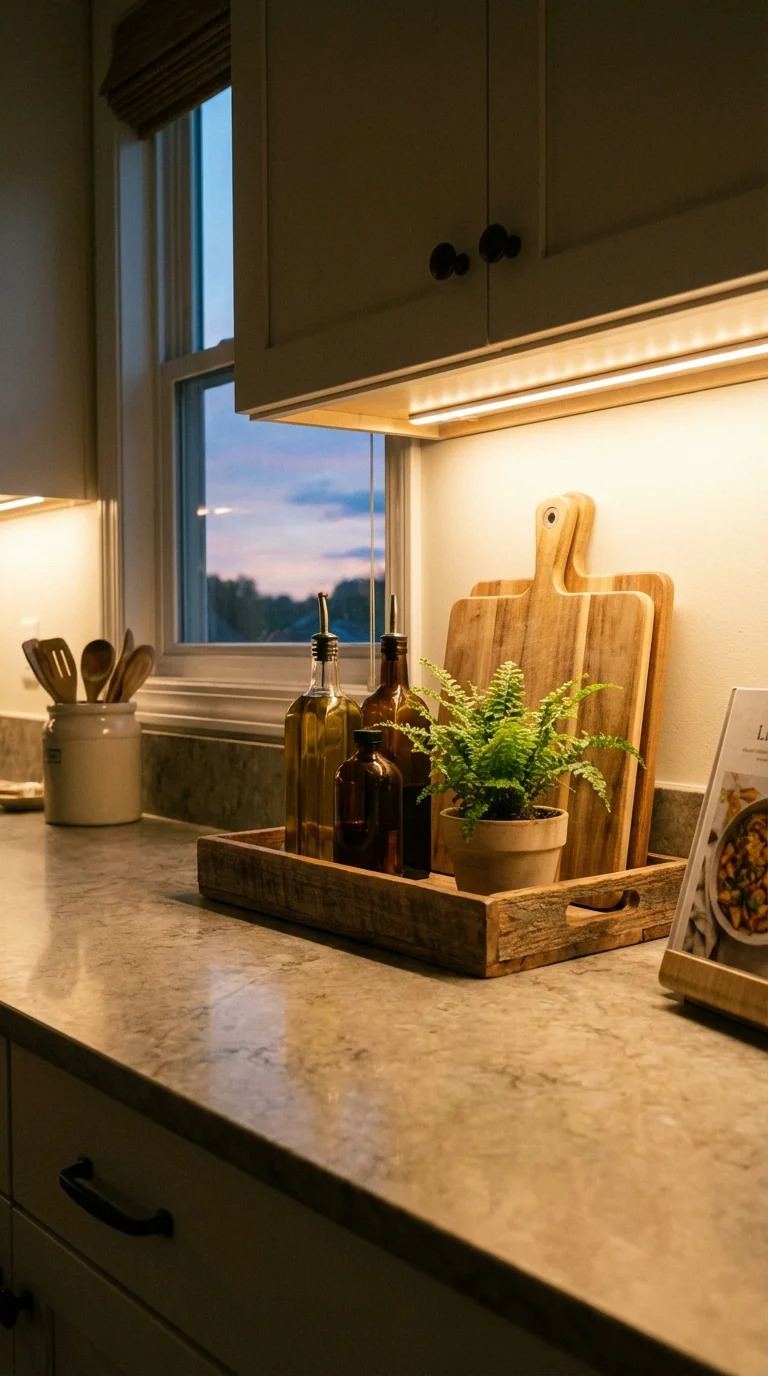
Lean two or three wood cutting boards upright against the backsplash instead of hiding them in a cabinet. Mix one large board, about 12 by 18 inches, with a smaller paddle or breadboard for varied height and texture.
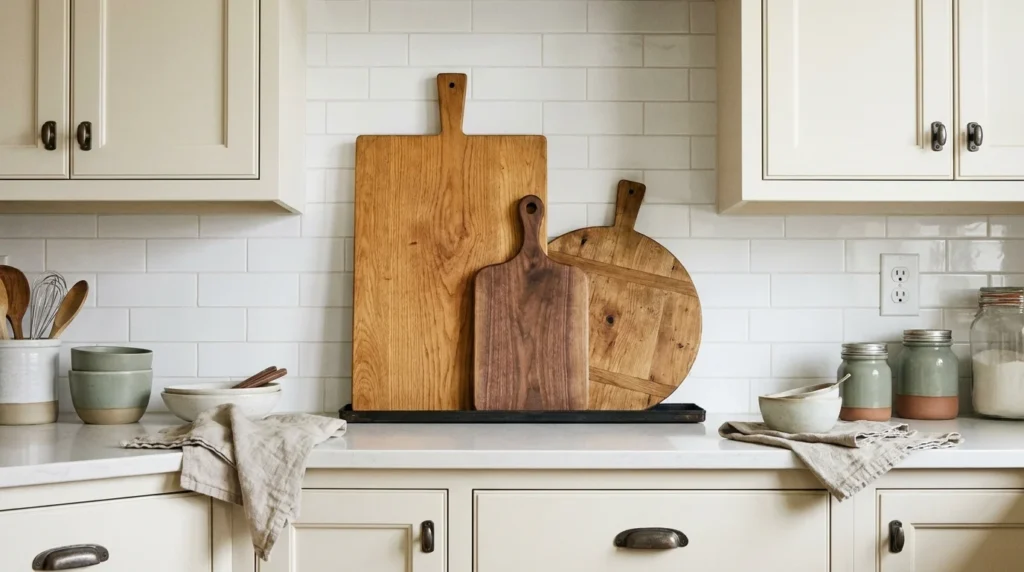
A narrow tray keeps the boards from sliding, while a countertop bookend can hold them securely without drilling. Place them near the prep area, not beside the sink where water can collect. For more guidance on arranging useful pieces, use these 12 kitchen counter decor tips.
7. Add One Anchor Object
A 12- to 16-inch dough bowl, or a pair of stoneware crocks, can anchor an empty counter corner. Fill a dough bowl with onions, apples, or clean kitchen towels, or move it to an adjacent table as a kitchen table centerpiece; use the crocks for wooden spoons and spatulas.
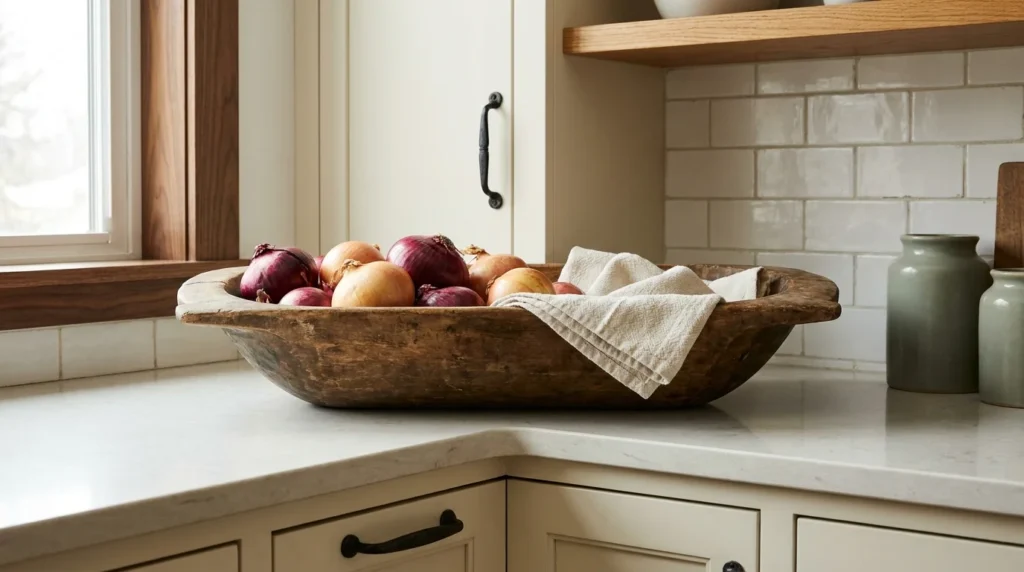
Keep the surrounding area open so the anchor has room to breathe. Hide excess appliances, food packaging, loose cords, and rarely used tools in a cabinet, basket, or appliance garage. Leave out items you use daily, such as a toaster, olive oil, or your favorite cutting board.
8. Create a Coffee Corner Without Adding Clutter
Group the coffee maker, a small tray, one ceramic mug, and a lidded canister or crock in one defined zone. Keep the machine close to an outlet, leave 12 to 15 inches of clear landing space, and allow at least 2 to 3 inches above a drip coffee maker for the lid and carafe.
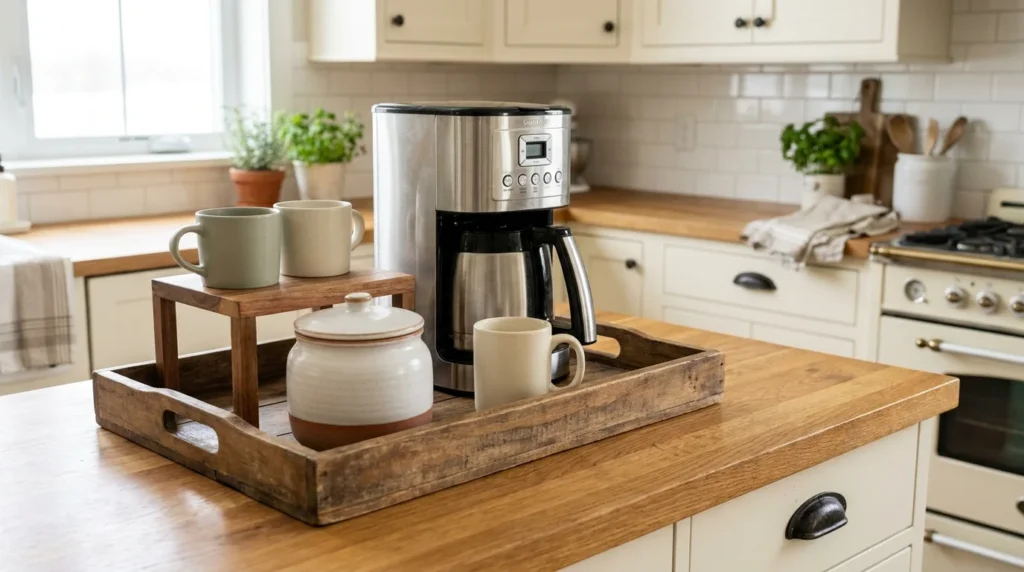
In a small kitchen, add a two-tier riser so mugs or coffee supplies sit above the machine. A wall rail with hooks can hold one or two cups while freeing the counter below. Keep the station away from the stove and never let cords cross the main prep area. Kitchen appliance safety guidance also recommends unplugging appliances when they aren’t in use.
Farmhouse Kitchen Wall Decor That Adds Character
The best farmhouse kitchen wall decor looks collected, not copied from a single display set. Mix useful objects with vintage decor, natural wood, iron, and paper so each wall feels personal. These four ideas add warmth without taking much counter space, making them practical for small kitchens and renters.
9. Hang a Vintage-Look Sign Without Word Art
Choose a vintage-look sign with a simple subject, such as a market schedule, seed company, dairy label, or hand-painted produce illustration. Avoid overused phrases and oversized slogans, which can make farmhouse decor kitchen displays feel predictable.
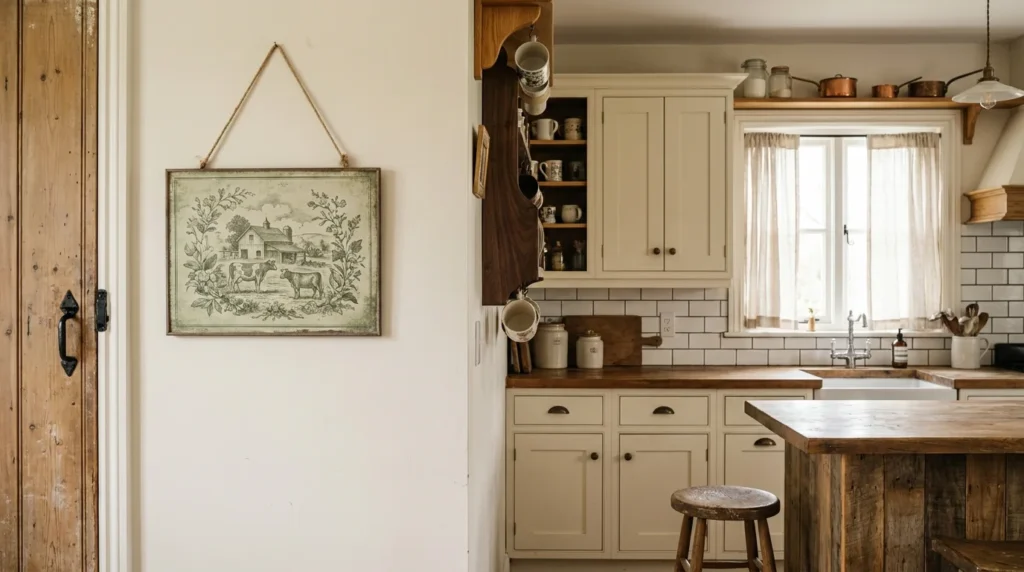
A thrifted sign, framed reproduction, or small metal plaque usually costs under $30. Hang it above a coffee station, beside a pantry door, or on a narrow wall between cabinets. Keep the sign at least 6 inches away from cabinet edges and switches so it has room to read as artwork.
10. Frame Botanical and Seed-Packet Prints
Botanical drawings and old seed-packet prints bring color without overwhelming a neutral farmhouse style kitchen. Look for muted green, faded yellow, dusty blue, and warm cream, then place the prints in mismatched frames with similar proportions.
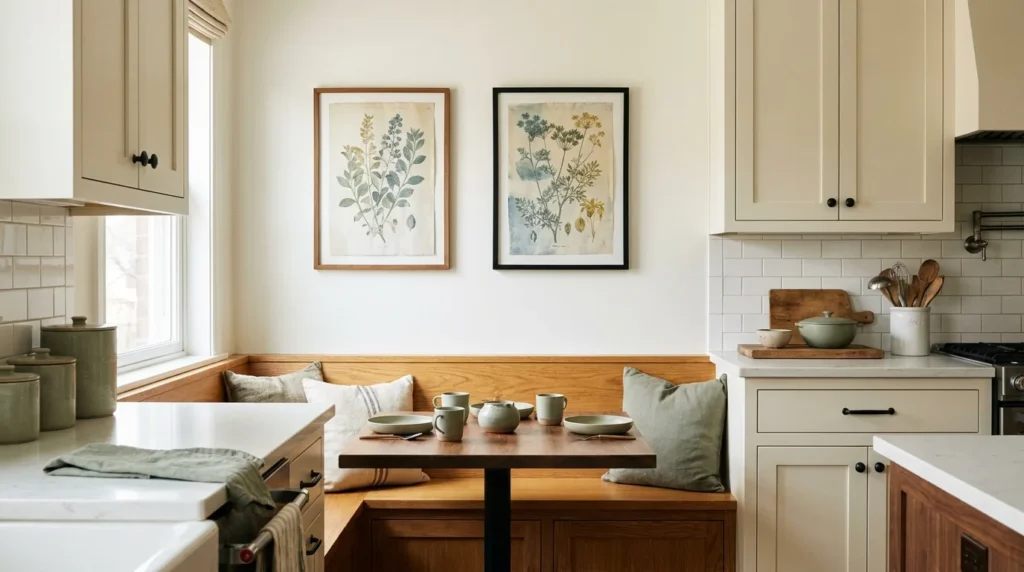
Use two or three 8-by-10-inch prints in a vertical arrangement, or create a compact row above a breakfast nook. Thin wood frames add warmth, while black frames or brass hardware connect the artwork to existing cabinet or rail finishes. For more ways to combine different wall pieces, browse these creative wall decor ideas.
11. Add a Hanging Rail for Everyday Utensils
A slim black iron or brass rail turns useful tools into kitchen farmhouse wall decor. It works especially well against a subway tile backsplash or beside the range, where the contrast adds texture. Hang three to five wooden spoons, a small whisk, or one linen towel from S-hooks.
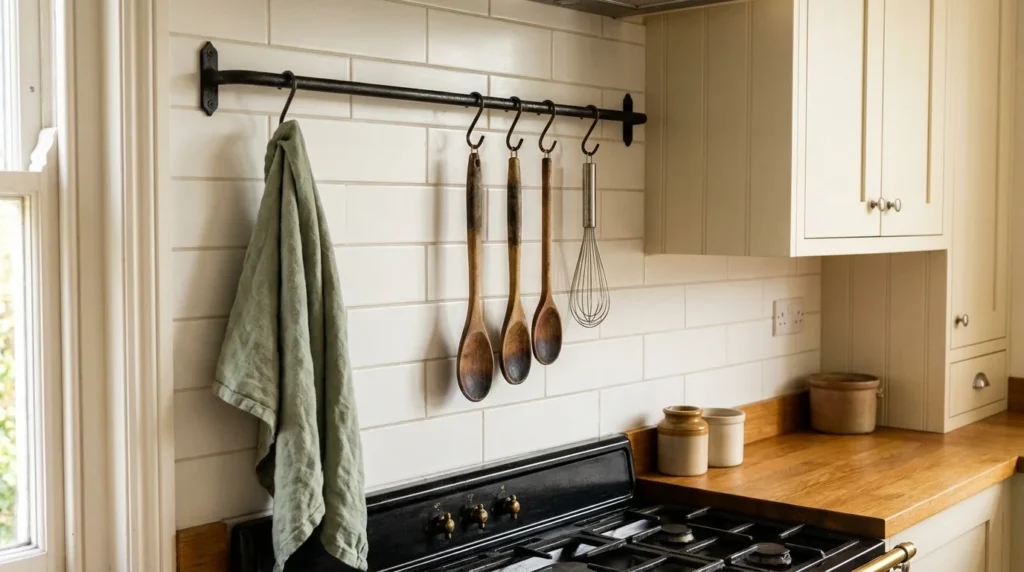
Renters can use a freestanding rail, over-the-door rack, or removable adhesive hooks rated for the hardware’s weight. Leave at least 4 inches between the rail and the wall, and keep utensils away from direct burner heat. The result feels relaxed because everything has a practical reason to be there.
12. Hang a Plate Wall With a Measured Layout
A plate wall adds shape and texture above a breakfast nook, empty counter, or low cabinet. Start by tracing each plate onto paper, cutting out the templates, and arranging them on the floor before you touch the wall.
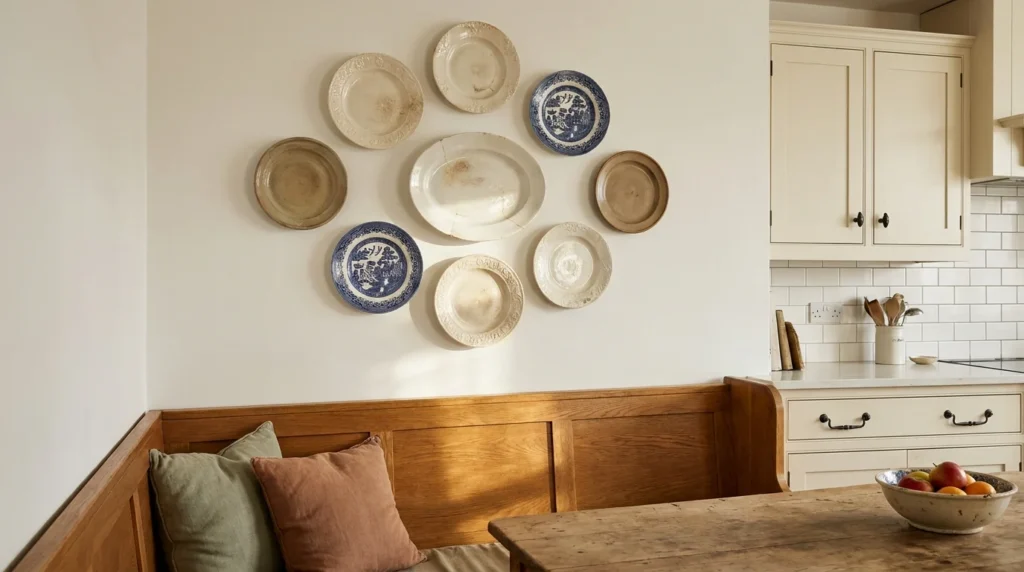
Move the paper templates until the display is centered over the target area. Keep the finished grouping about 2 to 3 inches between plates, a practical spacing range supported by plate-display guidance from this plate-hanging guide. Use secure plate hooks suited to each plate’s weight, and check the hook’s listed capacity before hanging heavier stoneware.
Leave extra breathing room near cabinet corners, light switches, and countertops. The plates should form one centered shape rather than press against every nearby edge. A mixture of ironstone, blue transferware, and plain cream plates keeps the display found instead of themed.
Texture, Textiles, and Color for a Warm Farmhouse Kitchen
Warm farmhouse kitchens feel inviting because they combine soft fabrics with harder surfaces. Wood, clay, stone, and metal bring the natural materials that give the room depth. These layered details add warmth without filling every surface or relying on matching accessories.
13. Layer Linen and Cotton Textiles
Replace shiny polyester towels, curtains, and seat cushions with linen or cotton. Their loose weave adds softness while keeping the room relaxed and practical. Choose ticking stripes, small checks, faded botanical prints, or plain flax-colored fabric.
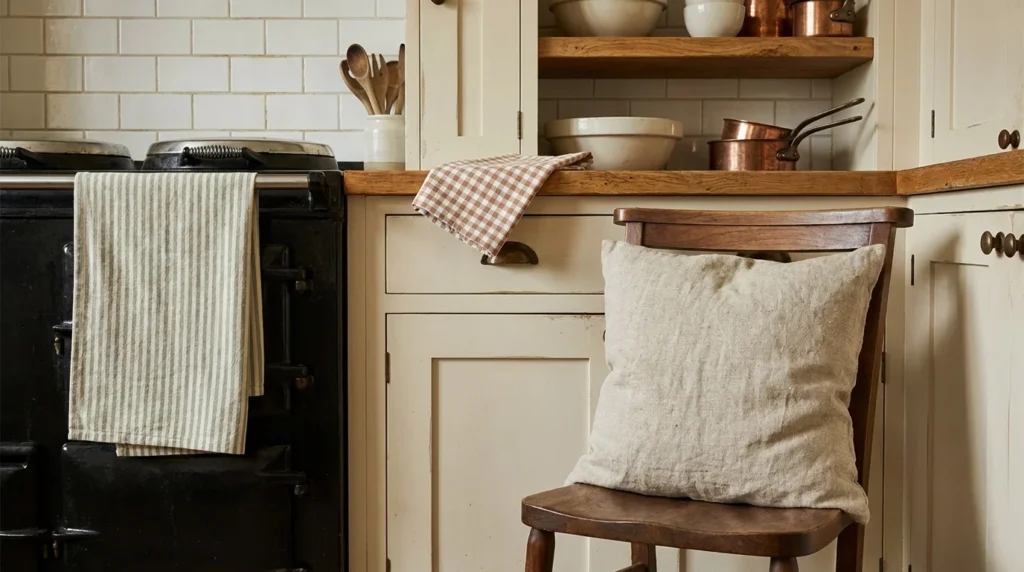
Hang one cotton towel from the oven handle, fold another over a shelf edge, or add a linen cushion to a wooden chair. Use two related patterns at most, then let the natural texture do the work. For more inspiration, browse these neutral home decor ideas before choosing a fabric palette.
14. Add a Washable Runner
A washable runner brings pattern and comfort to the floor without the cost of a full renovation. Look for a flatweave cotton runner between 2.5 and 3 feet wide, leaving at least 3 inches of visible flooring beside cabinets when possible.
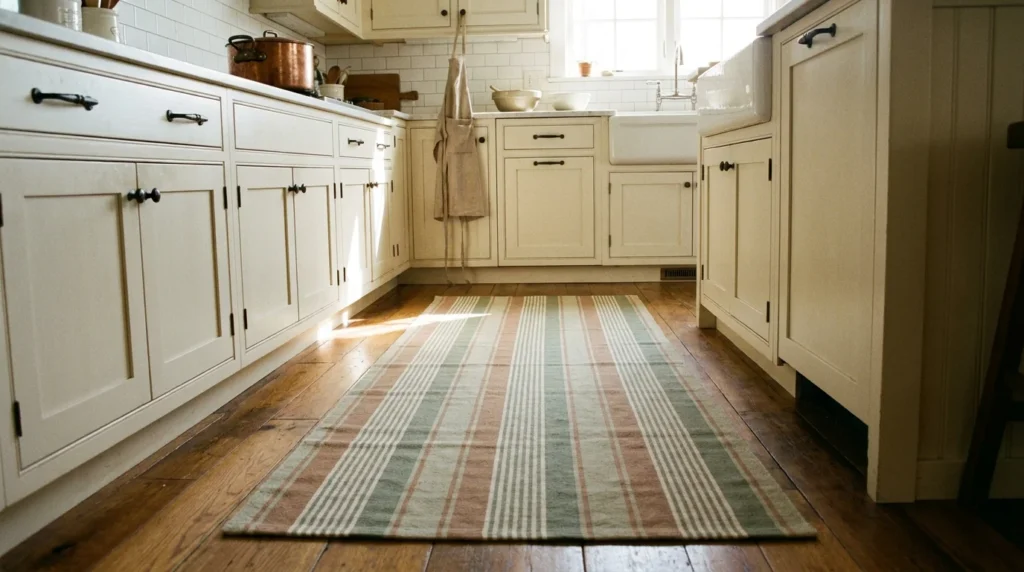
Muted stripes, faded diamonds, and small checks suit rustic kitchen decor better than bright geometric prints. A small-check pattern can echo the look of a checkered table runner without feeling overly formal. Place the runner along the main sink or prep area, where it can cushion your feet and catch small spills. Choose a low-pile style so cabinet doors open freely, then secure it with a non-slip pad.
15. Use Color Without Losing the Farmhouse Feeling
Build a neutral color palette with warm white, cream, or greige on the walls and larger furnishings. Let wood and natural fibers form the middle layer through oak shelves, woven baskets, cotton towels, and linen curtains. Finish with small accents in muted sage, clay, or black iron.
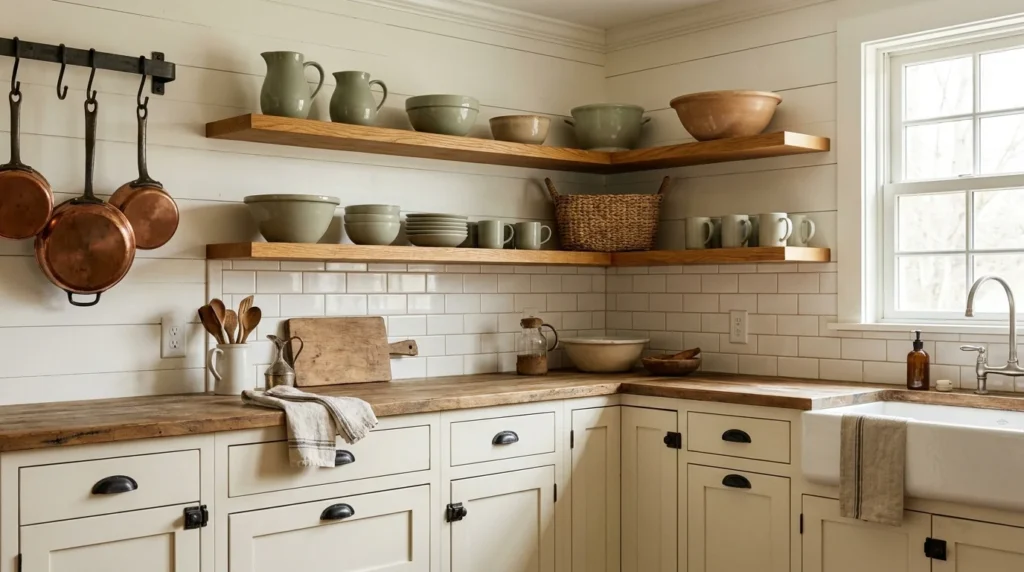
Stark white can flatten a rustic room because it removes the warm contrast that gives wood grain and aged finishes their character. Instead, pair warm neutrals with clay pottery, woven fibers, natural oak, and black iron hardware. A white kitchen with a green wall is another option if you want more color without losing the farmhouse feeling.
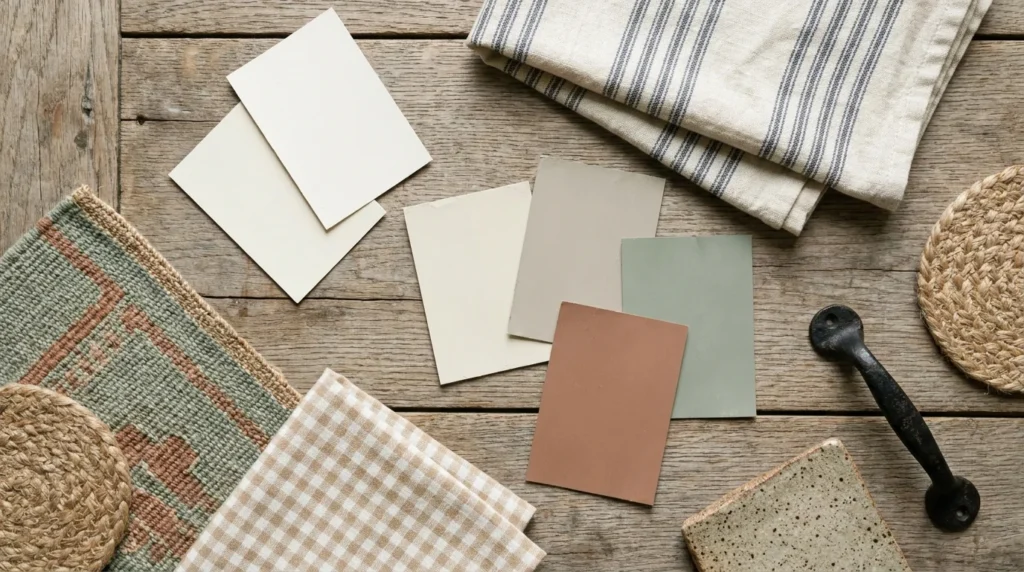
Test paint or fabric samples in the actual kitchen before buying full quantities. Place large swatches near the cabinets and flooring, then check them in morning, afternoon, evening, and under the installed bulbs. A shade that looks creamy at breakfast may appear gray or yellow at night, so give each sample a full day before deciding.
Lighting That Sets a Cozy Farmhouse Tone
A layered lighting plan brings out the grain in wood, softens cream cabinets, and gives the room a welcoming evening glow. Focus on layered light instead of one bright ceiling fixture, especially in a small kitchen where every surface needs to feel calm and useful.
16. Hang Farmhouse Pendants at the Right Scale
A pair of aged-metal, milk-glass, or woven pendant lights can define an island without making the kitchen feel overly styled. Choose fixtures about 10 to 14 inches in diameter for most residential spaces, then leave at least 6 inches between each pendant and the island edge.
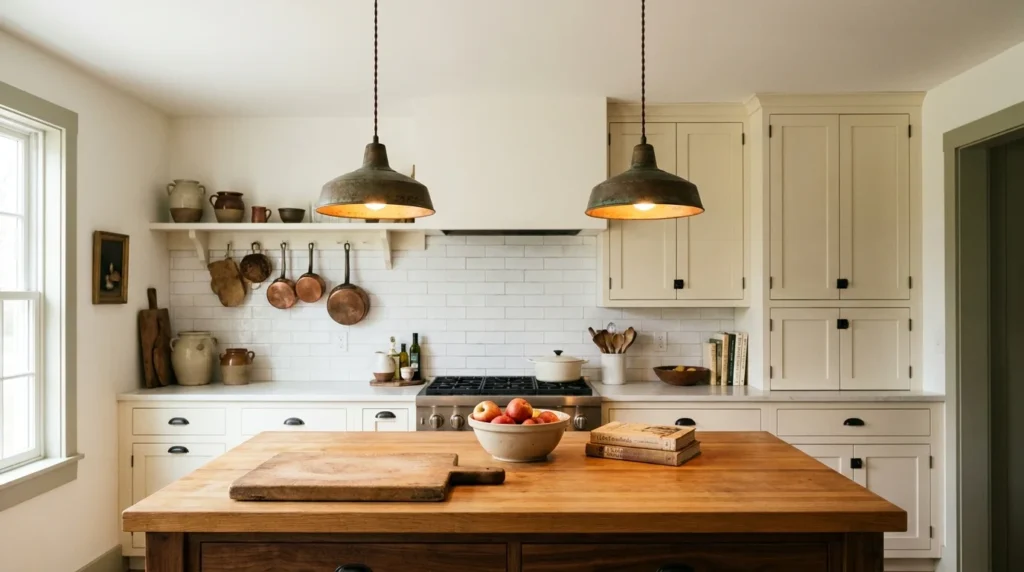
For a kitchen island, choose pendant lights that suit its overall scale and length. Hang the bottom of each fixture 30 to 36 inches above the kitchen island countertop. When using two or more fixtures, allow roughly 24 to 36 inches between them, depending on the island length and pendant size. A smaller island may need one centered fixture, while a longer one can handle multiple pendant lights spaced evenly across its length.
For a closer look at standard pendant placement, use this kitchen island pendant height guide. Choose 2700K bulbs for a warm, cozy mood. Bulbs around 3000K still feel welcoming but provide cleaner task lighting near a sink or prep area.
17. Add Renter-Safe Layers Under and Beside Cabinets
You don’t need hardwired fixtures to create a farmhouse-style kitchen with layered light. Plug-in sconces with fabric, metal, or seeded-glass shades can add character beside a pantry or breakfast nook, while battery-operated lights work well in darker corners. These flexible layers also suit a modern farmhouse kitchen.
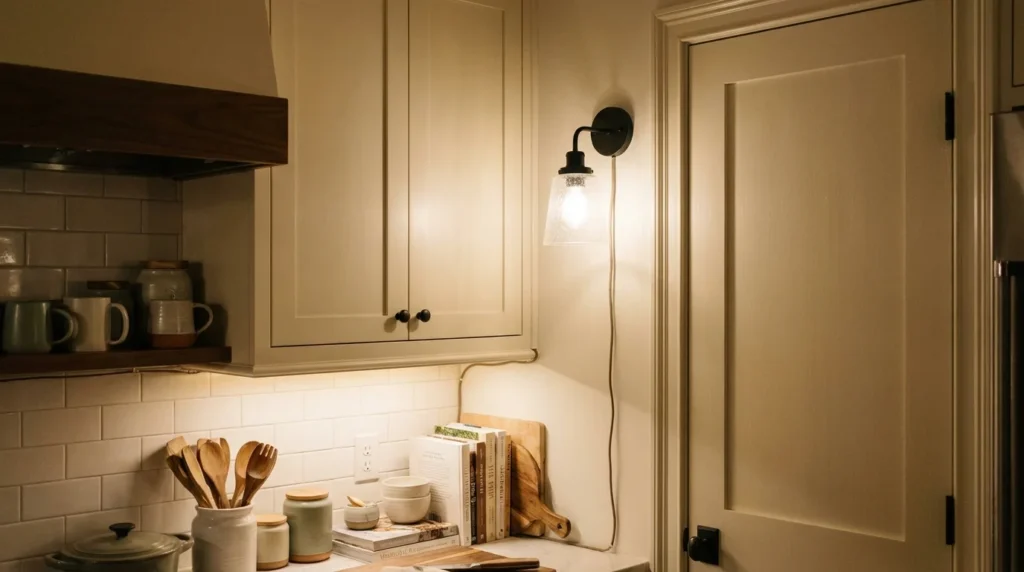
Adhesive under-cabinet LED strips add a soft glow beneath wall cabinets and make evening prep easier. Hide the cord along the cabinet underside, keep the light away from direct splashes, and follow the product instructions for kitchen use. Always follow local electrical rules, manufacturer guidance, and your landlord’s requirements.
Warm light works especially well with the natural materials found in small apartment decorating ideas. Use one light layer for counters and another for the island. Add a softer accent near seating, and keep the cooking zone around the range hood well lit.
Storage That Doubles as Rustic Farmhouse Kitchen Decor
The most useful farmhouse details make kitchen storage visible without making the room feel crowded. Choose containers, baskets, and rails that solve a daily problem, then arrange them with enough variation to feel collected.
Make Open Storage Easy to Maintain
A weekly reset keeps open shelving looking intentional. Return each item to its zone, wipe dusty containers, remove empty jars, and keep only the pieces you use most at eye level. Grouping by task works better than arranging everything by color, especially when you need coffee, baking, or cooking supplies quickly.
Use these three practical storage ideas:
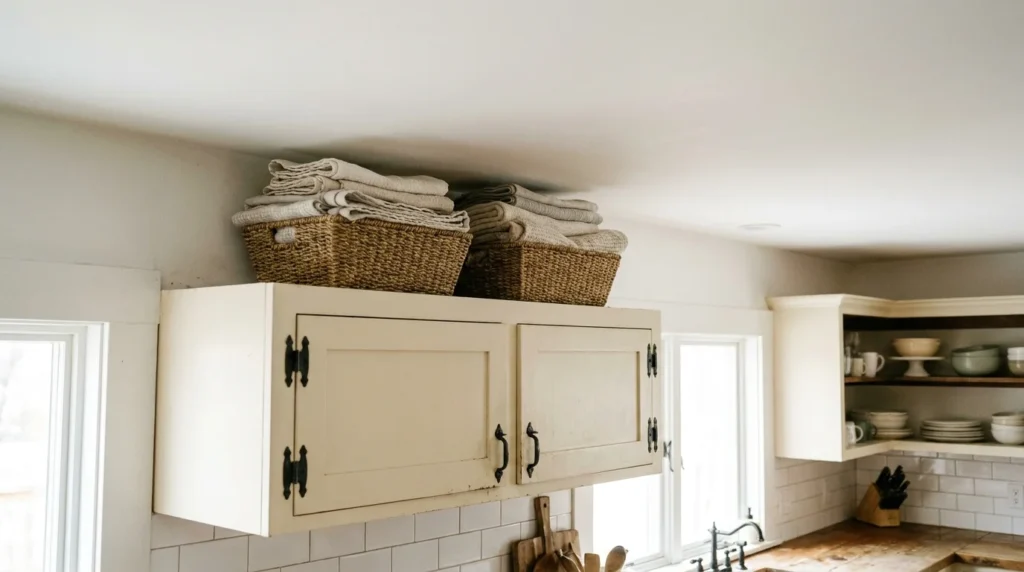
18. Place baskets above the cabinets
Fill one or two low-profile woven baskets with lightweight linens, rarely used serving pieces, or extra napkins. Choose seagrass, wire, or aged wood baskets in related neutral tones. Keep heavy cookware, glassware, and bulky appliances in lower cabinets because overhead items can fall or cause strain when you lift them down.
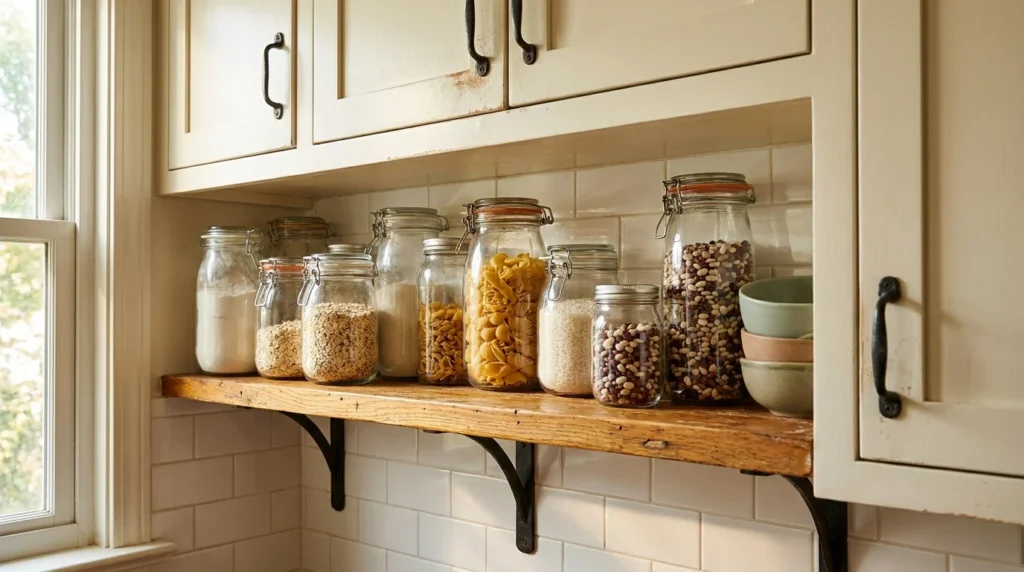
19. Decant dry goods into glass jars
Clear jars and glass canisters make flour, oats, pasta, rice, and beans easy to see. Add simple labels only when they help you find items faster. Use containers with airtight seals for opened foods, and store them in a cool, dry place. The USDA guidance on dry goods supports sealing opened foods to protect quality.
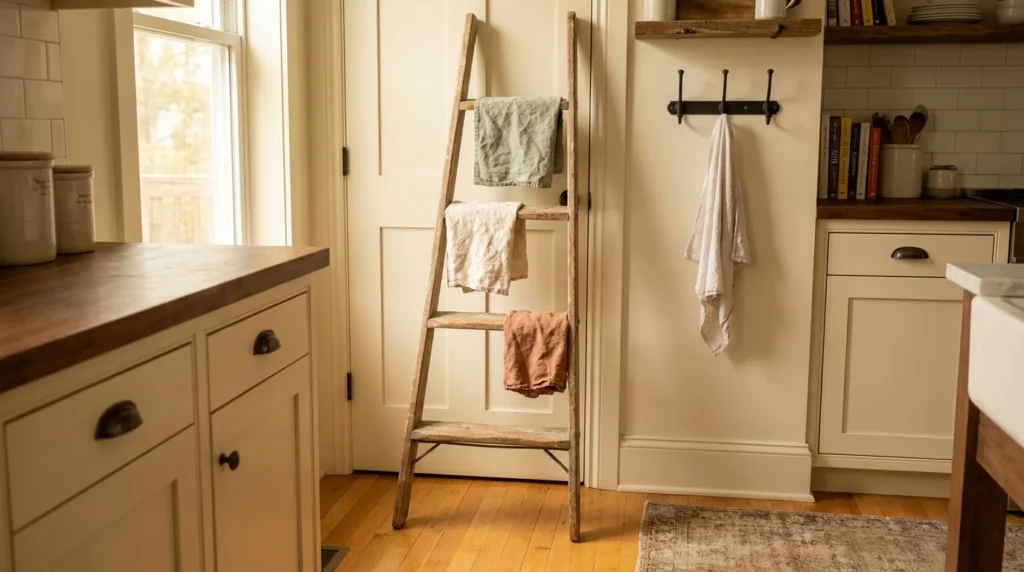
20. Hang towels on a ladder or hook rail
A slim wood ladder can lean beside a pantry, while a black iron rail with three hooks can fit beneath a shelf. Hang only the towels you use, then keep extras in a nearby basket or drawer.
Vary the heights and materials instead of buying identical containers for every shelf. Matching labels and jars can look staged when each piece has the same shape, size, and finish. Relate the colors through cream, honey oak, black iron, or muted sage, then let the forms differ.
Keep every visible item useful, able to hold something, or able to solve a storage problem. That rule keeps farmhouse decor kitchen displays practical instead of crowded.
Small Kitchen Farmhouse Ideas That Do Not Crowd the Room
Small kitchens need fewer, better-chosen details. Use scale, vertical space, and clear work zones to create a warm farmhouse look without covering every available surface. These small-space decor ideas can help you keep the room useful while adding rustic character.
21. Choose One Focal Point for a Tiny Kitchen
Select one anchor that gives the room its farmhouse personality. A thick wood shelf, vintage crock, plate arrangement, or appropriately scaled pendant lights can draw the eye without requiring several small accessories. Nearby surfaces should stay quiet, with open counter space and only the items you use often.
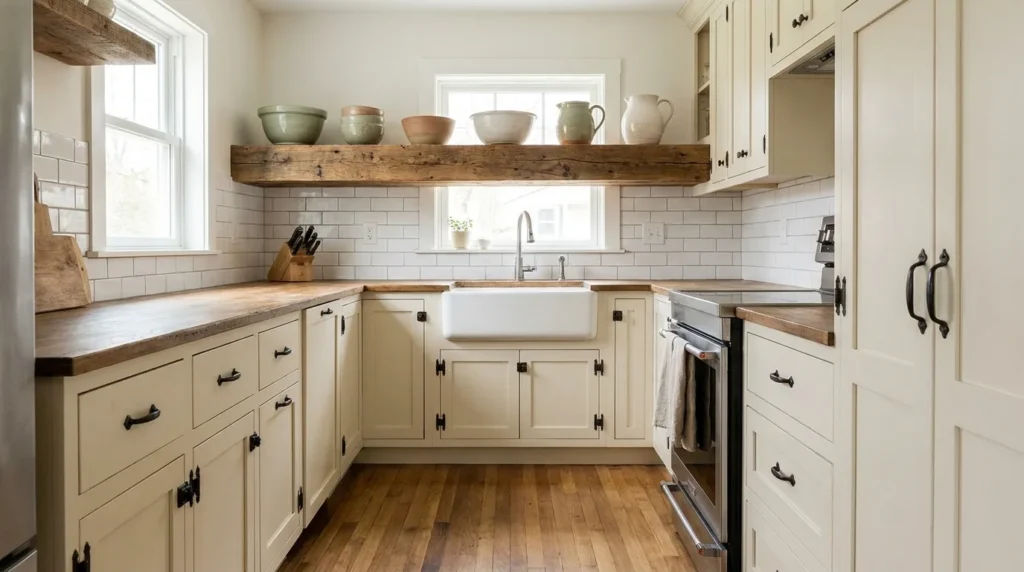
Before settling on the placement, open every cabinet and drawer around it. Check that the anchor doesn’t block doors, interrupt a prep zone, narrow the walkway, or restrict circulation around a kitchen island. Leave at least a few inches around wall decor, and keep countertop pieces toward the back edge so they don’t steal your working area. Designers also recommend using vertical storage in compact kitchens, as shown in these small kitchen design ideas.
22. Use One Large Texture and Move Decor Upward
In a tight kitchen, one large object usually looks calmer than five tiny ones. Lean a 12-by-18-inch rustic wood shelf against the backsplash, add a slim runner that clears cabinet doors, or place one over-cabinet basket above the cabinets for lightweight, rarely used items.
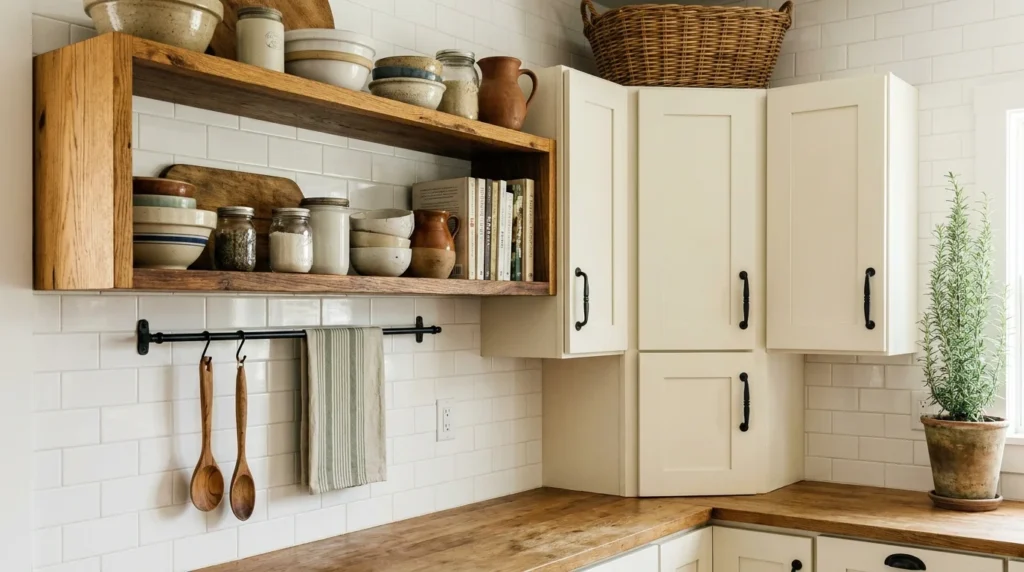
A narrow wall rail can hold towels or two wooden utensils without filling the counter. Open shelving can also move storage upward without consuming prep space. If you want greenery, choose one tall, slim plant in a corner, or grow fresh herbs in a wall-mounted holder. Keep the pot away from heat and splash zones. These vertical solutions give a modern farmhouse kitchen room to breathe while preserving the surfaces you need for cooking.
Frequently Asked Questions
These answers cover practical choices that help a rustic farmhouse kitchen feel warm, useful, and collected. Start with changes that require no remodeling, then add larger pieces when your routine calls for them.
What Is Rustic Farmhouse Style?
Rustic farmhouse style combines natural wood, warm whites, visible texture, aged metal, useful objects, and relaxed patina. Reclaimed boards, ironstone, linen, crocks, and handmade-looking ceramics add character without making the room feel themed. Farmhouse kitchen examples show how practical details can carry the style.
What Is the Difference Between Rustic and Modern Farmhouse?
Rustic farmhouse uses warmer woods, stronger grain, visible wear, relaxed patina, and layered objects. Modern farmhouse favors cleaner lines, higher contrast, simpler lighting, and less distressing. A modern farmhouse kitchen can combine Shaker cabinets and uncluttered counters with a reclaimed wood shelf, vintage crock, or aged iron fixture.
How Do I Make My Kitchen Look Farmhouse on a Budget?
Start by decluttering, which costs nothing and gives existing pieces more visual space. Display wood boards, everyday dishes, and serving bowls you already own. Add linen or cotton towels for soft texture, then shop thrift stores and secondhand marketplaces. Save larger upgrades, such as a farmhouse sink, for after these low-cost edits.
Can Renters Do Farmhouse Kitchen Decor Without Drilling?
Yes, renters can create a farmhouse look without drilling or making permanent changes. Use tension rods, freestanding shelves, over-cabinet racks, removable hooks, plug-in lighting, and adhesive under-cabinet strips. Choose appropriately scaled lighting over a kitchen island, and add removable task lights near the range hood. Check each product’s weight limit, and review your lease before attaching anything to cabinets, walls, or tile.
What Colors Work in a Rustic Farmhouse Kitchen?
Warm white, creamy white, greige, soft mushroom, muted sage, natural oak, clay, and black iron all work well in a rustic farmhouse kitchen. Together, these shades create a neutral color palette that complements wood grain, pottery, and aged metal. They also feel softer than stark white or bright primary colors, which can make the room look sharp or overly themed.
How Do I Keep Open Shelving From Looking Cluttered?
Limit the palette to a few related colors, then group objects in odd numbers, such as three mugs or five plates. Keep your most-used pieces accessible, and vary height and texture with a cutting board, ceramic bowl, and woven basket. Leave visible space between groups because shelves should follow real kitchen routines, not be filled to the edge.
Conclusion
The strongest ideas make the room feel lived in because they support daily life. Useful pieces, mixed textures, and gradual choices create more character than a matching set bought in one afternoon.
Start today by clearing one counter or shelf. Keep three useful objects, then add one warm wood or woven texture you already own. Live with that arrangement for a week before buying anything else. The collected look will grow naturally as you notice what your kitchen needs, helping the space feel more personal and more like home.