15 Small Bedroom Ideas to Maximize Space in Every Inch
A crowded bedroom can make every morning feel harder, with clothes spilling from a chair, furniture blocking the walkway, and barely enough room to open a drawer. In 2026, the best small bedroom ideas create breathing room without sacrificing comfort, whether you are refreshing a rental or updating your own home.
What counts as a small bedroom? A small bedroom is generally any sleeping space under about 100 sq ft (roughly 10×10 ft), where floor area, storage, and walking paths all compete. The goal isn’t more furniture; it is furniture and layout that do more with less.
The fastest improvements come from clearing the floor, choosing multifunctional furniture, building storage upward, using a light tonal palette, and layering warm lighting. These ideas for small bedrooms can make the room feel calmer, brighter, and easier to live in.
This guide covers 15 ideas plus budget options, common mistakes, and simple styling choices.
- Choose furniture that serves more than one purpose.
- Keep as much open floor space as possible to prevent a cramped feel.
- Use vertical storage instead of bulky cabinets.
- Stick with a light, coordinated color palette.
- Layer warm lighting for a cozy finish.
Key Takeaways
- Prioritize floor space: Begin with a smart layout that keeps walkways clear, using painter’s tape to map out furniture footprints before purchasing new pieces.
- Maximize vertical storage: Utilize the full height of your walls with tall shelving, over-the-door organizers, and wall-mounted desks or bedside shelves to reclaim floor area.
- Opt for multifunctional furniture: Choose pieces that serve dual purposes, such as storage ottomans, bed frames with built-in drawers, or wardrobes with sliding doors, to reduce the total number of items in the room.
- Use light, cohesive design: Stick to a tonal color palette, incorporate large mirrors to reflect light, and layer warm lighting to create an airy, tranquil atmosphere that feels more expansive.
Start With a “small bedroom layout” That Opens Up the Floor
A smart small bedroom layout begins with the floor, not the decor. Place the bed where it leaves a clear path from the door, then choose storage and work surfaces that stay shallow, elevated, or hidden. When you focus on maintaining open floor space, even a very small bedroom feels easier to use.
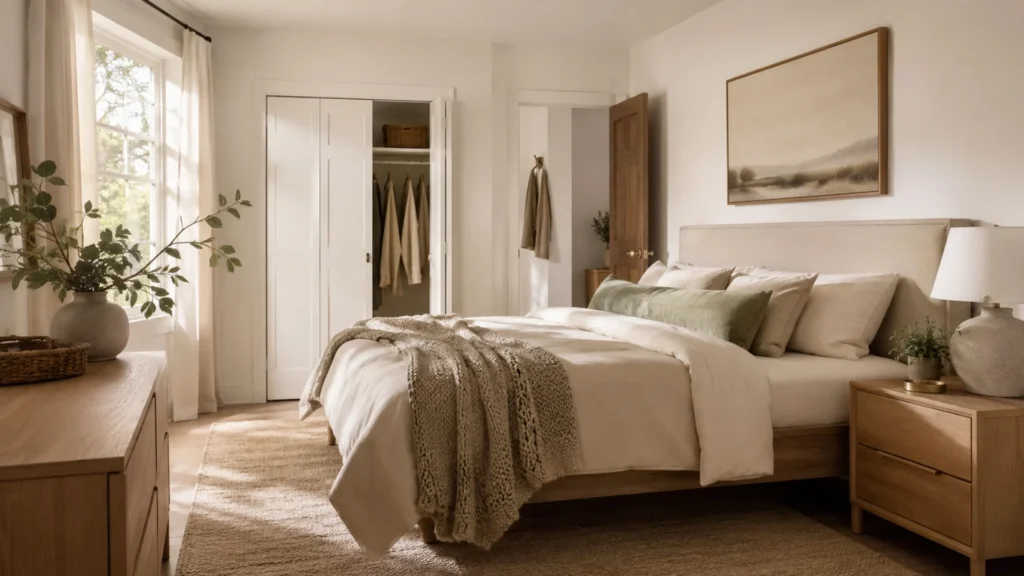
Before buying furniture, measure the bed, door swing, closet opening, and walking paths. Mark each piece on the floor with painter’s tape. This simple step helps you spot cramped corners before you spend money, especially when planning small bedroom ideas with a queen or king bed.
Choose a Bed With Built-In Storage
A storage bed with drawers or a lift-up platform replaces a bulky dresser and reclaims the room entirely. In a compact room, built-in storage like this frees up the floor space a dresser would otherwise take. Under-bed drawers work well for items you need often, such as folded clothing, shoes, or spare bedding. Choose a frame with smooth-gliding drawers if you need regular access.
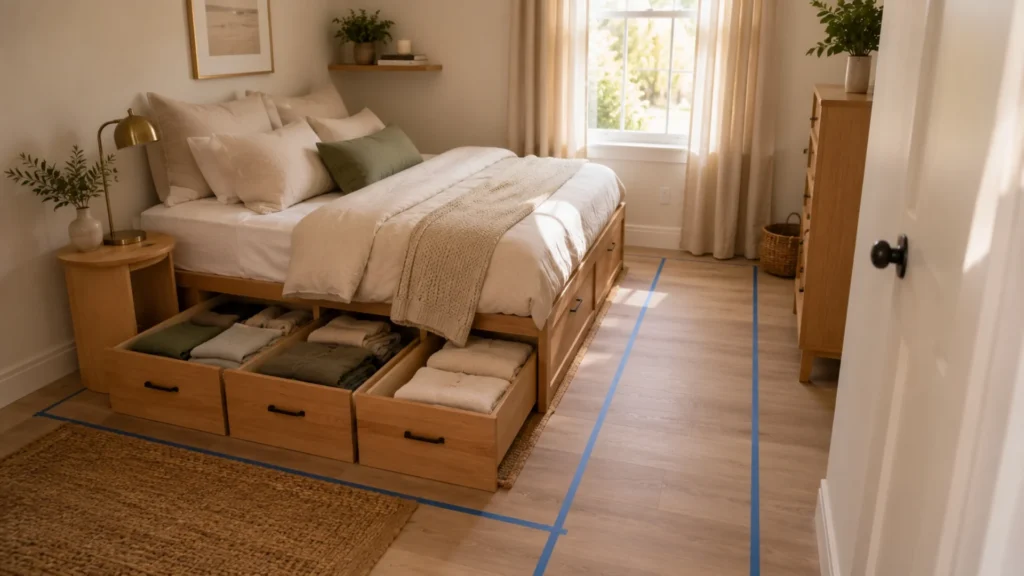
A lift-up platform gives you one large hidden compartment beneath the mattress. It works especially well for luggage, extra blankets, seasonal clothing, and other items you use less often. Since the mattress lifts as one piece, leave enough clearance around the bed to open it comfortably.
Affordable alternatives for under-bed storage include shallow containers, low rolling bins, and bed risers with bins underneath. Fabric bags with handles are useful for off-season clothing and shoes, while a structured case can protect spare bedding. Store luggage inside one another when possible, then place smaller bags inside the largest case.
Keep categories separate so the space does not become a difficult-to-reach junk zone. For example, use one container for winter clothes, another for shoes, and a third for extra linens. Add simple labels to fabric bags, even if you can see the contents through the opening.
Hidden storage works best when you can reach it without moving half the room.
Check that any bed risers, bins, or storage frame keep the bed stable, level, and safe. The support must match the bed’s weight, mattress, and sleepers. Avoid stacking loose boxes under the frame, since uneven support can damage the bed or create a wobble.
Swap a Bulky “bedside table” for Slim “floating shelves”
A wall-mounted floating shelf holds your essentials, lamp, phone, book, and water, without eating the floor space a traditional bedside table would occupy. These floating shelves work well beside the bed when you only need a few items. Choose a picture ledge for a lighter look, or install a wall-mounted bedside cabinet if you need a drawer for glasses and personal items.
Keep only nighttime necessities within reach. Store extra books, beauty products, paperwork, and cables in a closet or drawer so the shelf does not become a crowded catchall. A small basket mounted below the shelf can hold chargers, but keep cords secured and off the floor.
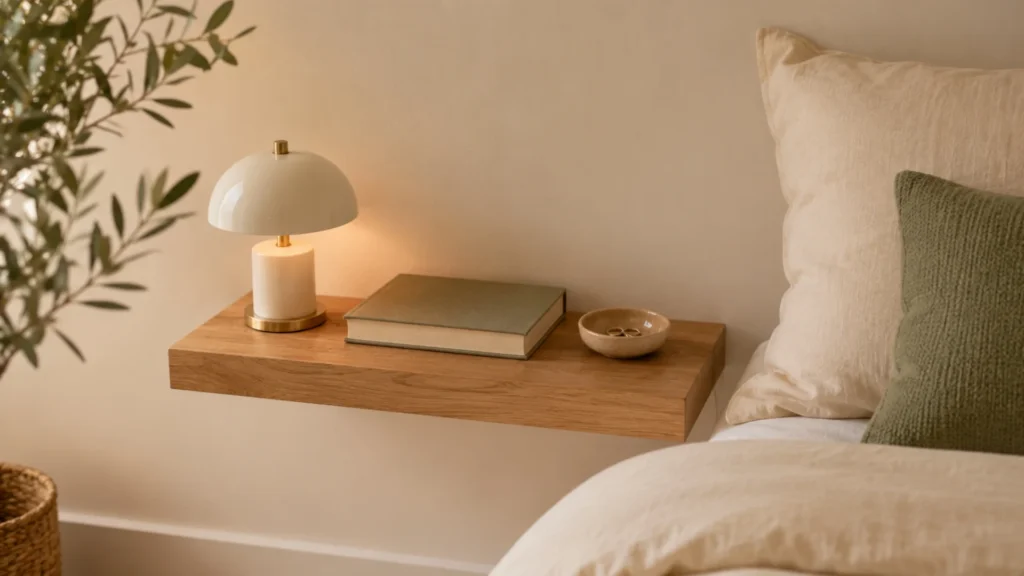
Before drilling, locate the wall studs or use anchors rated for the shelf and its contents. A shelf holding a lamp and books needs stronger support than one displaying a single lightweight object. Test the mounting hardware before placing anything breakable on top.
Choose a finish that matches the room’s existing palette, such as light wood, white, or soft black. The simpler the shelf, the more open your bedroom design for a small room will feel. Keep the surface visually calm with one lamp, one book, and a small dish for jewelry or keys.
Use a Fold-Down Desk or a Narrow Work Surface
A wall-mounted fold-down desk gives you a work or makeup zone that disappears when you are done. It can support a laptop, mirror, notebook, or small craft project without forcing a full desk into the bedroom. When closed, the wall returns to its original purpose and the walkway stays clear.
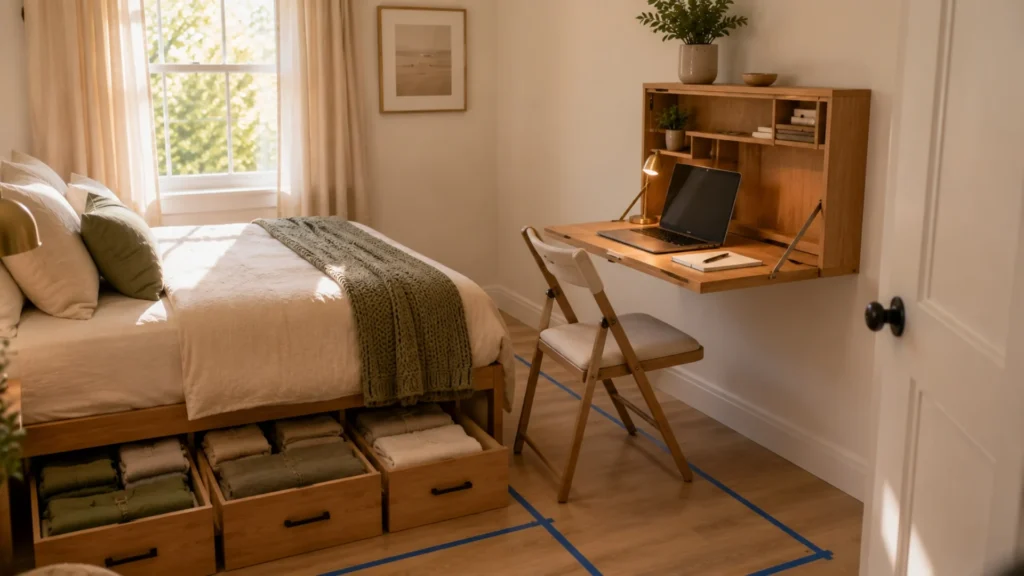
A slim console or writing ledge offers another practical option. Use it as a compact work surface, a makeup station, a journaling spot, or a place to sort mail. A narrow surface is often more useful than a standard desk that leaves no room for movement.
Pair the surface with a folding chair on a wall hook, or choose a chair that slides fully underneath. Keep the chair close enough for daily use, but avoid leaving it in the main walking path. If you work from the bedroom, a chair with a small footprint can still provide comfort without making the room feel office-like.
Manage cables along the underside of the desk with adhesive clips or a compact cable sleeve. Add a small task lamp, preferably one with an adjustable arm, so you do not rely on a harsh ceiling fixture. Store work supplies in one lidded box when the desk closes.
Most importantly, give the work zone a clear visual boundary. A small lamp, framed print, or washable mat can separate it from the sleep area without taking up floor space. When the surface is closed and supplies are put away, your small bedroom returns to a calmer place for rest.
Make Every Wall Work Harder With Smart Small Bedroom Storage
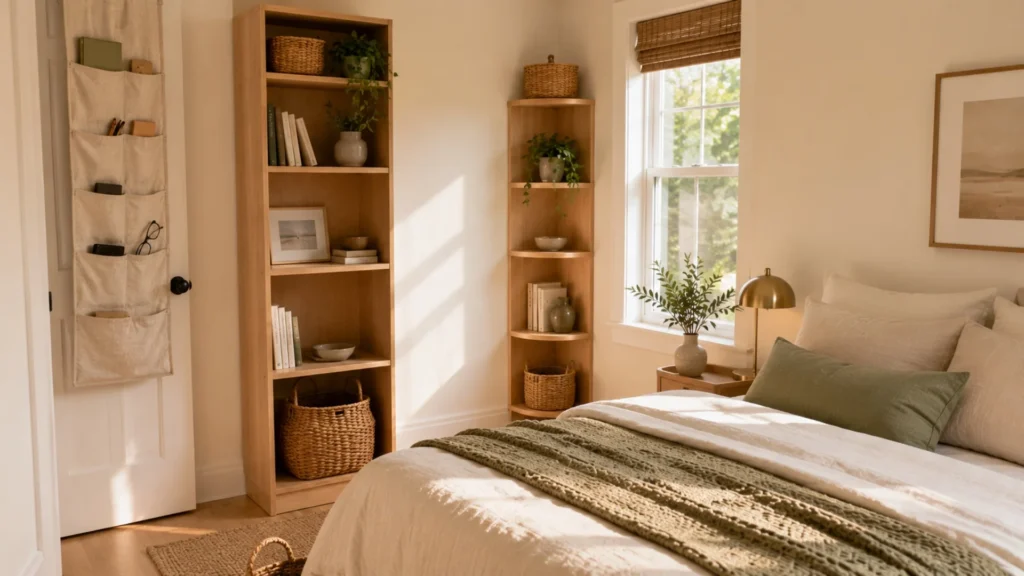
When floor space is limited, the walls can take over the storage work. Vertical shelves, door organizers, and carefully planned corner stations keep clothing and daily essentials within reach without crowding the walkway. These small bedroom storage ideas also help the room feel calmer because each item has a clear home.
Install Tall Shelves Around the Bed
Tall shelving beside and above the bed allows you to optimize vertical space in areas that most small bedrooms waste. A narrow bookcase can fit between the bed and a wall, while a tower shelf can occupy an unused corner without taking much floor area. If you own the home, consider built-ins around the headboard or beside the bed for a custom look.
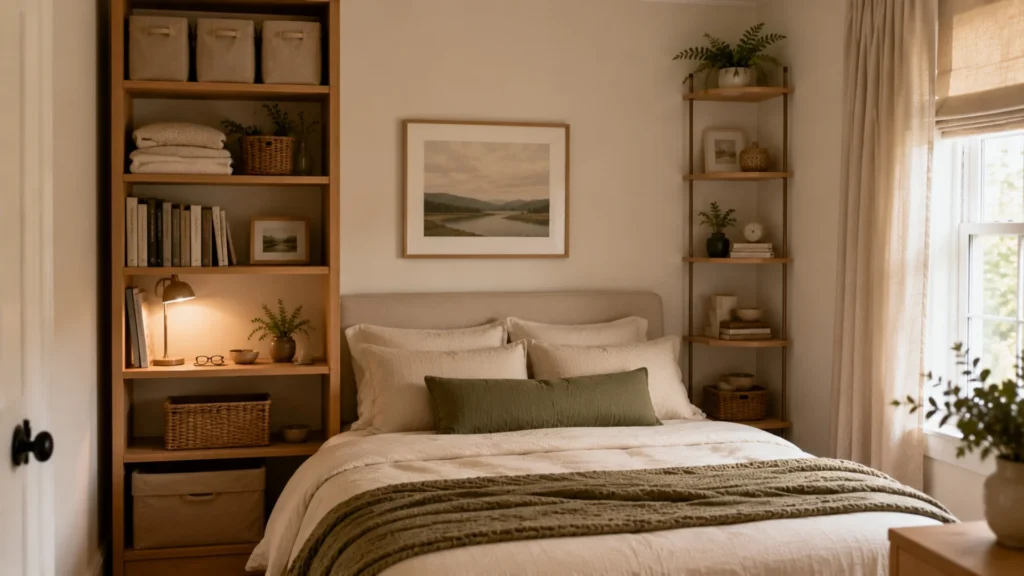
Keep everyday items at eye level, where you can reach them without stretching. Place books, a reading lamp, glasses, or a small basket on the lower shelves. Higher shelves can hold spare bedding, seasonal accessories, and less-used items inside matching bins.
A shelf arrangement should feel useful but not packed. Mix books with woven baskets and a few meaningful objects, such as a framed photo or a small ceramic piece. Leaving some open space keeps tall furniture from making the bedroom feel heavy.
Always secure tall shelving to the wall, especially in homes with children or pets. Use the manufacturer’s mounting hardware when possible, or choose anchors rated for the wall type and the shelf’s full load. A narrow unit can tip if someone pulls on it or places too much weight near the top. The CPSC’s Anchor It campaign recommends anchoring all furniture with drawers, doors, and shelves to the wall.
Add an Over-the-Door Organizer for Hidden Storage
The back of the bedroom door is free vertical storage for shoes, accessories, or tools. Pocket organizers work well for small items, belts, scarves, and folded accessories. Hooks are better for robes, hats, and bags, while a peg rail gives you flexibility as your storage needs change.
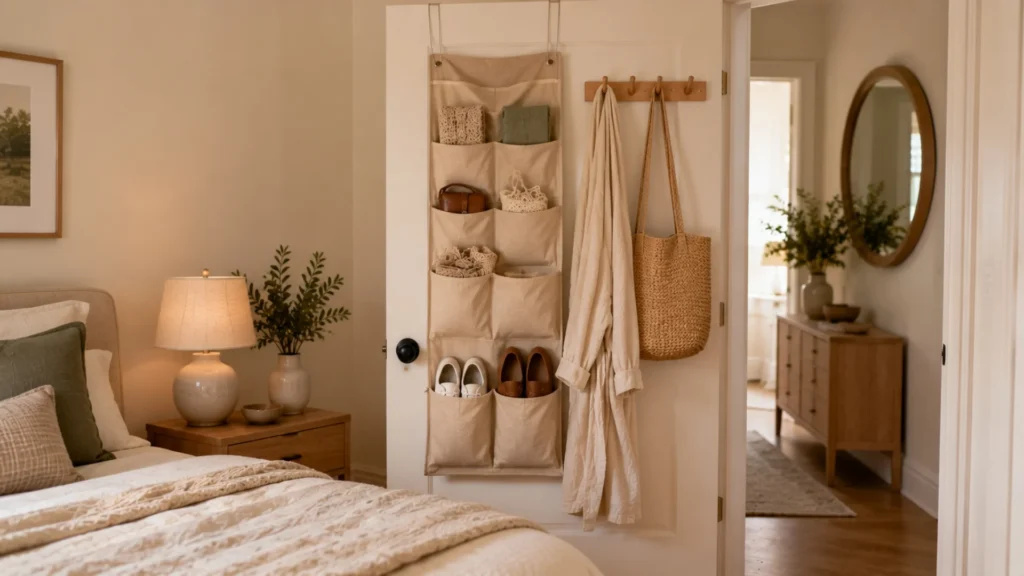
Slim hanging racks add shelves or baskets without requiring permanent installation. However, check the door clearance before buying one. Close the door slowly and measure the gap between the door, trim, and nearby wall so the organizer does not scrape the frame or prevent the door from opening fully.
Group similar items together rather than filling each pocket at random. Shoes can stay near the bottom, daily accessories can sit at hand height, and rarely used items can occupy the upper pockets. Choose one color or material, such as white canvas, natural wood, or black metal, so the visible side looks neat.
Renters can use over-the-door hooks, removable adhesive hooks, or hanging organizers that leave no major wall damage. Check the weight limit before adding heavy shoes or tools. If the door opens toward a narrow walkway, choose the slimmest option to preserve comfortable movement.
Turn an Empty Corner Into a Useful Dressing Zone
An awkward corner can become a compact dressing station that pulls clutter off the bed and floor. When considering wardrobe ideas for tight quarters, a narrow cabinet works well for folded clothing, while a corner clothing rack gives frequently worn pieces a visible home. In a very small bedroom, wall hooks and a mirror with hidden storage may provide enough function without adding a full piece of furniture.
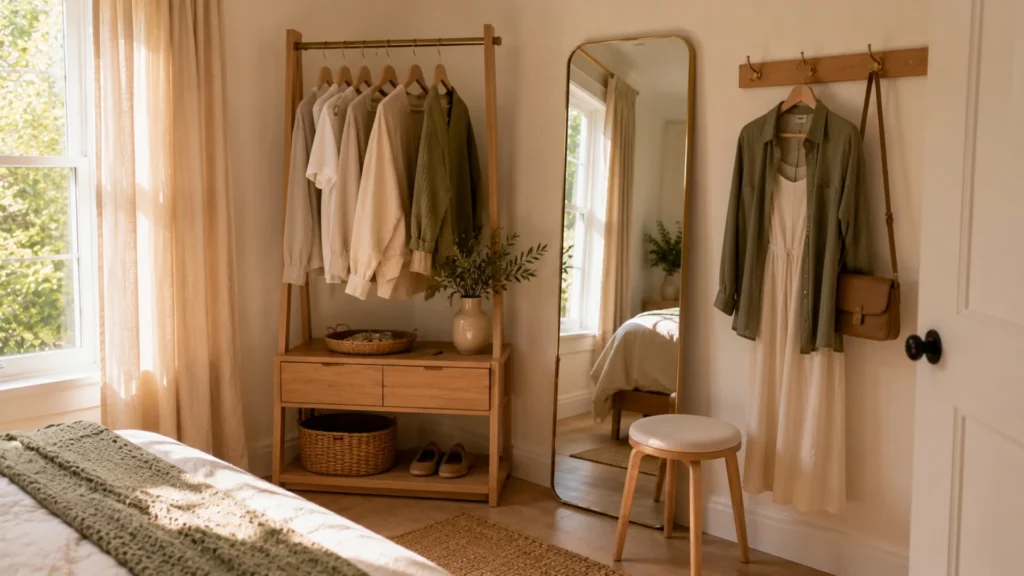
Give the corner a clear job before adding furniture. One defined hook rail can hold tomorrow’s outfit, one laundry basket can collect worn clothes, and a small tray can corral jewelry or hair accessories. Without these limits, the corner may become another drop zone.
For adult small bedroom ideas, choose a slim wardrobe with a clean front or a full-length mirror that conceals shelves. A small stool can provide a place to sit, but only keep it there if it does not block the bed or closet. In a shared room, assign each person a section of hooks or a basket.
Very small bedroom design ideas require extra attention to the walkway. Keep the dressing zone shallow, measure the door swing, and leave a clear path between the bed, closet, and exit to protect your valuable floor space. When the corner stores only what you use daily, the room feels intentional instead of crowded.
Use Color, Mirrors, and Light in Your Small Space Bedroom Design
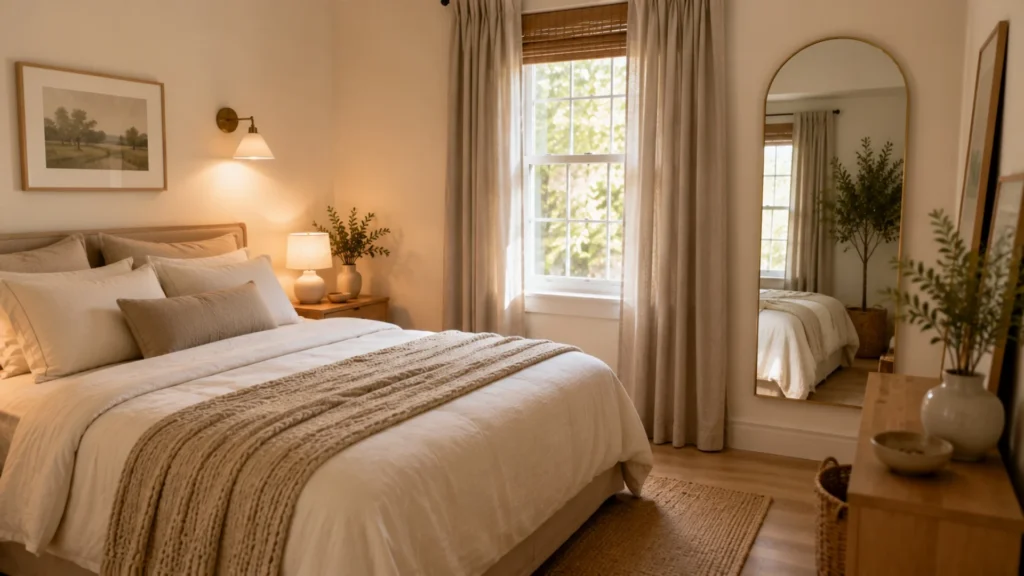
Color, reflection, and lighting can change how a small bedroom feels without taking up any floor space. A thoughtful bedroom design for a small room should make the space brighter, calmer, and easier to use at every hour of the day.
Create a Light, Tonal Color Palette
Repeating related light shades, white, cream, pale blue, soft green, or warm beige, reduces visual breaks so the room reads bigger. When choosing your color palette, select one soft base and carry it through the walls, bedding, curtains, and larger furniture.
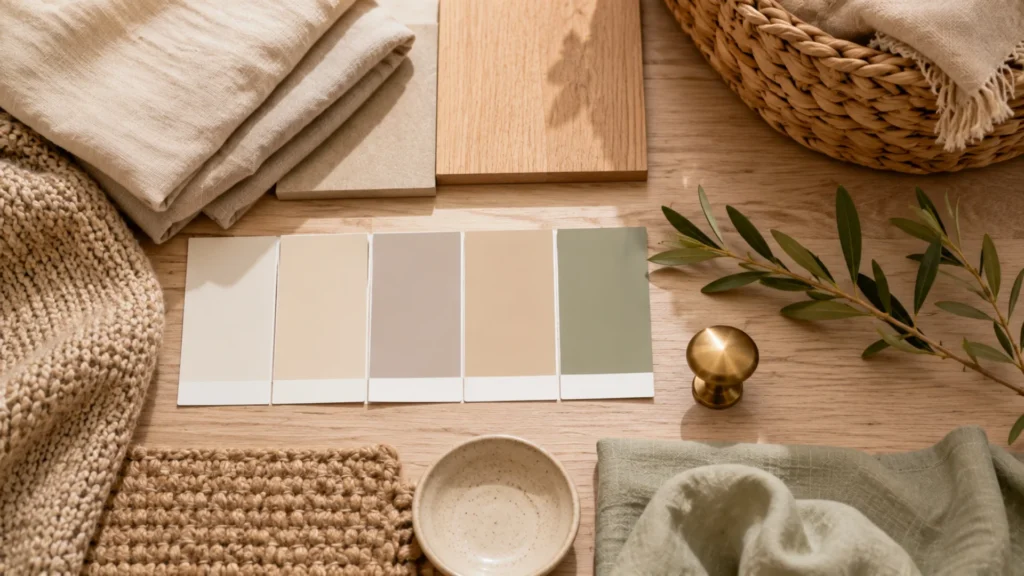
For example, warm white walls can pair with cream bedding, oatmeal curtains, and a pale wood bed frame. Soft green walls work well with sage linens, natural baskets, and light beige upholstery. When you stick to these neutral paint colors, the eye moves smoothly around the room.
Use the largest surfaces for your quietest shades. Paint, a duvet cover, curtains, and a wardrobe can quickly make a small bedroom feel busy when each one introduces a new color. Keep those pieces within the same tonal family, then add interest with texture.
Linen bedding brings a relaxed, airy finish, while a boucle bench or small boucle pillow adds softness. Woven baskets provide natural pattern without introducing a bold print. A chunky knit throw, a ribbed lampshade, or a nubby area rug can also create depth while keeping the palette restrained.
Texture gives a light bedroom palette character without making the room feel crowded.
A darker accent can still work. Use it on one small feature, such as a black wall sconce, a walnut picture frame, or a deep green lumbar pillow. Repeat that shade in two or three small details so it feels intentional rather than heavy. Avoid spreading dark furniture across every wall, since large blocks of strong contrast can make the room feel smaller.
Before painting, test a sample on more than one wall. Natural and artificial light can change how a color looks throughout the day. If the room receives little daylight, choose warm off-white, pale beige, or a soft muted color instead of a cool gray that may feel flat.
Place Decorative Mirrors Where They Reflect Light
One mirror placed opposite a window bounces natural light and adds visual depth. The reflection can make a narrow room appear wider, while the extra light helps pale walls and bedding feel more open.
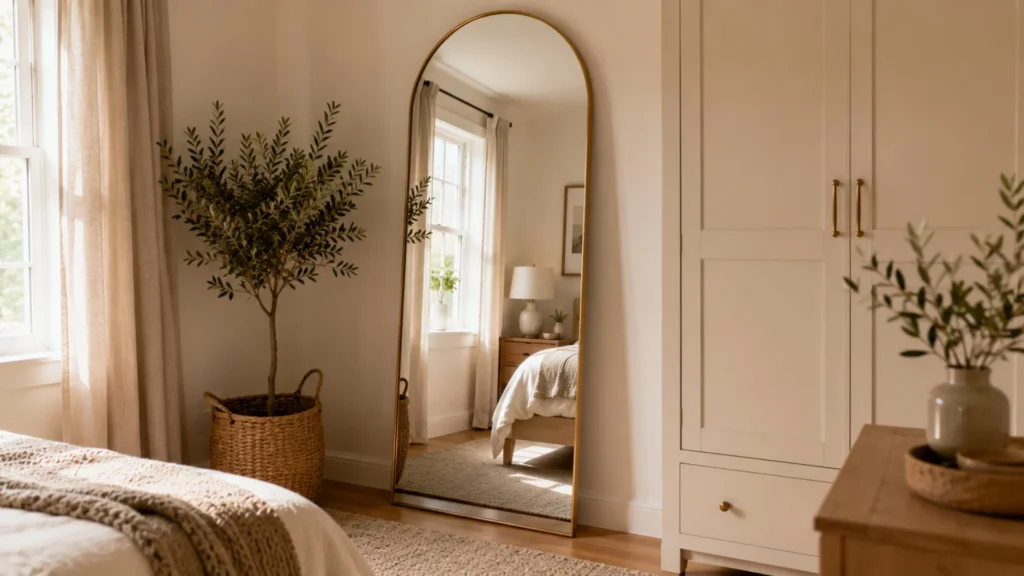
A leaning full-length mirror is a flexible choice for renters. Place it against a wall beside the wardrobe or near the door, then angle it toward the room. It adds a useful dressing view without requiring permanent installation, although you should secure the top if children or pets use the room.
A wall-mounted mirror takes up less floor space and gives a cleaner finish. Choose a tall, narrow shape beside the closet, or hang a wide mirror above a floating dresser or shelf. Mirrored wardrobe doors provide the most reflection, but they work best when the clothing inside stays organized. An untidy closet becomes part of the room’s visual field.
Aim the mirror toward an attractive view, a light wall, or a tidy corner. Avoid reflecting laundry baskets, open storage, or a cluttered desk. Also check the angle from the bed. A mirror that catches direct sunlight or reflects a lamp into your eyes can create glare when you are trying to relax.
For renters, a leaning mirror or lightweight framed option usually avoids wall damage. Removable mounting strips can work for small mirrors when the product’s weight limit matches the frame. Heavier mirrors need proper anchors or stud mounting, and adhesive solutions should never replace secure hardware when the mirror could fall.
Layer Lighting Instead of Relying on One Ceiling Fixture
Combine a ceiling light with wall-mounted lighting using warm 2700K bulbs and a dimmer to shift the room from useful to cozy. One overhead fixture often creates harsh shadows, while layered light lets you control the mood and brightness for different tasks.
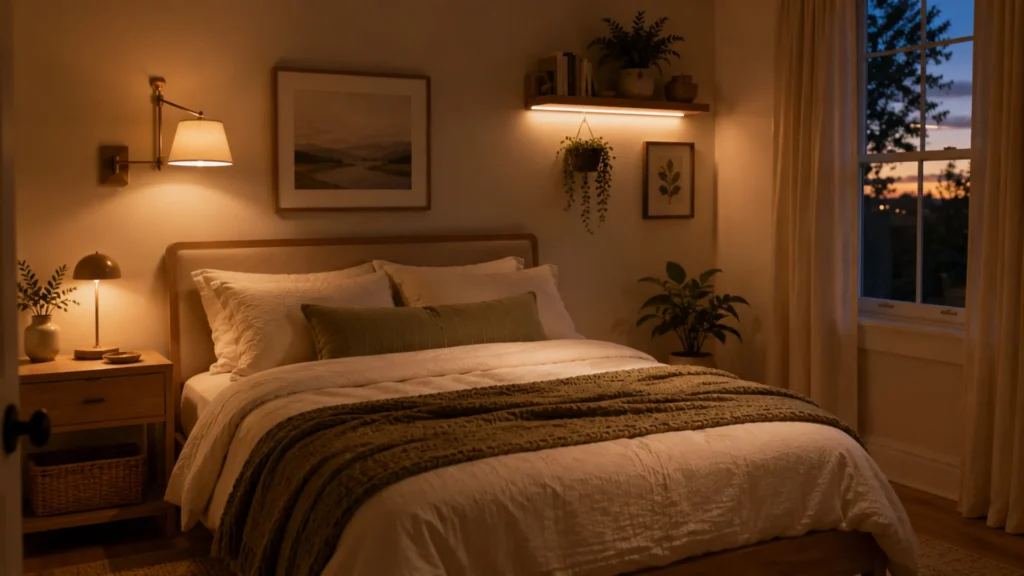
Wall sconces free both nightstands and floor space. Hardwired sconces look polished beside the headboard, but plug-in sconces offer a renter-friendly option. Choose swing-arm styles for reading, then mount them high enough to light the page without shining directly across the bed.
A small bedside reading lamp adds a softer pool of light for books, journaling, or winding down. Pick a compact lamp with a narrow base, or use a rechargeable lamp when there is no outlet near the bed. A portable light can also move to a dresser when you need brighter illumination for getting dressed.
Soft LED lighting inside a wardrobe or under a floating shelf helps you find clothes without turning on the ceiling light. Motion-sensor strips are useful in dark storage areas, especially when the bedroom has limited natural light. Keep the glow warm and subtle so the room still feels restful at night.
Renters can install plug-in fixtures with adhesive cable clips along the wall or underside of a shelf. Rechargeable lamps remove the need for visible cords altogether. For permanent fixtures, hide wires inside a surface-mounted cord cover that matches the wall, then keep every cable away from the main walking path.
Use each light for a clear purpose:
- The ceiling light provides general illumination for cleaning and daily tasks.
- Wall sconces or reading lamps support bedtime reading without brightening the entire room.
- A dresser lamp helps with makeup, hair, or getting dressed.
- Low LED lighting makes storage easier to use.
- A dimmer lowers the brightness when you want to relax and prepare for sleep.
Position switches and controls within easy reach of the bed when possible. That small detail makes a difference in a compact bedroom, since you will not need to cross the room after turning off the lights.
Choose Small Bedroom Furniture and Decor That Do More Than One Job
The best small bedroom furniture earns its space by handling more than one task. Incorporating multifunctional furniture allows you to combine seating, storage, display, or dressing functions while keeping silhouettes light enough for clear walkways. This approach gives you the comfort you want without filling every corner with a separate item.
Before buying, evaluate the furniture scale to ensure your pieces match the room size, and measure the area needed to use them. A piece may look compact in a product photo but still block a drawer, door, or closet once it arrives. Leave enough open floor around each item for everyday movement.
Replace a Standard Bench With a Storage Ottoman
A storage ottoman at the foot of the bed adds seating and hides blankets, bags, and pillows in one piece. It gives you somewhere to sit while getting dressed, yet it also clears soft items from the floor and top of the bed.
Choose an ottoman slightly narrower than the mattress so it does not make the bed feel boxed in. A firm, flat top can hold you comfortably or provide a temporary surface for a folded outfit, book, or breakfast tray. It should support daily use without becoming another place where clutter gathers.
Light upholstery, open legs, or a raised base can keep the piece from feeling heavy. Pale linen, cream fabric, or a soft neutral shade blends into the room, while visible legs allow more floor and light to show beneath it. A lift-top style offers hidden storage, but a simple hinged lid may be easier to open regularly.
Check a few practical details before you buy:
- Test the lid mechanism to make sure it opens smoothly and stays secure.
- Measure the interior, since thick padding can reduce useful storage space.
- Confirm the weight limit if you plan to sit on it often.
- Leave enough clearance between the ottoman and nearby doors or drawers.
- Look for a removable or durable cover if the ottoman will handle shoes, bags, or pets.
A storage ottoman works especially well in small bedroom layouts with limited closet space. Use it for extra bedding you need each week, then place seasonal items in less accessible storage beneath the bed.
Use a Wardrobe With Sliding Doors or Curtains
Sliding doors or a curtain-covered rack save the swing space hinged wardrobe doors steal. When exploring wardrobe ideas, prioritize designs that reclaim valuable floor space, making a narrow path beside the bed easier to use. This is particularly important when the closet, dresser, and bedroom door compete for the same few feet.
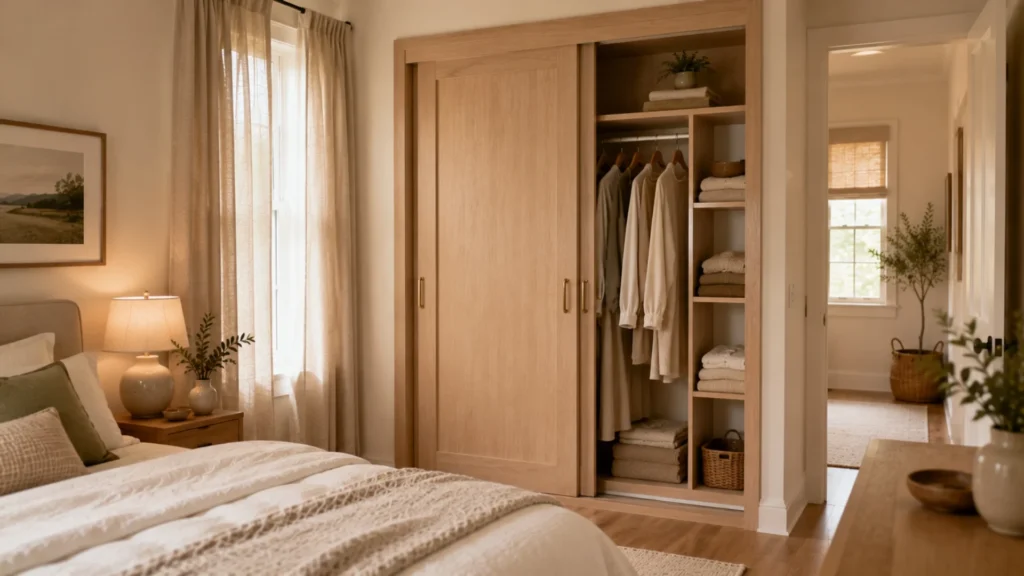
A compact wardrobe is the best choice when you want enclosed storage and a finished appearance. Look for a shallow unit with adjustable shelves, a hanging rail, and doors that move within the cabinet’s footprint. Sliding storage works well when you need more capacity but cannot open a traditional door without hitting the bed.
A curtain-covered clothing rack offers a lower-cost option for renters or anyone testing a new layout. It keeps clothing accessible while softening the look of open storage. Choose a curtain in a color close to the wall or bedding so the rack blends into the room instead of becoming a bold visual block.
Sort your clothing before choosing the size of the storage. Donate, sell, or relocate pieces you no longer wear, then measure the clothing you actually keep. Why buy a large wardrobe for items that already sit untouched in a bag?
Pay attention to these details when comparing furniture for a small bedroom:
- Use matching hangers to reduce visual clutter and fit more clothing on the rail.
- Check the rack’s weight limit, especially for coats, denim, or heavy sweaters.
- Allow air to circulate around clothing so fabrics do not stay damp or musty.
- Leave clearance between the wardrobe and bed for comfortable dressing.
- Anchor tall wardrobes or racks according to the manufacturer’s instructions.
A curtain also makes open storage easier to hide before guests arrive. Keep daily pieces organized by category, then close the curtain at night for a calmer view from the bed.
Hang Art and Accessories Above Eye Level With Care
One tall statement piece draws the eye upward and looks calmer than a crowded gallery wall. Vertical art can fill a narrow wall beside the bed, above a dresser, or near the doorway without taking valuable floor space.
A narrow picture ledge gives you more flexibility than permanently hanging several frames. Place a few small prints, a slim mirror, or one framed photograph on the ledge, then leave space between each item. Because you can change the arrangement without adding new holes, it suits renters and anyone who likes to refresh their decor.
For a softer finish, try a small textile hanging above a desk or on a blank section of wall. A woven piece adds texture without the hard edges of a large frame. Keep it lightweight, and use removable hooks or renter-friendly picture strips that match the item’s weight.
Position every piece with safety and movement in mind. Avoid placing heavy frames where you could bump them while getting into bed, and keep artwork away from the main walkway if the room is especially narrow. Above-eye-level decor should draw attention upward without creating a hazard near your head or shoulders.
Repeat one or two colors from the bedding, curtains, or rug to connect the artwork to the rest of the bedroom. A muted green print can echo sage bedding, while a warm wood frame can tie into a nightstand or storage shelf. Keep the arrangement simple. An empty wall does not need to become a display opportunity just because space is available.
Small Bedroom Decorating Ideas That Add Cozy Style Without Crowding
Small bedroom decorating ideas work best when every soft furnishing and decorative detail has a clear purpose. Use texture, color, and comfort to make the room feel personal, but keep the floor, bed, and bedside surfaces easy to use. A few well-sized choices create more warmth than a room filled with accessories.
Choose Area Rugs That Fit the Bed and Walking Area
Size the rug to the room; it should extend about 18 to 24 inches beyond the sides of the bed, or use runners on each side. A larger rug placed under the lower two-thirds of the bed gives the room a finished look while leaving the headboard area clear. This arrangement also puts softness where you step out of bed.
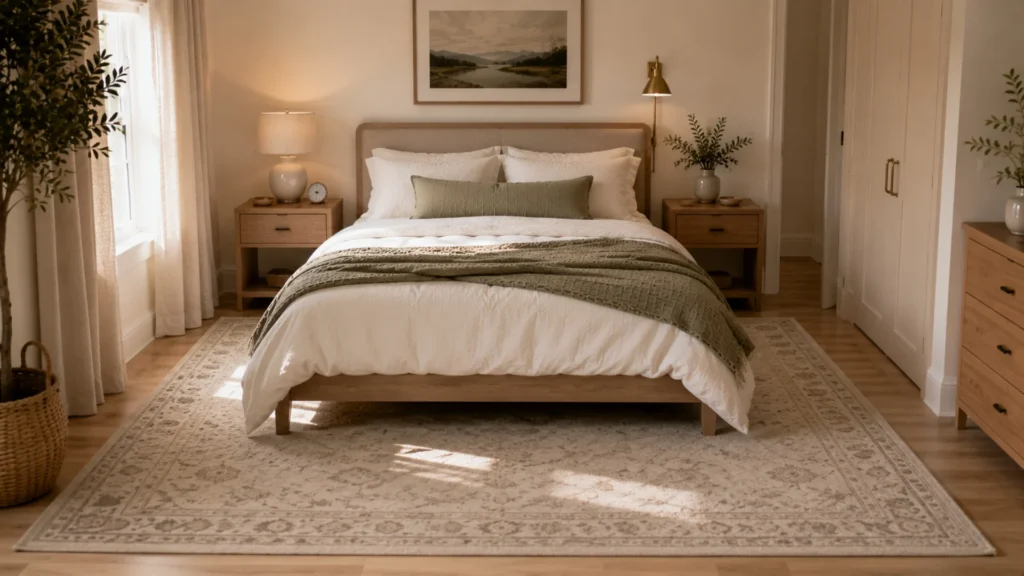
If a full-size rug leaves too little walking space, place one runner along each side of the bed. These area rugs are practical for narrow rooms because they define the sleeping area without covering the entire floor. In a rental, a small washable rug at the foot of the bed or beside the bed adds comfort without requiring a major purchase.
Choose a low-pile rug if the bedroom door swings inward. A thick rug can catch beneath the door and make the room harder to use. Add a rug pad underneath to prevent slipping, protect the floor, and help the rug stay flat.
Simple patterns usually work best in very small bedroom design ideas. Try a soft stripe, a small geometric print, or a faded floral in colors that echo the bedding. By selecting a light color palette, you can make the floor feel more expansive and help unify the room. Cream, oatmeal, muted green, dusty blue, and warm beige can add interest without making the floor feel broken up. When the rug, curtains, and bedding share one or two tones, the room feels more connected.
Style the Bed With One or Two Useful Layers
Make the bed the focal point with breathable bedding, one folded throw, and a small number of pillows; coordinated texture beats a pile of accessories. Start with neutral base bedding in white, cream, beige, or soft gray, then repeat one accent color in the throw, pillow cover, or artwork.
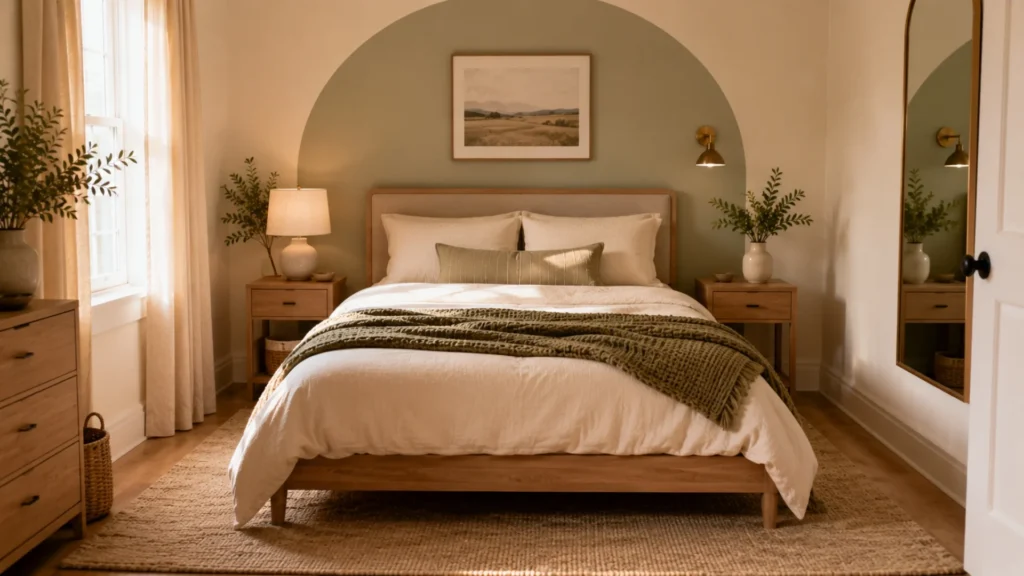
Washable covers make daily life easier, especially if you have pets, children, or limited laundry space. Linen and cotton give the bed a relaxed finish, while a quilted blanket adds gentle pattern without looking busy. For extra warmth, fold a knit throw across the lower third of the bed instead of layering several blankets from edge to edge.
Keep pillows useful and easy to remove. Two sleeping pillows, one or two shams, and a single lumbar pillow are often enough for a polished look. If you prefer a softer, more collected style, use different textures in the same color family rather than adding many competing prints.
A neutral bed also gives you room to change the mood later. Swap a sage throw for rust in fall, or use pale blue covers for a lighter summer feel. The main bedding stays consistent, so seasonal updates don’t add storage problems.
End each day with a quick reset: make the bed, return loose items to storage, and clear the bedside shelf. That small habit keeps cozy bedroom decor from turning into visual clutter.
Create a Calm Feature Wall Behind the Bed
One feature wall behind the bed adds personality without covering every surface. It gives the room a visual anchor, which helps the rest of the decor stay simple and intentional. Pairing a bold feature wall with neutral paint colors on the surrounding surfaces provides necessary balance and keeps the space from feeling cramped.
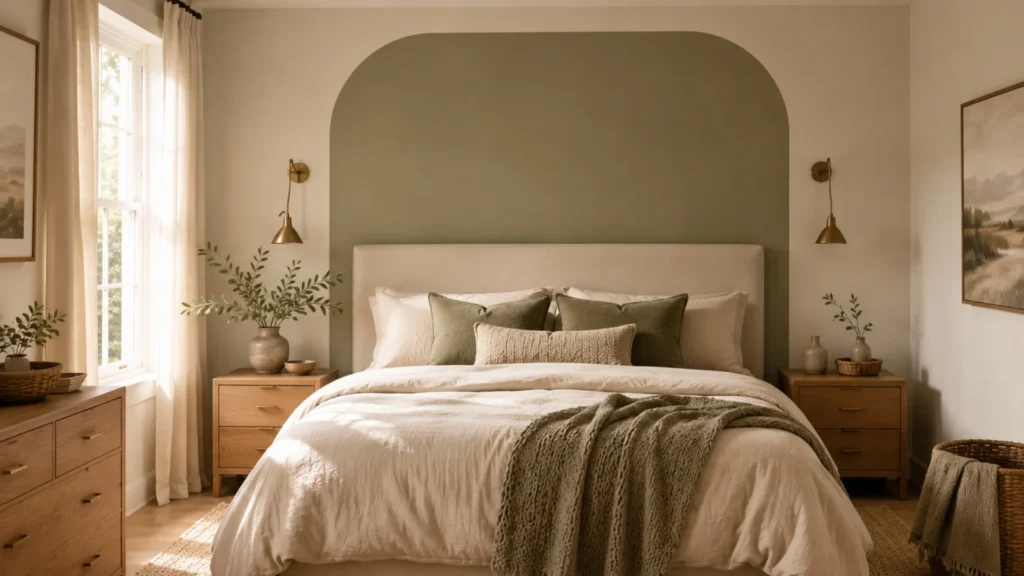
Removable wallpaper is a renter-friendly choice, while regular paint offers a lasting update for homeowners. Wood-look panels can add warmth, but choose slim panels or a narrow application so the wall doesn’t feel heavy. A fabric headboard also creates softness without requiring artwork or extra wall decor.
For a low-cost project, paint a soft arch, a wide color block, or a simple half-wall behind the bed. Framed fabric offers another easy option. Stretch a textile over a lightweight frame, or hang one large woven piece to add pattern without filling the wall with small objects.
Test peel-and-stick samples or paint swatches before committing. Look at them in morning, afternoon, and evening light, then compare them with the bed frame, curtains, and flooring. Large patterns can overwhelm a small bedroom, so choose a scale that works with the furniture already in the room.
This approach suits several bedroom styles for small rooms:
- Soft modern: Warm white walls, a muted color block, and simple black or wood accents.
- Relaxed minimal: One quiet paint color, natural bedding, and very little wall decor.
- Warm organic: Clay, olive, or sand tones paired with wood, linen, and woven textures.
Keep the feature wall focused on the bed. When one surface carries the pattern or color, the remaining walls can provide breathing room.
A Simple Plan for Putting These Small Bedroom Ideas Into Action
The best small bedroom ideas become easier when you apply them in the right order. Start with the floor and bed placement, then handle storage, lighting, and decor. This prevents you from buying pieces that look attractive but make the room harder to use.
What Is the Fastest Way to Make a Small Bedroom Look Bigger Using Small Bedroom Ideas?
Clear the floor, reposition the bed, remove excess furniture, and improve the lighting, as editing the room beats buying new decor. A small bedroom often feels crowded because too many items compete for attention and movement.
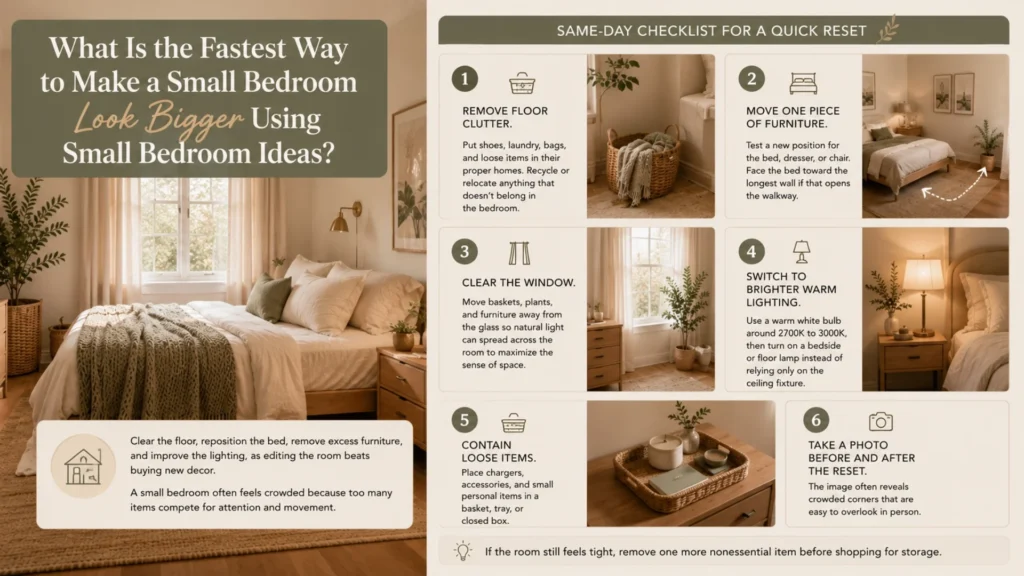
Use this same-day checklist for a quick reset:
- Remove floor clutter. Put shoes, laundry, bags, and loose items in their proper homes. Recycle or relocate anything that doesn’t belong in the bedroom.
- Move one piece of furniture. Test a new position for the bed, dresser, or chair. Face the bed toward the longest wall if that opens the walkway.
- Clear the window. Move baskets, plants, and furniture away from the glass so natural light can spread across the room to maximize the sense of space.
- Switch to brighter warm lighting. Use a warm white bulb around 2700K to 3000K, then turn on a bedside or floor lamp instead of relying only on the ceiling fixture.
- Contain loose items. Place chargers, accessories, and small personal items in a basket, tray, or closed box.
Take a photo before and after the reset. The image often reveals crowded corners that are easy to overlook in person. If the room still feels tight, remove one more nonessential item before shopping for storage.
What Bed Works Best in a Tight Bedroom?
A storage bed or platform bed usually works best in a tight room, but the right choice depends on your storage needs, ceiling height, and room shape. Each style solves a different problem, so compare the bed with the way you actually use the room.
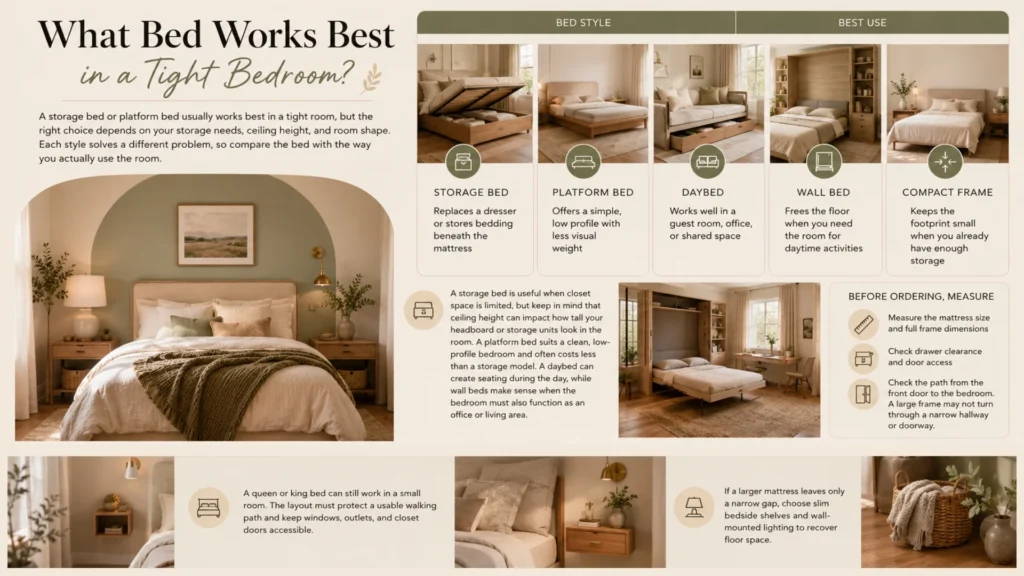
| Bed style | Best use |
|---|---|
| Storage bed | Replaces a dresser or stores bedding beneath the mattress |
| Platform bed | Offers a simple, low profile with less visual weight |
| Daybed | Works well in a guest room, office, or shared space |
| Wall bed | Frees the floor when you need the room for daytime activities |
| Compact frame | Keeps the footprint small when you already have enough storage |
A storage bed is useful when closet space is limited, but keep in mind that ceiling height can impact how tall your headboard or storage units look in the room. A platform bed suits a clean, low-profile bedroom and often costs less than a storage model. A daybed can create seating during the day, while wall beds make sense when the bedroom must also function as an office or living area.
Before ordering, measure the mattress size, full frame dimensions, drawer clearance, and door access. Check the path from the front door to the bedroom, since a large frame may not turn through a narrow hallway or doorway.
A queen or king bed can still work in a small room. The layout must protect a usable walking path and keep windows, outlets, and closet doors accessible. If a larger mattress leaves only a narrow gap, choose slim bedside shelves and wall-mounted lighting to recover floor space.
Where Should the Bed Go in a Small Bedroom Layout?
Place the bed against the longest solid wall, ideally where you can see the door but aren’t directly in line with it, leaving clear paths on the open side. This position often creates the simplest arrangement because it gives the bed a clear boundary and preserves more usable floor.
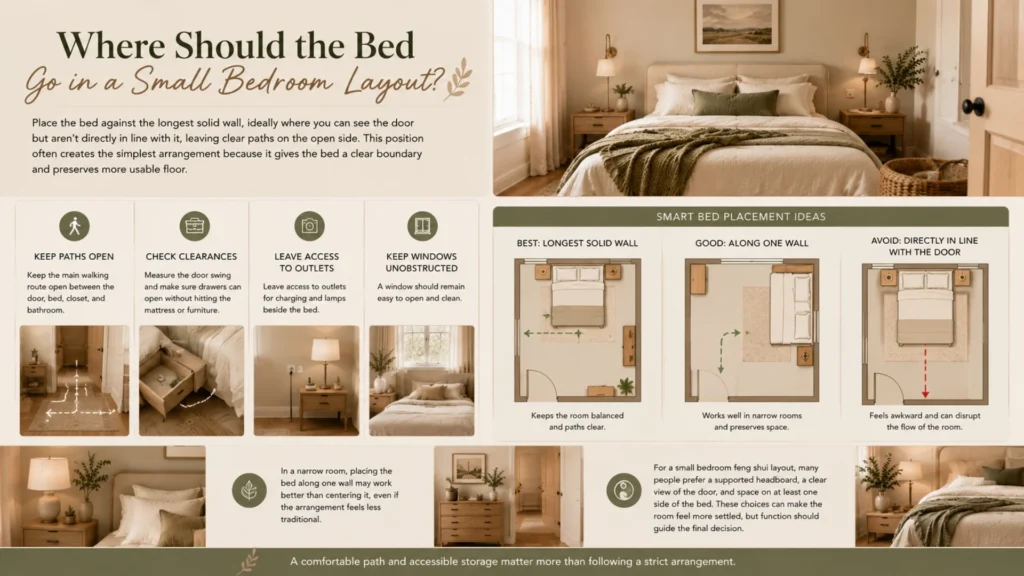
Keep the main walking route open between the door, bed, closet, and bathroom. Measure the door swing before pushing the bed into a corner, and make sure drawers can open without hitting the mattress or another piece of furniture. Leave access to outlets as well, especially if you charge a phone or use a lamp beside the bed.
A window should remain easy to open and clean. If the bed must sit near one, avoid covering the lower section with a tall headboard or bulky storage unit. In a narrow room, placing the bed along one wall may work better than centering it, even if the arrangement feels less traditional.
For a small bedroom feng shui layout, many people prefer a supported headboard, a clear view of the door, and space on at least one side of the bed. These choices can make the room feel more settled, but function should guide the final decision. A comfortable path and accessible storage matter more than following a strict arrangement.
How Can I Decorate a Small Bedroom Without Adding Clutter?
Use the one-in-one-out rule, closed storage, and a few grouped decor pieces instead of filling every surface. When you bring in a new lamp, pillow, basket, or artwork, remove something else that no longer earns its space.
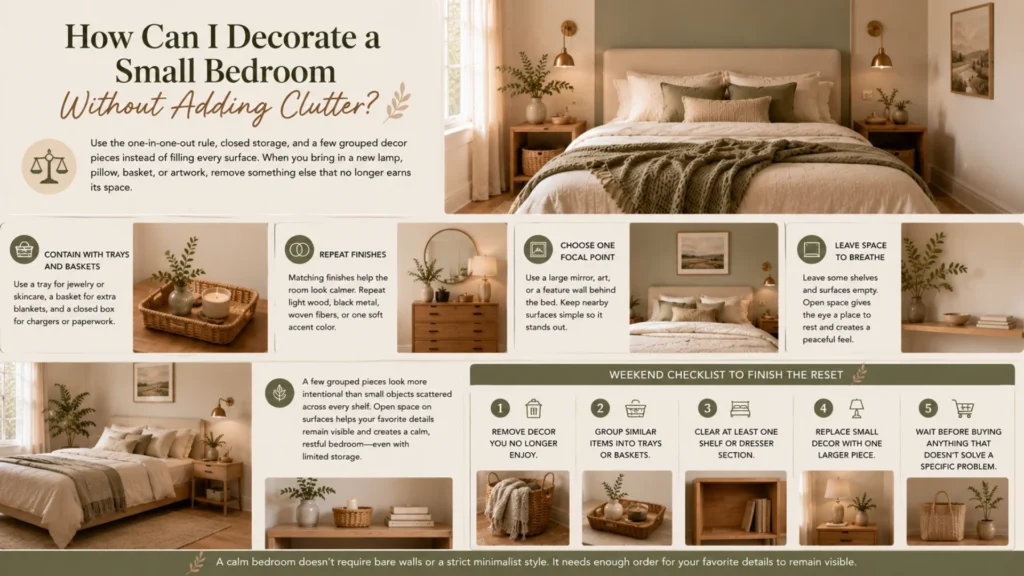
Trays and baskets keep useful items contained. Use a tray for jewelry or skincare, a basket for extra blankets, and a closed box for chargers or paperwork. Matching finishes also help the room look calmer. Repeat light wood, black metal, woven fibers, or one soft accent color instead of introducing a new material with every purchase.
Choose one focal point, such as a large mirror, a piece of art, or a feature wall behind the bed. Keep nearby surfaces simple so the focal point has room to stand out. A few grouped pieces look more intentional than small objects scattered across every shelf.
Leave some shelves and surfaces empty. Open space gives the eye a place to rest and makes the bedroom feel peaceful, even when storage is limited.
Use this weekend checklist to finish the reset:
- Remove decor you no longer enjoy.
- Group similar items into trays or baskets.
- Clear at least one shelf or dresser section.
- Replace several small decorations with one larger piece, such as a sleek bedside table that organizes your essentials.
- Wait before buying anything that doesn’t solve a specific storage or comfort problem.
A calm bedroom doesn’t require bare walls or a strict minimalist style. It needs enough order for your favorite details to remain visible.
Conclusion
A tight bedroom does not need less personality. It needs better planning. Open floor space, multipurpose furniture, vertical storage, soft colors, warm lighting, and edited decor can make the room feel calmer without taking away its character.
Start with one change that fits your needs. Clear the floor, add under-bed storage, or improve the bedside lighting. Before shopping, look at what you already own and find new uses for pieces that still work. When you do buy something, choose furniture or decor that solves a real problem.
The best small bedroom ideas create comfort and order at the same time. Pick your favorite strategy and start a simple refresh this week.
Related reading
- Home Decor Ideas for Every Room: A Complete Guide
- 12 Luxury Master Bedroom Ideas You’ll Want in 2026
- High-End Dark Feminine Bedroom Decor Ideas
- 19 Apartment Decor Ideas That Make Small Spaces Feel Like Home
- Affordable Budget Home Decor Ideas for a Modern Home Refresh
- 17 Wall Decor Ideas for Every Room